Anna University Mandates Absolute Grading System for Engineering Colleges from 2026-27
In a significant academic reform, Anna University has directed all engineering colleges to transition from the relative grading system to the absolute grading system starting from the next academic year, 2026-27. This move aims to evaluate students based on their individual scores rather than their performance relative to peers, ensuring a more accurate reflection of academic achievement.
University Circular Details New Grading Framework
Based on a decision approved by the academic council of Anna University, a circular issued by the university's registrar to all principals states that the absolute grading system will be implemented for all undergraduate (UG) and postgraduate (PG) students in non-autonomous colleges under the regulations of 2025. Additionally, autonomous colleges have been instructed to adopt this system for the evaluation and passing of results for all UG and PG students enrolling in the 2026-27 academic year.
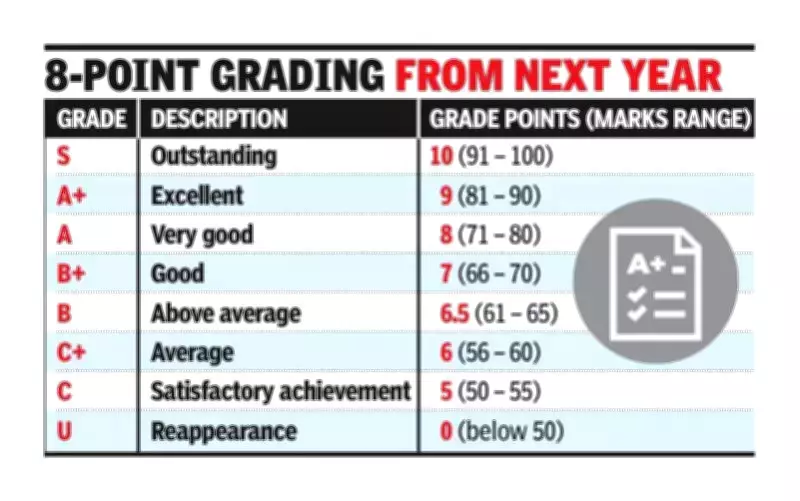
The new system introduces an 8-point grading scale, ranging from outstanding to re-appearance for exams. For instance, students scoring between 91 and 100 marks will receive an 'S' grade, denoting outstanding performance with respect to course learning objectives. According to the circular, this grade signifies that "the student exhibits original and creative thinking, and demonstrates the ability to analyse critically and synthesise information."

Rationale Behind the Shift to Absolute Grading
University officials highlighted the need for this change due to substantial variations in student performance across colleges. An official explained, "There is a huge variation in the performance of students in the colleges. Several thousand students appear for each paper, and top performers are not getting the grades they deserve." The official further elaborated that under the relative grading system, disparities arise where "a student who scored 200 out of 200 cut-off marks and a student who scored 100 out of 200 cut-off marks are writing the same exam. We think the absolute grading will reflect their performance more accurately."
New Grade Introductions and Adjustments
As part of the overhaul, Anna University has introduced new grades for engineering students. Specifically, students scoring 56 to 60 marks will now receive a C+ grade, while those with 50 to 55 marks will get a 'C' grade. This marks a change from the existing system, where all students scoring between 50 and 60 marks were awarded a 'C' grade, providing more granularity in assessment.
Perspectives from Academic Leaders
Professors and principals have shared mixed views on the transition. Some argue that the relative grading system functions effectively only with a small cohort of students. A principal from an autonomous engineering college noted, "Students who scored 91 marks are also not able to get the A+ grade if there are more students scoring above 95 marks out of 100. So, absolute grading may help top scorers to get their grades according to their marks."
However, others express concerns that the absolute grading system could lead to a decrease in the number of top grades awarded. This shift is expected to impact grading outcomes significantly, as it moves away from a curve-based approach to a fixed benchmark system.
The implementation of absolute grading from 2026-27 represents a pivotal change in Tamil Nadu's engineering education landscape, aiming to enhance fairness and accuracy in student evaluation across affiliated institutions.