Patna: In a significant move to overhaul postgraduate (PG) programmes across the state, Lok Bhawan on Friday launched a three-day exercise to revise PG curricula in 37 subjects spanning humanities, social sciences, commerce, and science streams across 14 conventional universities. The exercise involves 97 subject experts and is supervised by the chancellor’s secretariat, with the revision scheduled to conclude on Sunday.
The revised PG syllabi are expected to be implemented uniformly across all universities starting from the 2026–27 academic session, according to sources in the chancellor’s secretariat.
As per a directive issued by Chancellor’s Additional Chief Secretary Dipak Kumar Singh, experts from various state universities have been tasked with preparing uniform syllabi in alignment with the National Education Policy (NEP) 2020 and the University Grants Commission’s (UGC) curriculum and credit framework for postgraduate programmes. They have also been advised to bring relevant reference materials, including documents, books, laptops, and pen drives.

The UGC, in May 2025, had directed universities nationwide to undertake a comprehensive revision of academic curricula in line with NEP 2020. It stressed the necessity of updating programmes to equip students with skills suited to a rapidly evolving global environment.
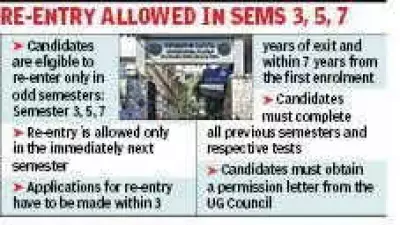
Subsequently, the UGC introduced a new postgraduate curriculum and credit framework focused on flexibility and mobility. The framework removes discipline-specific prerequisites for entry into one-year or two-year PG courses and allows students in two-year programmes to exit after the first year.
It proposes a two-year PG programme with a research component for graduates of three-year bachelor’s courses, and a one-year PG programme for those completing a four-year bachelor’s degree with honours or research. An integrated five-year bachelor’s/master’s programme has also been recommended.
The framework further emphasises the integration of emerging technologies, innovative pedagogy, and multidisciplinary approaches. It encourages collaboration with stakeholders, including industry and academia, to align curricula with job market needs while fostering critical thinking and global competencies.