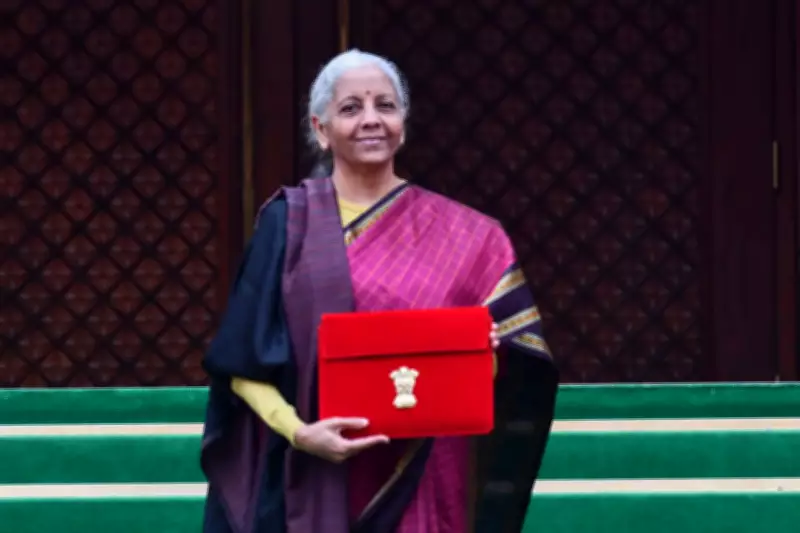
Finance Minister Nirmala Sitharaman presented the Union Budget for the fiscal year 2026-27 in Parliament today, marking a significant shift in how education is positioned within India's economic framework. Rather than treating education as an isolated sector, the budget strategically integrates it into the broader employment conversation, framing it as a critical feeder system for key industries including services, health, tourism, and technology.
Substantial Financial Commitment to Education
The Ministry of Education has been allocated a substantial ₹1,39,285.95 crore for the upcoming financial year, representing an impressive increase of 8.27% compared to the previous year's allocation. This enhanced funding demonstrates the government's commitment to strengthening India's educational infrastructure and capabilities.
Within this overall allocation, school education receives ₹83,561.41 crore, while higher education sees an even more significant boost with ₹55,724.54 crore earmarked for advanced learning institutions and programs. This distribution reflects a balanced approach to strengthening both foundational education and specialized higher learning.

Key Educational Initiatives Announced
High-Powered Committee to Bridge Education and Employment
At the heart of the education strategy lies the proposal to establish a High-Powered Education to Employment and Enterprise Standing Committee. This committee will play a crucial role in recommending measures to position India as a global leader in services, with an ambitious target of achieving a 10% global market share by 2047.
The committee's mandate includes identifying priority areas for growth, employment generation, and export enhancement. It will also assess how emerging technologies, particularly artificial intelligence, are transforming job markets and skill requirements, suggesting necessary course corrections to keep India's workforce competitive.
New National Institute of Design for Eastern India
Addressing the rapid expansion of the design industry and the current shortage of trained professionals, the Finance Minister announced plans to establish a new National Institute of Design in eastern India. This institute will be created through a challenge route mechanism designed to stimulate innovation in design education and development.
University Townships Near Industrial Corridors
The budget proposes supporting states in creating five university townships located near major industrial and logistics corridors. These planned academic zones will host comprehensive educational ecosystems including universities, colleges, research institutions, skill development centers, and residential complexes.
This initiative aims to create integrated learning and work environments that reduce the distance between educational campuses and employment centers while encouraging greater collaboration between academic institutions and industries.
Enhanced Support for Women in STEM
Recognizing the practical challenges faced by women pursuing higher education in science, technology, engineering, and mathematics (STEM) fields, the budget announces capital support and viability gap funding to establish one girls' hostel in every district across the country.
This infrastructure-focused approach addresses the practical barriers created by long study hours and laboratory work requirements, positioning these hostels as a retention and access improvement strategy rather than relying solely on scholarship programs.
Strengthening Astronomy Education Infrastructure
To promote immersive learning in astrophysics and astronomy, the budget proposes establishing or upgrading four telescope infrastructure facilities. These include the National Large Solar Telescope, the National Large Optical Infrared Telescope, the Himalayan Chandra Telescope, and the COSMOS 2 Planetarium.

Regional Medical Hubs with Educational Components
As part of India's push to become a global hub for medical tourism, the budget announces a scheme supporting states in establishing five regional medical hubs through public-private partnerships. These integrated healthcare complexes will combine medical facilities with educational and research components, including AYUSH centers, medical value tourism facilitation centers, and comprehensive diagnostic and rehabilitation infrastructure.
Hospitality and Tourism Skilling Initiatives
The budget proposes upgrading the National Council for Hotel Management and Catering Technology into a National Institute of Hospitality, creating a stronger bridge between academia, industry, and government in the hospitality sector.
Additionally, a pilot scheme will upskill 10,000 tourist guides across 20 iconic sites through a standardized 12-week hybrid training program developed in collaboration with an Indian Institute of Management.
Reduced Tax Burden for Overseas Education
In a significant move acknowledging the scale of outward student mobility, the Finance Minister proposed reducing the tax collected at source rate for education and medical purposes under the Liberalised Remittance Scheme from 5% to 2%. This reduction lowers the upfront financial burden for families funding overseas education or medical treatment.
Broader Implications and Strategic Direction
The comprehensive education announcements in Budget 2026-27 signal a fundamental change in how the government conceptualizes its role in the education sector. The emphasis has shifted from primarily expanding access in early education, where participation rates are already high, to more strategically managing transitions from education to employment, from campuses to industrial corridors, and from academic degrees to services-led work opportunities.
The various committees, hubs, and institutes proposed in the budget serve as coordination mechanisms rather than ends in themselves. Their ultimate success will depend on whether they effectively reduce uncertainty for students and families navigating educational and career pathways, or whether they simply add additional administrative layers to an already complex system.
The budget effectively lays the foundational scaffolding for India's educational transformation. Whether this framework proves robust enough to support the nation's ambitious development goals will be tested in the coming years as India progresses toward its 2047 vision.