The Calcutta High Court delivered a significant ruling on Thursday, stating that a college prospectus or brochure constitutes a formal contractual agreement between students and the educational institution. This decision came as the court upheld a substantial 37.5% mid-course fee increase implemented by Dr BC Roy Engineering College in Durgapur.
Court Clarifies Contractual Nature of Admission
Justice Partha Sarathi Chatterjee made it clear that when students enroll in a college, they effectively accept all terms and conditions outlined in the institution's documentation. The college's prospectus specifically mentioned that the fee structure could be revised periodically based on government decisions.
Students Challenge Fee Increase
A group of BTech students from the 2023-2027 batch filed a legal case challenging what they called the "legality" of a government notification that permitted fee enhancements during their academic program. These students argued they had taken educational loans based on the original fee structure presented at admission time.

They contended that implementing such a significant increase mid-course would create severe financial difficulties. Their legal representative emphasized that the case wasn't about whether colleges have authority to raise fees, but whether such increases should apply to students already enrolled.
Timeline of Events
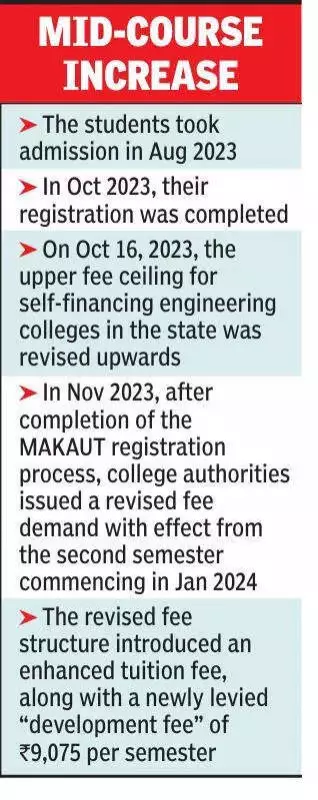
The students began their admission process in August 2023, with registration completing in October 2023. On October 16, 2023, the West Bengal government revised upward the maximum fee ceiling for self-financing engineering colleges across the state.
In November 2023, after the MAKAUT registration process concluded, Dr BC Roy Engineering College issued revised fee demands effective from the second semester starting January 2024. The new structure included both increased tuition fees and a newly introduced "development fee" of Rs 9,075 per semester.
The combined changes resulted in a total fee increase approaching 37.5% compared to what students were originally quoted during their admission process.
Court's Reasoning and Decision
Justice Chatterjee acknowledged the genuine difficulties faced by students but maintained a firm legal position. "The writ jurisdiction cannot be allowed to be invoked to facilitate the avoidance of contractual obligations voluntarily undertaken," the judge stated.
The court further explained that "the occurrence of hardship or inconvenience in the performance of conditions agreed to under a contract affords no justification for non-compliance with the terms of the contract, which the parties had accepted with open eyes."
College's Justification
The college administration defended the fee revision, explaining it marked the first adjustment in nearly seven years for self-financing engineering institutions in West Bengal. They cited substantial increases in operational costs including faculty salaries, infrastructure maintenance, laboratory upgrades, and regulatory compliance requirements.
College representatives argued that the revised fee structure was neither arbitrary nor retrospective. They emphasized it was implemented prospectively according to state government notifications and within the regulatory framework governing self-financing educational institutions.
Broader Implications
This ruling establishes important precedents for educational institutions across India. It clarifies that admission brochures and prospectuses carry contractual weight, and students implicitly accept all stated terms upon enrollment.
The decision also highlights the financial pressures facing educational institutions, particularly self-financing colleges that must balance operational costs with student affordability. While recognizing student difficulties, the court prioritized contractual obligations in its final judgment.