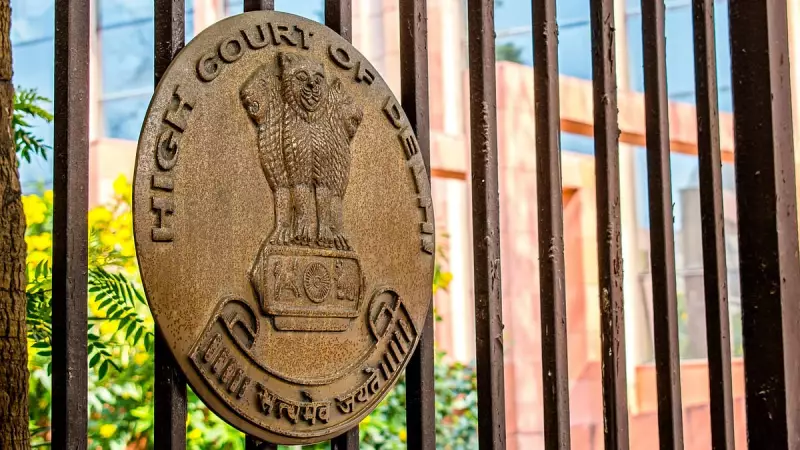
In a significant ruling that underscores the sanctity of academic pursuits, the Delhi High Court has firmly stated that a student's fundamental right to pursue higher education cannot be curtailed without substantial justification. The court emphasized that an admission secured through a transparent and merit-based process carries significant weight.
Court's Stance on Merit-Based Admissions
The bench made these observations while hearing a petition concerning the potential cancellation of a student's admission. The court noted that the petitioner had secured admission purely on merit by participating in an open entrance examination. This process, being competitive and transparent, forms a strong foundation for the student's claim to the academic seat.
The judges articulated that such a legitimately obtained position in an educational institution is not a trivial matter. It represents the culmination of hard work and fair competition. Therefore, any authority seeking to cancel or revoke it must come forward with exceptionally strong reasons.

High Threshold for Cancellation
The ruling clearly sets a high bar for any institution or body that wishes to cancel an admission. The court specified that cancellation is permissible only under valid, genuine, and compelling circumstances. Vague, arbitrary, or minor infractions would not meet this stringent standard.
This directive serves as a protective shield for students against capricious decisions by administrative bodies. It reinforces the principle that once a student has crossed the hurdle of a merit-based selection, their academic journey should not be interrupted without due cause that withstands judicial scrutiny.
Implications for Educational Institutions
The judgment, delivered on 12 January 2026, has immediate implications for universities, colleges, and admission authorities across the capital and potentially the country. It mandates a more rigorous and evidence-based approach before any decision to oust a student is taken.
This precedent strengthens the legal framework around educational rights in India. It aligns with the broader constitutional vision of promoting education and protecting citizens' rights. The court's message is unambiguous: the path to knowledge must be kept clear and fair, and barriers can only be erected for the most serious of reasons.
By prioritizing the student's right to education, the Delhi High Court has reaffirmed the value society places on learning and equitable opportunity. This decision is likely to be cited in future cases where the rights of students are pitted against administrative authority.