Maharashtra CM Stresses Action Over Historical Pride at Education Summit
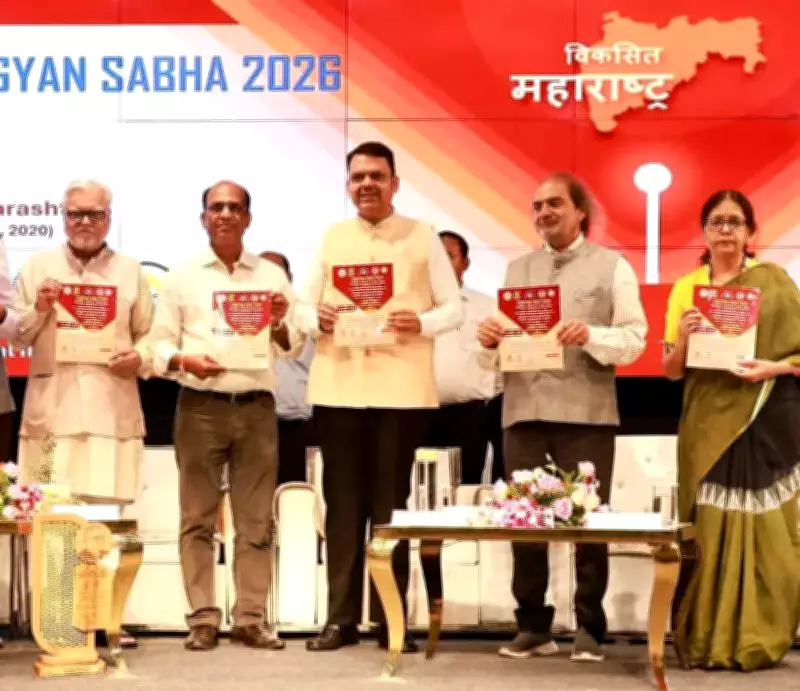
Nagpur: Maharashtra Chief Minister Devendra Fadnavis delivered a compelling address at the inaugural session of the Maharashtra Gyan Sabha 2026, held at the Visvesvaraya National Institute of Technology (VNIT). He asserted that the nation cannot achieve greatness solely by celebrating its illustrious past, urging a forward-looking approach to education and development.
Beyond Historical Glory: Embracing Present and Future Challenges
"We often proclaim with immense pride that our history has been glorious," Fadnavis remarked. "When the world had not even conceptualized universities, we had already established renowned institutions like Nalanda, Takshashila, and Vikramashila. However, repeated invasions severely damaged these centers, and subsequent educational models rendered our traditional system nearly obsolete."
He emphasized a critical shift in perspective: "At the same time, we cannot become great merely by talking about history. To achieve true greatness, we must confront the challenges of the present and the future alongside our historical legacy."

New Education Policy: Indianising Global Knowledge and Globalising Indian Wisdom
The Chief Minister highlighted that the core objective of the New Education Policy (NEP) is the Indianisation of global knowledge and the globalisation of Indian knowledge. He pointed out the unprecedented pace of global progress, noting that while the first industrial revolution began in 1760 and the next three unfolded over nearly 250 years, the world has witnessed three major industrial revolutions in just the past 15 years.
"Ignoring this rapid pace of change could leave us behind," Fadnavis warned. He underscored the significant role Indians are playing in advancing artificial intelligence and deep technology, stressing the urgent need to build an education system that seamlessly integrates global and Indian knowledge systems.
Technological Transformation and Employment Outlook
Fadnavis provided a stark forecast regarding the job market, stating that nearly 60% of jobs are expected to undergo transformation within the next 1,000 days due to rapid advancements in AI and deep tech. However, he offered reassurance, drawing a parallel with the computer revolution.
"Similar concerns about large-scale unemployment were raised during the computer revolution," he explained. "Yet, India successfully established a formidable presence in that sector. This technological shift does not necessarily equate to widespread job loss but rather a transformation of roles."
He also announced a significant government initiative: "The government is developing an EduCity in Navi Mumbai, where students will have access to foreign university education at affordable costs, further bridging global educational gaps."
Experts Advocate Qualitative Education for a Developed India
The conference, jointly organized by Nagpur University, Gondwana University, the Indian Institute of Management (IIM) Nagpur, and Shiksha Sanskriti Utthan Nyas, featured a dedicated session where experts unanimously stressed that India could achieve its goal of becoming a developed nation through qualitative changes in education.
Chaired by Shashikala Wanjari, the session focused on academic transformation under the National Education Policy 2020. Speakers included Ujjwala Chakradeo, Vilas Sapkal, Dr. Prashant Joshi, Prashant Gupta, and A. Vinod, with moderation by Shamrao Koreti.
Key recommendations from the expert panel included:

- Institutional Excellence and Governance Reforms: Speakers highlighted these as fundamental to educational transformation.
- Value-Based Education: Ujjwala Chakradeo emphasized the integration of compassion and moral values into the curriculum.
- Regulatory Framework: Vilas Sapkal advocated for "light but tight" regulation to foster innovation while maintaining standards.
- Ethical Foundation: Dr. Prashant Joshi stressed the importance of ethical decision-making in academia.
- Core Pillars: Prashant Gupta identified education, training, and research as the essential pillars for national development.
Shashikala Wanjari underlined the necessity of holistic development and transparency, noting that Maharashtra has been making steady progress in higher education reforms.
Distinguished Gathering
The inaugural function was attended by several dignitaries, including National Secretary of Shiksha Sanskriti Utthan Nyas Atul Kothari, Secretary to the Governor Prashant Narnavare, IIM-Nagpur Director Bhimraya Metri, Nagpur University Vice-Chancellor Manali Kshirsagar, Gondwana University Vice-Chancellor Prashant Bokare, VNIT Board of Governors Chairman Madabhushi Madan Gopal, VNIT Director Premlal Patel, and industrialist Ravneet Khurana.
The Maharashtra Gyan Sabha 2026 stands as a significant platform, aligning with the national vision to reshape India's educational landscape, blending its rich heritage with the demands of a rapidly evolving global future.