Government Vows No Misuse of UGC Equity Regulations Despite Growing Protests
The Union government has firmly asserted that the recently introduced UGC regulations will not be misused and will not lead to any form of discrimination, even as students across various states continue to hold protests, expressing fears that these rules could potentially cause campus chaos. This assurance comes in the wake of escalating tensions and political fallout surrounding the new guidelines.
Political Resignation and Ministerial Assurance
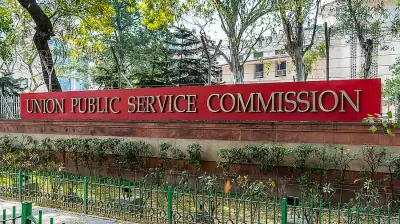
In a significant development, a BJP Mahila Morcha office bearer in Uttar Pradesh, Shashi Tomar, resigned from her post, citing deep hurt over the decision to implement these regulations. In her letter to the party's Firozabad district unit chief, Uday Pratap Singh, Tomar explicitly stated that she does not endorse the Promotion of Equity in Higher Education Institutions Regulations, 2026 issued by the University Grants Commission (UGC).
Amidst these protests, Union Education Minister Dharmendra Pradhan stepped forward on Tuesday to provide reassurance. He emphasized that there would be no discrimination against anyone and that the regulations would not be exploited. "I want to humbly assure everyone, no one is going to face any harassment, there will be no discrimination and no one will have the right to misuse the regulation in the name of discrimination," Pradhan stated. He further added that all actions, whether by the UGC, union, or state governments, would remain within the constitutional framework.

Expanded Scope and Mandatory Committees
The new UGC regulations, which replace the largely advisory 2012 norms, significantly broaden the anti-discrimination framework. A key change is the explicit inclusion of Other Backward Classes (OBCs) alongside Scheduled Castes and Scheduled Tribes under the ambit of protection, a move that has sparked sharp reactions in academic and political circles.
Notified on January 13, these regulations mandate that all higher education institutions establish equity committees to investigate discrimination complaints and promote equity. These committees must include representatives from OBCs, SCs, STs, persons with disabilities, and women, ensuring diverse participation in addressing grievances.
Legal Challenges and Supportive Voices
The regulations have also led to legal action, with a plea filed in the Supreme Court challenging them. The petition alleges that the UGC has adopted a non-inclusionary definition of caste-based discrimination and excludes certain categories from institutional protection. It urges the court to restrain enforcement and redefine discrimination in a caste-neutral and constitutionally-compliant manner.
Conversely, the Left-backed All India Students' Association has released a statement supporting the 2026 regulations, welcoming the inclusion of OBCs. However, they pointed out that representation in equity committees remains low, vague, and inadequately defined, and the regulations define discrimination in broad terms without concrete examples.
Background and Related Incidents
The UGC document was issued following a Supreme Court directive during a hearing on a plea by the mothers of Rohith Vemula and Payal Tadvi, who questioned the implementation of the 2012 regulations. Vemula, a PhD scholar at the University of Hyderabad, died by suicide in 2016 after alleged caste-based harassment, while Tadvi, a resident doctor in Mumbai, took her own life in 2019 following reported casteist slurs.
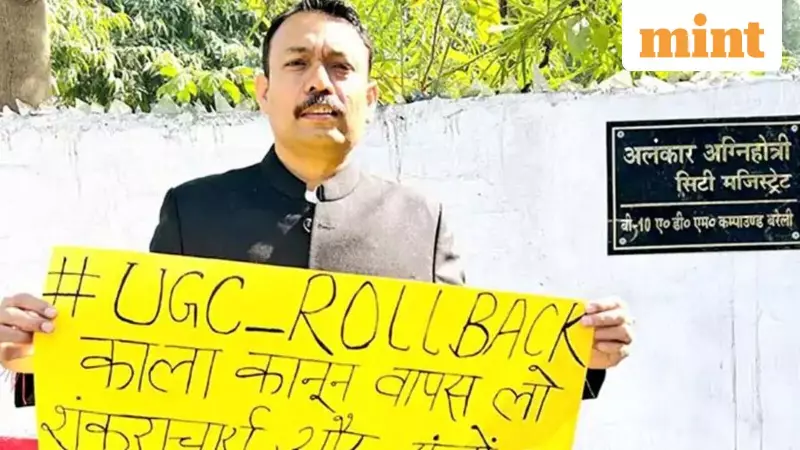
In a related incident, suspended Bareilly City Magistrate Alankar Agnihotri staged a dharna, alleging a conspiracy against him after his suspension by the Uttar Pradesh government. He was suspended on charges of indiscipline following his resignation in protest against government policies, including the new UGC rules, and has been attached to the Shamli district magistrate's office.
As the debate intensifies, the government's assurances aim to quell fears, but the widespread protests and legal challenges highlight the ongoing controversy over these equity regulations in India's higher education landscape.