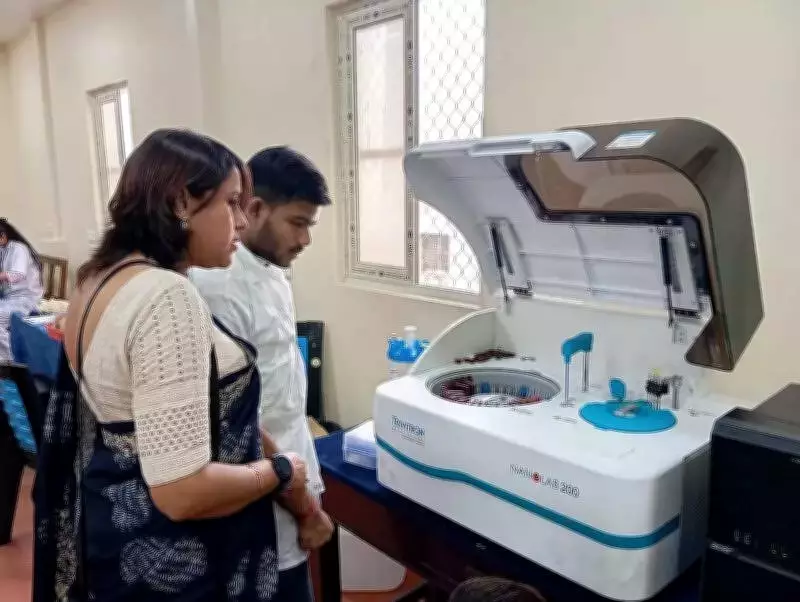
In a significant development for educational and healthcare innovation, Surendranath College in Kolkata inaugurated an advanced 'automated blood analyzer' on Friday. This initiative represents a major step forward in the college's startup program, blending academic learning with practical health services.
Comprehensive Health Services for Campus Community
The newly installed machine is equipped to conduct approximately 48 types of comprehensive blood investigations. Initially, students from the department of physiology will utilize this technology to perform blood tests and provide primary health check-ups for the college's students, teachers, and staff members.
Expanding Reach to Local Community
College principal Indranil Kar highlighted that this initiative is unique for a state-aided institution affiliated with the University of Calcutta. "We are providing a health card to everyone at the college and will soon extend this service to people in our locality as well," Kar explained. The health cards contain questionnaires that will be analyzed by assigned students, creating valuable data for future research programs.

Educational and Entrepreneurial Benefits
Faruk Ahamed, head of the physiology department, emphasized that this hands-on experience will encourage students to develop their own startups. The initiative directly links practical work with course curriculum, giving students real-world skills in medical technology and healthcare management.
Future Plans and Collaborations
The college has ambitious plans for this program. A specific certificate program in phlebotomy will be launched in collaboration with a private research organization. Additionally, the department plans to pursue research programs based on data collected through health screenings, creating opportunities for academic advancement and community health improvement.
This innovative approach demonstrates how educational institutions can serve dual purposes: providing essential health services while creating entrepreneurial opportunities for students through practical, curriculum-linked experiences.