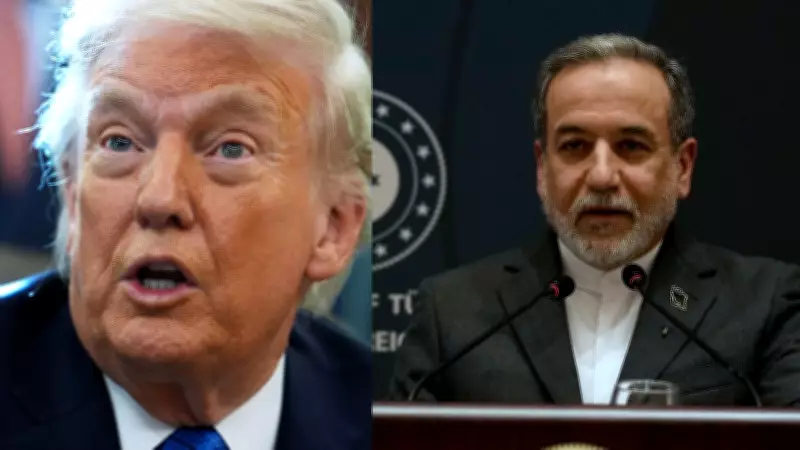
Iran-US Tensions Live Updates: Iran Open to Talks but Firm on Missiles
In a significant development amid escalating tensions, Iran has expressed willingness to engage in nuclear negotiations with the United States, while firmly rejecting any discussions on its missile capabilities. Iranian Foreign Minister Abbas Araghchi made this announcement on Friday, highlighting a delicate diplomatic stance as military activities intensify in the region.
Iran's Stance on Nuclear Talks and Missile Programme
Speaking from Istanbul, Abbas Araghchi emphasized that Iran is open to participating in fair and just nuclear talks with the United States. However, he categorically ruled out any negotiations concerning Iran's missile programme or defence systems. Araghchi clarified that there are currently no scheduled talks with Washington and reiterated that Iran's nuclear activities are solely for peaceful purposes, aimed at energy and medical research.
This position comes as tensions between Iran and the US have been rising, with both nations accusing each other of aggressive posturing. Araghchi's comments underscore Iran's commitment to maintaining its sovereignty over defence matters, even as it seeks to de-escalate nuclear-related conflicts through dialogue.

US Response and Trump's Remarks
In response, US President Donald Trump stated that Iran does want to make a deal to avoid potential military confrontation. Speaking at the White House, Trump noted that time is running out for Iran to agree to a new nuclear agreement, though he did not specify any deadlines. This remark reflects the ongoing pressure tactics employed by the US, which has increased its military presence near Iran in recent weeks.
Trump's assertion suggests a belief that diplomatic avenues remain viable, despite the lack of formal talks. The US administration continues to monitor Iran's nuclear programme closely, with concerns that it could be diverted for weapon development, a claim Iran consistently denies.
Escalating Military Activities and Regional Dynamics
The diplomatic stalemate has been accompanied by heightened military exercises from both sides. The United States has announced plans for multi-day air drills in the region, while Iran is set to conduct live-fire exercises in the Strait of Hormuz, a critical global shipping route for oil and gas. These actions signal a potential risk of miscalculation or accidental conflict, further complicating the path to peaceful resolution.
International actors are also stepping in to mediate. Turkey has offered to facilitate talks between Washington and Tehran, and Russia has stated it is closely monitoring the situation. These efforts highlight the global implications of the Iran-US standoff, which affects not only regional stability but also international energy markets and security frameworks.
Background and Context of the Nuclear Standoff
The current tensions stem from long-standing disputes over Iran's nuclear programme. Iran maintains that its nuclear activities are for civilian use, such as power generation and medical isotopes, but Western powers, led by the US, fear they could be used to develop nuclear weapons. This disagreement has led to a series of sanctions and diplomatic efforts, including the now-defunct Joint Comprehensive Plan of Action (JCPOA), from which the US withdrew in 2018.
Recent weeks have seen a breakdown in diplomatic channels, with both sides adopting more assertive military postures. The situation is further exacerbated by geopolitical rivalries in the Middle East, where Iran's influence is a point of contention for the US and its allies.
Implications for Global Politics and India
For India, the Iran-US tensions hold significant relevance due to energy security and regional stability concerns. India imports a substantial amount of oil from the Middle East, and any disruption in the Strait of Hormuz could impact global prices and supply chains. Additionally, India has historical ties with Iran and strategic interests in the region, making it a stakeholder in peaceful resolutions.

The Express Global Desk continues to provide authoritative coverage on such international developments, ensuring readers receive verified and context-driven news. As the situation evolves, staying informed through reliable sources is crucial for understanding the complex dynamics at play.