Madhya Pradesh's 'Happiness Cell' Initiative Sparks Controversy Amid Infrastructure Woes
The Madhya Pradesh government's ambitious plan to establish 'Happiness Cells' across all state-run colleges has encountered significant opposition from students and faculty members. Critics argue that the initiative, designed to address student stress through counseling, peer interaction, and activities like yoga, cannot succeed in institutions grappling with severe infrastructure deficiencies and acute teacher shortages.
Infrastructure Crisis Undermines Mental Health Efforts
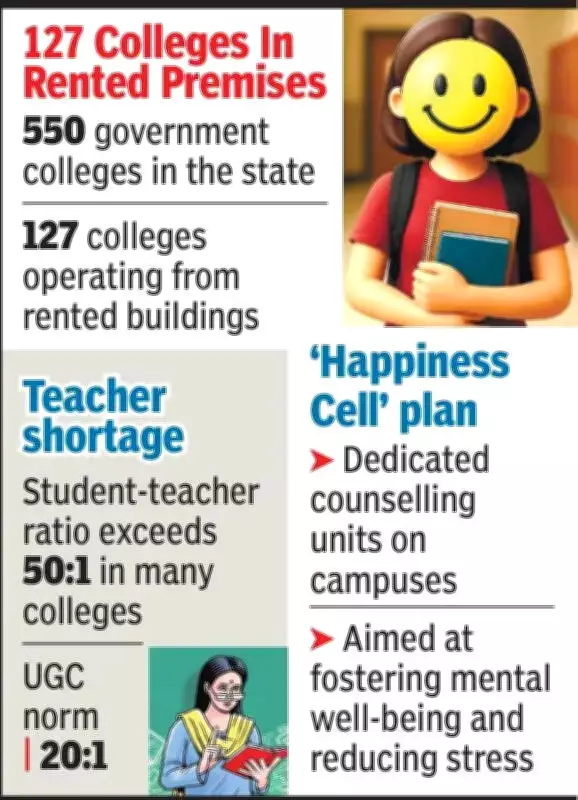
According to official state data, a staggering 127 out of 550 government colleges—representing over a quarter of the total—are currently operating from temporary rented spaces without owning permanent land. More than 25 of these institutions have yet to secure land for permanent campuses. This lack of basic facilities has created a hostile learning environment where students struggle with fundamental amenities.
"How can a 'Happiness Cell' spark joy when we're studying in rented sheds with missing basic facilities?" questioned Prarthna Shukla, a third-year arts student at a local college. Her institution exemplifies the widespread problem, lacking essential amenities such as libraries, laboratories, and facing faculty vacancy rates approaching 40%.

Teacher Shortages Compound Educational Challenges
The student-teacher ratio in many Madhya Pradesh government colleges has reached alarming levels, frequently exceeding 50:1—more than double the University Grants Commission's recommended norm of 20:1. This severe staffing crisis directly impacts educational quality and student support systems.
"We're battling for basics like desks and electricity, let alone mental health support," revealed a senior teaching faculty member who requested anonymity. "Without addressing infrastructure, this is just window dressing."
Government Defends Forward-Looking Initiative
State officials have vigorously defended the Happiness Cell program, describing it as a progressive step toward strengthening emotional health alongside academic development. "Happiness is the foundation of learning," declared an official during a recent press conference. "These cells will empower our youth to thrive academically and emotionally."
Praveen Gangrade, director of Rajya Anand Santshan (the state's happiness department), elaborated on the program's philosophy: "The Happiness Cell aims to teach students what inner happiness means in today's high-pressure life. It seeks to graduate a generation that smiles through storms—not just survives them."
Student Unions Demand Infrastructure Priority
Student organizations have joined the criticism, calling for immediate infrastructure improvements before implementing psychological support programs. "Redirect funds from fancy cells to fixing our colleges first," demanded Ravi Kumar, state vice-president of the National Students' Union of India (NSUI).
Government officials have responded by promising phased infrastructure upgrades alongside the Happiness Cell rollout. However, with the academic year already underway, skepticism continues to grow across campuses.
The Fundamental Question Remains Unanswered
As dissent grows louder across Madhya Pradesh's educational institutions, a crucial question persists: Can Happiness Cells genuinely ignite joy and emotional well-being in crumbling, under-resourced college halls? For now, this answer eludes the state's frustrated campuses, where students and faculty continue to prioritize basic educational infrastructure over psychological support programs.
The controversy highlights the tension between aspirational mental health initiatives and ground-level educational realities, raising important questions about resource allocation and educational priorities in India's state-run higher education system.