Nagpur University VC Advocates for Concrete Action to Transform Education in Tribal Regions
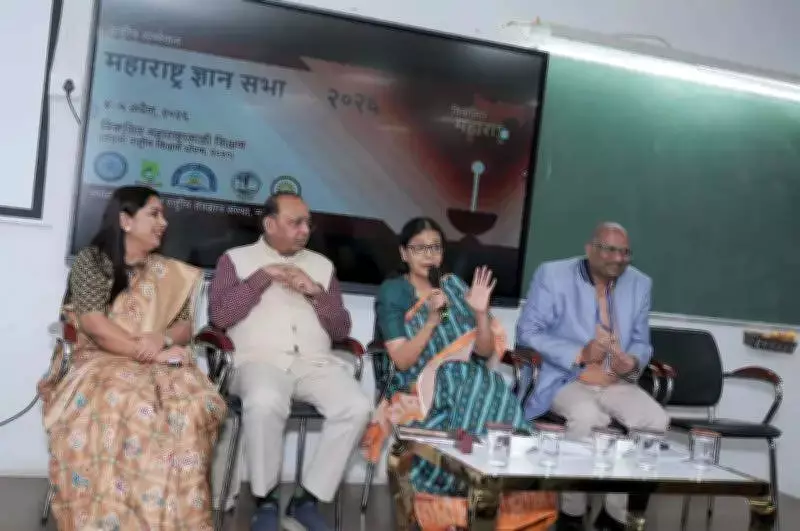
Nagpur University Vice-Chancellor Manali Kshirsagar has declared that a focused action plan combined with collective efforts is essential for driving positive change in education and social development. She made these remarks during the Maharashtra Gyan Sabha session on inclusive education in tribal and remote areas, which was held at VNIT on Sunday.
Implementation Gaps Persist Despite Multiple Policies
Kshirsagar stressed that despite the existence of numerous policies, significant gaps in implementation continue to adversely affect educational outcomes. These gaps are particularly evident in critical areas such as access to education and persistently high dropout rates among students from marginalized communities.
Chairing the session, the Vice-Chancellor highlighted the urgent need for a participatory dialogue that actively involves policymakers, educators, and local communities. She emphasized that understanding the local language, culture, and ground realities is fundamental to designing effective educational interventions.

Infrastructure and Resource Challenges in Remote Areas
With a substantial population in remote regions still lacking basic infrastructure, Kshirsagar pointed out that challenges such as poor connectivity and significant resource gaps remain persistent obstacles. Experts at the session called for a strategic mix of technology-driven solutions and field-level interventions to address these issues comprehensively.
Speakers also emphasized the importance of aligning research, policy, and grassroots efforts to ensure inclusive and sustainable development across Maharashtra's tribal landscapes.
National and Academic Leaders Weigh In on Educational Reform
Atul Kothari, National Secretary of Shiksha Sanskriti Utthan Nyas, advocated for building ideal educational institutions through collective efforts, which could serve as benchmarks for broader reform. He stressed the necessity of deriving actionable outcomes from policy discussions to translate ideas into tangible improvements.
Sanjay Kaushik, Vice-Chancellor of GG University (Gurugram University), asserted that coordinated efforts by the government, educational institutions, and teachers have the potential to position India as a global education hub.
Integrating Education with Local Economic Needs
Agriculture expert Charudatta Mayee highlighted the crucial role of linking higher education with sectors such as agriculture, MSMEs, and local needs. He argued that this integration is vital for achieving holistic rural development and effectively reducing inequality in tribal and remote areas.
Shifting Towards India-Centric Educational Frameworks
Marathi University Vice-Chancellor Avinash Avalgavkar called for a significant shift from Eurocentric to India-centric education. He emphasized that promoting Indian languages is essential not only for ensuring wider access to education but also for preserving the rich cultural roots of the nation's diverse communities.
The session concluded with a consensus on the need for immediate, collaborative action to bridge the educational divide and foster inclusive growth in Maharashtra's most underserved regions.