Nalanda and the Birth of Global Education: Why Abhay K's Book Matters Now
In an era where education systems worldwide grapple with questions of relevance, inclusivity, and purpose, Abhay K's remarkable book Nalanda: How It Changed the World arrives not merely as a historical account but as a profound restoration of memory. This work quietly yet confidently reminds us that truth does not require amplification—it simply needs to be remembered and reclaimed.
The Diplomat-Poet's Perspective
Abhay K brings a unique multidimensional perspective to this exploration, writing not just as a historian but as a diplomat, poet, and citizen of multiple worlds. As a career member of the Indian Foreign Service who has represented India across continents, he possesses an intimate understanding of international relations, cultural exchanges, and the subtle dynamics that shape global discourse. This diplomatic training infuses the book with a calm authority that recognizes how history, much like diplomacy, involves both continuity and conflict.
The book's sustained presence on bestseller lists represents more than literary success—it signifies a quiet referendum on a collective hunger we may not have fully recognized. This hunger seeks to reposition India not as an appendix to Western modernity but as a genuine origin point of global intelligence and educational innovation.

Nalanda: Beyond Nostalgia to Reclamation
Abhay K presents Nalanda not as an object of nostalgia or grievance but as an active reclamation of educational heritage. Long before Western institutions perfected the university model with quadrangles, endowments, and Latin mottos, Nalanda functioned as a vibrant, breathing ecosystem of intellectual exchange. Philosophy, astronomy, medicine, mathematics, linguistics, logic, and metaphysics existed not in isolated silos but as interconnected conversations.
Students journeyed from Korea, China, Tibet, and Southeast Asia—drawn not by imperial force but by academic excellence. Knowledge traveled outward not as conquest but as communion, creating what might be considered the world's first truly global campus.
Ancient Solutions to Modern Questions
One of Abhay K's greatest achievements is making this ancient institution feel remarkably present rather than distant. Readers discover that questions we consider distinctly modern—interdisciplinary learning, global campuses, plural epistemologies—were being actively explored and answered in Bihar more than a millennium ago.
Nalanda was not merely an institution; it represented a method of thinking that rejected dogma, welcomed rigorous debate, and understood education as fundamentally moral in character. This relevance feels particularly timely as an international conference unfolds at the revived Nalanda campus, hosted by the Observer Research Foundation, with fresh investment flowing from Korea and Japan—countries whose ancestors once sent their finest minds to Nalanda's libraries.
Architecture as Educational Ideology
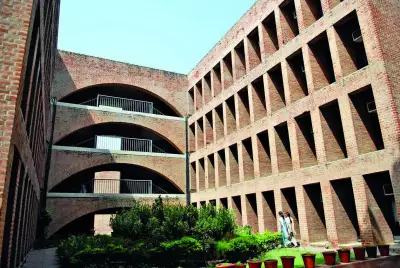
The book beautifully explores how architecture, like education, represents ideology made visible. Nalanda's original structures were designed for contemplation, peripatetic thought, and debate under open skies. Abhay K transforms bricks and manuscripts into powerful metaphors, framing the famed libraries—said to have burned for months when destroyed—not simply as historical loss but as enduring warning: when knowledge systems are erased, humanity's future becomes impoverished.
One of the book's most quietly devastating insights reveals how thoroughly Western, Abrahamic educational models—with their hierarchies, canonization of certain knowledge forms, and exclusion of others—pushed Nalanda to the margins of global memory. This marginalization wasn't always malicious; often it was simply convenient. Yet convenience, repeated across centuries, creates cultural amnesia that Abhay K corrects with grace rather than grievance.

Prose That Invites Reflection
Abhay K's writing carries rhythm without rhetoric, offering alliteration without excess and scholarship without sterility. Memorable lines feel destined for marginal notes, social media captions, and slow rereading: Nalanda as "a lighthouse without walls" and knowledge as "a pilgrimage, not a possession." These are not empty slogans but genuine invitations to reconsider our educational paradigms.
Essential Reading for Our Educational Future
What makes this book truly essential extends beyond its historical revelations to its implications for our educational future. In an era obsessed with rankings, returns on investment, and market-ready graduates, Nalanda reminds us that education was once fundamentally about liberation—of the mind, of inquiry, of empathy. While livelihood certainly mattered, so did life itself in its fullest sense.
By the book's conclusion, readers experience a subtle but significant shift in perspective. The world feels wider, India feels older and deeper, and there emerges a sense of intellectual confidence rather than apology. One begins to understand that Nalanda was never truly lost—it was simply waiting to be remembered properly.
The lingering aftertaste isn't one of pride or anger but of perspective and agency—a growing conviction that the future of education might yet learn something profound from its most generous past. This book deserves reading not because it's a bestseller (though it richly merits that status) but because it restores a missing chapter in our collective imagination. Nalanda didn't just change the world once; if we allow its lessons to guide us, it might well do so again.