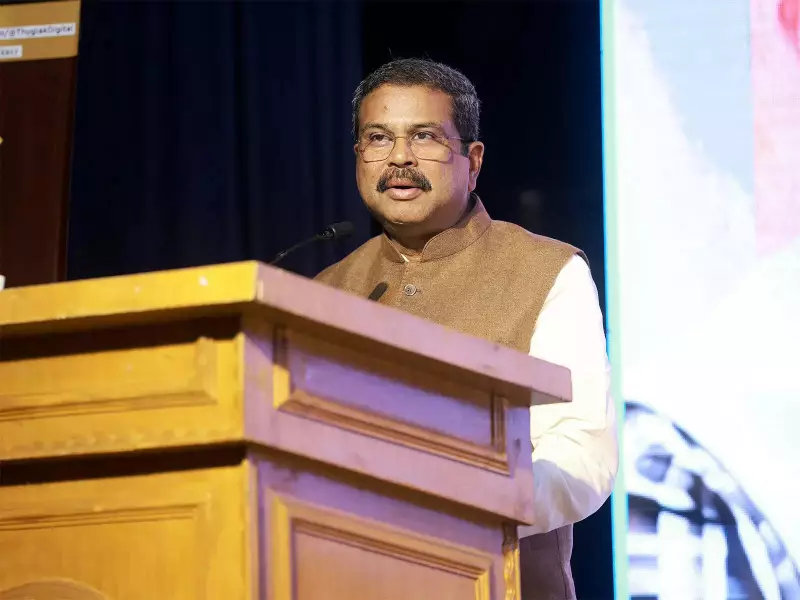
Union Education Minister Dharmendra Pradhan on Tuesday provided firm assurances that the recently introduced University Grants Commission (UGC) guidelines, designed to combat caste-based discrimination within educational campuses, will not be subject to misuse. The minister emphasized the collective responsibility of regulatory bodies and governments in upholding constitutional principles.
Constitutional Framework and Supreme Court Oversight
"I would like to assure everyone that no misuse of the law in the name of discrimination will be allowed. Ensuring this is the responsibility of the UGC, the Government of India, and state governments. All actions will be carried out within the ambit of the Constitution. This matter is also under the supervision of the Supreme Court, and I assure you that there will be no discrimination," Pradhan stated clearly during his interaction with reporters in New Delhi.
Controversial Regulations and Widespread Criticism
Notified on January 13, the Promotion of Equity in Higher Education Institutions Regulations, 2026, have sparked significant debate and drawn widespread criticism from students belonging to the general category. These students argue that the regulatory framework, while intended to protect marginalized groups, could potentially lead to discrimination against them, creating an imbalance in grievance redressal mechanisms.

Under the new regulations, the UGC has directed higher education institutions to establish special committees, dedicated helplines, and monitoring teams specifically to handle complaints from Scheduled Caste (SC), Scheduled Tribe (ST), and Other Backward Class (OBC) students. This targeted approach has raised concerns about inclusivity and equal protection for all student communities.
Supreme Court Petition Challenges Regulatory Scope
Meanwhile, a significant legal challenge has emerged with a plea filed in the Supreme Court. The petitioner alleges that a specific provision within the policy is "non-inclusionary" and fails to adequately protect students and faculty members outside the reserved categories, thereby creating a protection gap.
"By limiting the scope of 'caste-based discrimination' only to SC, ST, and OBC categories, the UGC has effectively denied institutional protection and grievance redressal to individuals belonging to the general or non-reserved categories who may also face harassment or bias based on their caste identity," argued the petitioner, Vineet Jindal, in his submission to the court.
Constitutional Violations Alleged
Jindal further contended that the regulation violates several fundamental rights enshrined in the Indian Constitution. Specifically, he claimed it infringes upon:
- Article 14 – The right to equality before the law and equal protection of laws.
- Article 15(1) – The prohibition of discrimination by the State on grounds of religion, race, caste, sex, or place of birth.
- Article 21 – The right to life and personal liberty, which judicial interpretation has expanded to include the right to live with dignity.
The plea seeks interim directions from the Supreme Court to the Union government and the UGC. It requests that mechanisms established under the regulations—such as Equal Opportunity Centres, Equity Helplines, and Ombudsperson offices—be made accessible to all students on a non-discriminatory basis. This interim measure is sought pending a formal judicial review of the regulation's definitional scope and its alignment with constitutional mandates.
The development highlights the ongoing tension between policies aimed at social justice and the imperative of ensuring equal protection for all citizens, setting the stage for a crucial legal and policy examination in India's higher education sector.