In a landmark decision for India's education sector, the Punjab Cabinet has approved the country's first comprehensive policy to allow private institutions to establish fully digital universities within the state. This pioneering move, sanctioned on Friday, January 10, 2026, is set to revolutionize access to higher education.
A Historic Reform in Higher Education
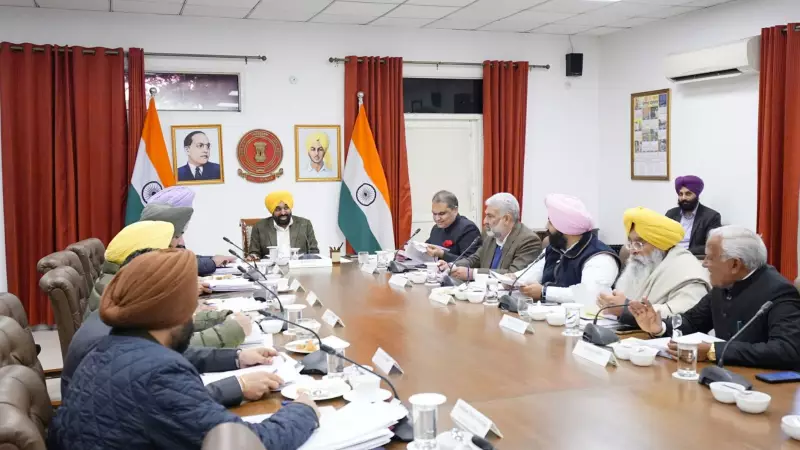
The Punjab Cabinet, meeting under the leadership of Chief Minister Bhagwant Mann, gave its nod to the Punjab Private Digital Open Universities Policy, 2026. Finance Minister Harpal Cheema, briefing the media, hailed the policy as a historic reform designed to regulate and promote private digital open universities offering online and open distance learning (ODL) programmes.
Minister Cheema emphasized that while Tripura has set up a digital university, it was done without an overarching policy framework. "Technically, Punjab has become the first state to provide both a policy and a model in this area," he stated, marking a significant first for India.

Bridging the Gap Between Degrees and Digital Learning
The policy directly addresses a critical disconnect in the current education system. As per an official government statement, millions of Indian youth are building careers by learning from online courses and AI apps, but existing university regulations only recognize physical campuses. This forced students to obtain formal degrees from traditional colleges while acquiring key skills online, creating a substantial gap.
The new policy effectively bridges this divide. Now, students can complete their entire degree from home via mobile or laptop, with the assurance that these qualifications will be legally valid and compliant with AICTE and UGC standards. This is expected to be a major boon for students and working professionals juggling jobs, family, and other commitments.
The government envisions this policy heralding a new era of lifelong learning and upskilling in high-demand fields like IT, Artificial Intelligence, Business, Healthcare, Manufacturing, and Data Science.
Stringent Standards for Quality and Transparency
To ensure quality and deter non-serious players, the policy sets high entry barriers for institutions. Requirements for establishing a digital university include:
- At least 2.5 acres of land.
- State-of-the-art digital infrastructure including content creation studios, IT server rooms, and control rooms.
- A dedicated Learning Management System (LMS) operations centre.
- Tech-enabled call centres and 24x7 student support systems.
- A minimum corpus fund of Rs 20 crore.
Furthermore, to guarantee legal robustness, separate bills will be introduced in the Punjab Assembly for every approved proposal. This legislative route ensures each digital university operates with transparency and a strong legal foundation.
Modelled on successful global institutions like Western Governors University (USA) and Open University Malaysia, the policy aims to build India's most modern higher education ecosystem in Punjab. The government highlights that the digital mode will significantly lower costs by reducing infrastructure needs, leading to more affordable fees and eliminating hidden expenses like commuting, hostel fees, and stationery.
By integrating new-age skills directly into degree programmes, Punjab's policy seeks to position the state as a premier digital learning hub, offering flexible, accessible, and future-ready education to lakhs of students.