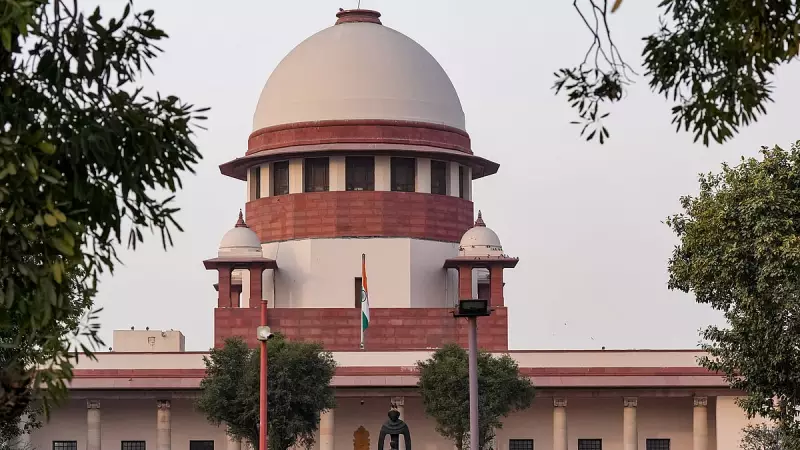
The Supreme Court of India has issued a significant directive to the National Task Force. The court wants the NTF to create detailed standard operating procedures for conducting "well-being audits" in higher education institutions across the country.
Addressing the Crisis of Student Suicides
This move comes as a direct response to the alarming number of student suicides reported from colleges and universities. The bench, comprising Justices J B Pardiwala and R Mahadevan, expressed deep concern over these tragic incidents. They emphasized the urgent need for systematic intervention to protect student mental health.
Immediate Reporting Mandate
In a crucial interim measure, the court has ordered all higher education institutions to report any student suicide or unnatural death immediately to local police authorities. This directive applies to every college and university nationwide without exception.

The justices adopted recommendations previously made by the National Task Force. They recognized that proper documentation and investigation represent essential first steps in understanding and preventing such tragedies.
What Well-being Audits Will Involve
While specific details of the SOPs will be developed by the NTF, legal experts suggest these audits will likely examine multiple aspects of institutional environments:
- Mental health support systems available to students
- Academic pressure and workload management
- Hostel facilities and living conditions
- Counseling services and their accessibility
- Mechanisms for identifying at-risk students
The Supreme Court expects these audits to become regular, structured evaluations rather than one-time inspections. Institutions will need to demonstrate they are creating healthier environments that support student well-being alongside academic achievement.
A National Response to a National Problem
This judicial intervention acknowledges that student suicides constitute a nationwide crisis requiring coordinated action. By tasking the National Task Force with creating uniform guidelines, the court aims to ensure consistent implementation across all states and union territories.
The directive represents a shift toward institutional accountability for student welfare. Higher education institutions can no longer focus solely on academic outcomes while neglecting the psychological well-being of their students.
Legal observers note this order could transform how colleges and universities approach student support services. The forthcoming SOPs will likely establish minimum standards that all institutions must meet, with potential consequences for those failing to comply.
The Supreme Court has given the National Task Force a clear mandate to develop practical, actionable guidelines. These procedures should help institutions identify problems early and implement effective interventions before crises develop.
This judicial direction marks a significant step toward creating safer educational environments. It recognizes that preventing student suicides requires systematic, institution-wide approaches rather than relying solely on individual resilience.