In a significant move to address student nutrition and empower women entrepreneurs, the Tamil Nadu government has announced a major initiative to establish canteens run by women's self-help groups (SHGs) in all government colleges across the state. The project aims to provide quality, home-style food at highly subsidized rates, directly benefiting students from economically weaker sections.
Affordable Meals to Combat Student Hunger
The state plans to roll out these SHG-operated canteens in all 269 government arts and science colleges, engineering colleges, polytechnic colleges, and colleges of education before the commencement of the next academic year. The decision comes after repeated requests from both students and faculty during various training programs. M P Vijayakumar, Vice-Chairman of TANSche (Tamil Nadu State Council for Higher Education), highlighted that many government colleges, especially in remote areas, lack proper canteen facilities, forcing students to skip meals or spend beyond their means at nearby hotels.
The pricing model is designed for extreme affordability. A plate of veg biryani will cost just ₹30, while popular South Indian snacks like bonda, bajji, and vada will be priced at ₹5 per piece. A cup of sundal will be available for ₹10. This pricing is a game-changer for students from poor and marginalized families who often attend classes on an empty stomach.

Leveraging Trained SHGs for Quality Catering
The government is tapping into its vast network of trained women's self-help groups to execute this plan. "We have strong women-run self-help groups trained in catering services. So, the state government is establishing SHG canteens in government colleges," explained Vijayakumar. The initiative not only solves the food accessibility issue but also creates a sustainable livelihood opportunity for thousands of women associated with these SHGs.
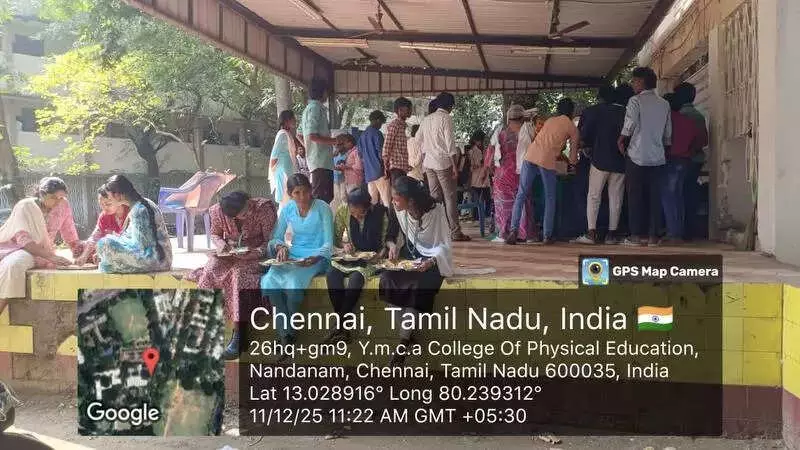
Some colleges with existing canteen contracts will transition to the SHG model once their current agreements conclude. An early success story is the government arts college in Nandanam, Chennai, which recently got one of the first SHG-run canteens. A professor from the college praised the initiative, stating, "The SHG canteen serves home-cooked food at affordable rates. Their veg-biryani is a favourite among students."
Future Expansion and Broader Impact
The announcement was formally made by Deputy Chief Minister Udhayanidhi Stalin, underlining the administration's commitment to student welfare and women's empowerment. The move has been welcomed widely, with educators already calling for its expansion. "State government should consider extending SHG canteens to government-aided and private colleges, where many students attend classes on an empty stomach," suggested a professor, pointing to the widespread nature of the problem beyond purely government institutions.
This holistic policy addresses multiple Sustainable Development Goals: it ensures food security for students, promotes gender equality by economically empowering women's collectives, and supports good health and well-being. By the next academic year, the landscape of campus dining in Tamil Nadu's higher education institutions is set for a nutritious and equitable transformation.