UK Universities Target India's Vast Youth Market with New Campuses
India boasts the world's largest youth population, with approximately 367 million individuals aged between 15 and 29. This demographic powerhouse is driving unprecedented growth in the education sector, which currently serves around 40 million students nationwide. However, the domestic system faces significant challenges in accommodating this surge, particularly at the higher education level.
The Admission Crunch and International Opportunity
While many Indian students pursue education abroad, millions more confront a highly competitive domestic admission landscape. According to Aritra Ghoshal of OneStep Global, an organization facilitating foreign university entry into India, "Eleven million students complete Grade 12 each year, with roughly 1.5-1.7 million falling within the top academic bracket. India's top-tier institutions admit only about 200,000 of them annually."
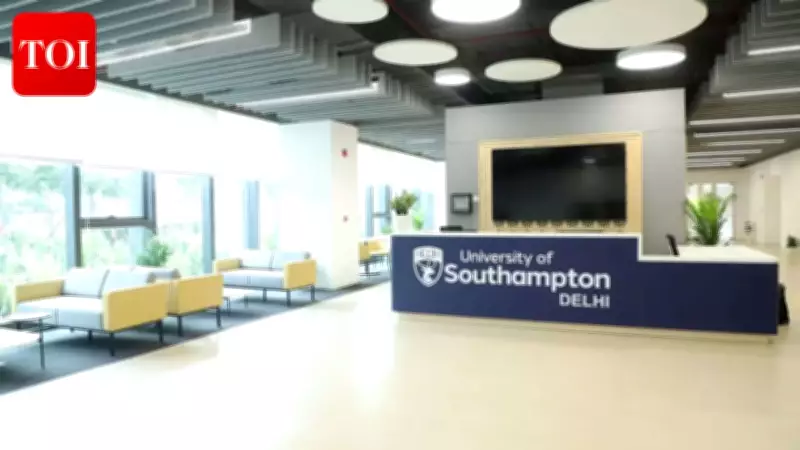
This admission gap has created a substantial market opportunity that UK universities are now aggressively pursuing. Following announcements in 2025 during Sir Keir Starmer's visit, nine British institutions are establishing campuses in India. The list includes the University of York, University of Aberdeen, University of Bristol, University of Liverpool, Queen's University Belfast, and Coventry University. The University of Southampton has already opened a campus in Delhi, while York is setting up in Mumbai, both focusing on business, management, and engineering programs.

Market Potential and Affordability Considerations
British government figures reveal that India currently has 40 million university students but will require at least 70 million places by 2035. This projects an incremental market opportunity of 25-30 million seats for British universities over the coming decade. From an affordability perspective, Ghoshal estimates that "four to five million students can realistically consider degree programmes priced above £10,000 per year."
This target demographic represents the aspirational upper middle class rather than the mass market, yet it constitutes a significant opportunity for UK institutions. The regulatory pathway opened in 2020 when India's National Education Policy permitted foreign universities to operate in the country, with specific rules notified in 2023.
Pricing Strategy and Quality Proposition
Lindsay Oades, provost of the University of York, which is establishing its campus in Mumbai's Powai area, indicates that fees will be approximately 50% lower than studying at the university's UK campus. While still more expensive than many private Indian universities, Oades emphasizes a "quality-justification" for the premium, noting that institutions like York adhere to global standards and focus on employability skills through industry partnerships.
Changing Student Preferences and Immigration Factors
The critical question remains whether these offerings will convince Indian students to forego traditional study abroad experiences. For generations, Indian families have saved and borrowed extensively to send children overseas, primarily for international work exposure and enhanced employment prospects.
Ankita Kejriwal, whose son Vivaan plans to study finance and economics in the US next year, told the BBC that most of his peers are opting abroad primarily for international exposure. However, Ghoshal suggests that tighter immigration policies in countries like the US might diminish the appeal of moving overseas. "For those seeking brand value with lower financial and visa exposure, it may be an efficient alternative," he explained.
Growth Trajectory and Implementation Challenges
Initial enrollment is expected to be modest, likely in the low hundreds during the early years. Ghoshal anticipates growth over a five-to-seven-year horizon as alumni outcomes become visible and employer acceptance stabilizes, noting that enrollment decisions in India are increasingly outcome-driven.

These campuses face the dual challenge of maintaining UK academic standards while operating at Indian price points, making program execution and infrastructure development particularly demanding. However, the potential rewards are enormous: Indian students spent $5.3 billion studying at British campuses abroad in 2024 alone, suggesting billion-dollar returns for successful implementations.
The entry of UK universities into India represents a transformative development in global education, potentially reshaping how millions of Indian students access international-quality education while remaining closer to home.