University of Wisconsin President Resists Board's Push for Removal Without Explanation
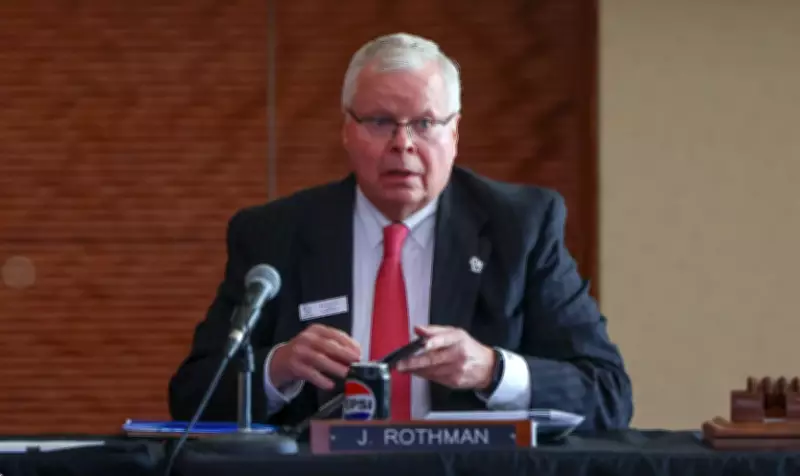
Leadership transitions in higher education institutions do not always commence with public declarations. Many originate in confidential meetings and private discussions, only emerging into public view through leaked documents or correspondence. This pattern describes the unfolding situation involving Jay Rothman, the president of the University of Wisconsin System, who is currently resisting attempts by members of the board of regents to compel his retirement or face potential removal from office.
The developments gained public attention after letters exchanged between Rothman and regents were obtained by the Associated Press, revealing a contentious behind-the-scenes struggle over leadership at one of America's largest public university systems.
The Role and Responsibilities of the Universities of Wisconsin President
The president of the Universities of Wisconsin oversees an extensive educational network serving approximately 165,000 students across the state. This comprehensive system includes the flagship campus in Madison, twelve additional universities, and multiple branch campuses that extend educational access throughout Wisconsin.

This leadership position reports directly to an eighteen-member board of regents while supervising campus chancellors, vice presidents, and administrative operations throughout the system. The president occupies a central role in critical decisions regarding funding allocations, staffing matters, and system-wide policy development that affects thousands of students, faculty, and staff members.
Jay Rothman represents the eighth individual to hold this presidential position since the system's creation by the state legislature in 1971, placing him within a lineage of leaders who have shaped Wisconsin's public higher education landscape for over five decades.
Unanswered Questions Surrounding the Removal Effort
The campaign to remove President Rothman has proceeded without public explanation or justification, transforming what might have been a routine leadership transition into a significant controversy regarding governance and accountability within the university system.
In a March 26 letter addressed to the board president, Rothman expressed frustration at the lack of substantive reasons provided for what appears to be diminished confidence in his leadership. According to the Associated Press, Rothman wrote: "When I asked you to articulate reasons for the Board's conclusion and apparent lack of confidence in me, you merely noted that each Regent has his or her own perspective on the matter. You did not provide any tangible reasons for the Board's determination."
This absence of clear justification has elevated the situation beyond a simple personnel matter, raising fundamental questions about how leadership decisions are made and communicated within public institutions of higher learning.
Legal Authority and Presidential Resistance
Considerable uncertainty surrounds whether the board of regents possesses the legal authority to remove the system president without establishing specific cause for such action. A university spokesperson confirmed that officials are currently reviewing what state law permits regarding presidential removal procedures.
Rothman has firmly declared his unwillingness to resign without proper justification. In his communication with the board, he stated that he had not been "provided any substantive reason or reasons" for any loss of confidence in his leadership, adding emphatically: "I am not prepared, as a matter of principle, to submit my resignation."
Chronology of the Emerging Controversy
The situation remained concealed from public view until this week, despite significant developments occurring behind closed doors. The board convened in a closed session on Wednesday to discuss personnel matters, though there was no initial indication that Rothman's position was under consideration during that meeting.

In a separate letter addressed to two regents, Rothman revealed that he had been informed that if he refused to resign voluntarily, the board was prepared to convene over the weekend specifically to remove him from office. This sequence of events has drawn attention to how consequential decisions within major public university systems can develop substantially before becoming visible to students, faculty, and the broader public.
Background and Tenure of President Jay Rothman
Before assuming leadership of the University of Wisconsin System, Jay Rothman established a distinguished career in the legal profession. He served as chairman and chief executive officer of Foley & Lardner, a prominent national law firm with offices across the United States. Rothman holds a bachelor's degree from Marquette University and earned his law degree from Harvard University.
When appointed to the presidency in 2022, regent Karen Walsh described him as a consensus builder capable of navigating complex institutional challenges. Walsh declined to comment on the current situation when contacted by the Associated Press.
Rothman's tenure has encompassed multiple significant challenges and initiatives:
- Efforts to secure increased state funding for the university system
- Management of debates surrounding free speech during campus protests
- Response to declining enrollment that necessitated the closure of eight branch campuses
In 2023, Rothman raised the possibility of resigning after the board initially rejected a funding agreement with Wisconsin's Republican-controlled legislature concerning diversity, equity, and inclusion initiatives. The board subsequently reversed its decision and approved the agreement, illustrating the complex political landscape within which university leaders must operate.
These episodes collectively reflect the substantial pressures confronting contemporary university leaders as they navigate competing political priorities, financial constraints, and campus community demands.
Implications and Future Developments
The current dispute emerges as the University of Wisconsin System prepares for another significant leadership transition, with Jennifer Mnookin scheduled to depart her role to assume the presidency of Columbia University.
The immediate question extends beyond whether Rothman will retain his position to encompass broader considerations about how leadership decisions are formulated, justified, and communicated within public institutions. The resolution of this controversy will establish precedents affecting more than a single administrative position—it will help define how authority, transparency, and accountability are balanced within one of the United States' largest and most influential public university systems.
As the situation continues to develop, stakeholders throughout Wisconsin and the higher education community nationally will be watching closely to see how this governance challenge is resolved and what implications it may hold for leadership transitions in public institutions across the country.