The second day of the 103rd annual conference for the Association of Heads of Anglo-Indian Schools in Kolkata turned its focus to the double-edged sword of artificial intelligence. Held at La Martiniere School on Tuesday, a special session explored how AI can make learning more engaging, while a subsequent meeting raised alarms about AI-powered cyber threats targeting educational institutions.
AI as a Friend, Not a Crutch: Making Learning Fun
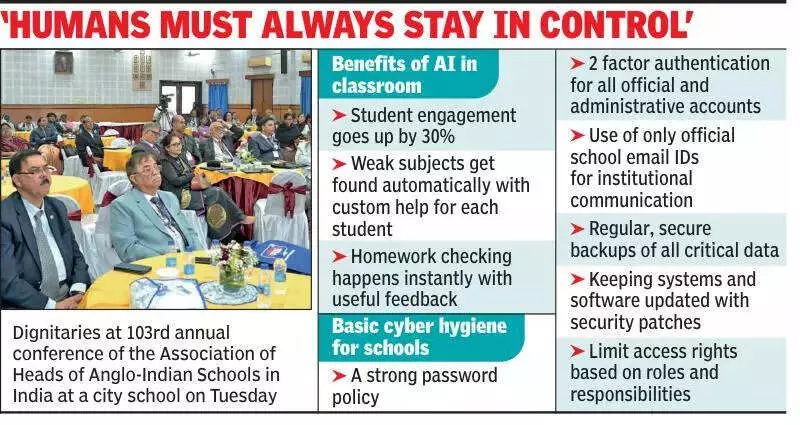
The session titled ‘Learning Made Fun & Engaging with an AI-Enabled Curriculum’ was led by AI expert and IIT-Kharagpur alumnus, Rajiv Agarwal. He positioned AI as a powerful ally in the classroom, capable of personalizing learning paths for individual students, automating homework checks, and using interactive content to boost enjoyment.
Agarwal drew a vivid comparison, stating that students focus on studies only when learning is as enjoyable as eating tasty, spicy food. He emphasized that when teachers incorporate engaging apps and techniques, academic performance improves naturally.

However, he issued a strong caution against the growing trend of students seeking quick, ‘instant noodle’-like solutions from AI. "AI is our friend, but sometimes it gives wrong answers very confidently," Agarwal warned. He stressed that over-dependence risks eroding human creativity, critical thinking, and moral judgment. "Too much dependence on AI means we give away our creativity, critical thinking, and ability to judge right from wrong. Humans must always stay in control," he concluded.
Cybersecurity in the Age of Automated Threats
The following session shifted gears to the dark side of technological advancement. Pranav Kumar, Additional Commissioner of Police, alerted school heads to the escalating danger of cybercrime, now supercharged by AI.
He explained that AI is making cyberattacks more automated, scalable, and faster, putting sensitive school data at unprecedented risk. Kumar urged every institution to develop a clear, written IT policy defining acceptable use and to establish robust rules for digital data and account management.
His recommendations for schools included:
- Placing greater emphasis on protecting sensitive data of students, parents, and staff.
- Ensuring operational continuity of school systems and services.
- Safeguarding financial transactions like fee payments and vendor dealings.
- Protecting the school's institutional identity and hard-earned reputation.
Call for Awareness and Robust Systems
With cyber offences becoming increasingly organised and cases of cyberbullying among minors on the rise, Kumar highlighted that reporting rates remain disproportionately low. He advocated for regular training and awareness programs as the most crucial defence.
"The entire landscape is changing every day. So, people should have proper knowledge, and report immediately if they are victims," he stated. He also stressed the importance of implementing secure Enterprise Resource Planning (ERP) systems to protect student data, underscoring that proactive measures are no longer optional but essential for every educational institution's survival and integrity.