

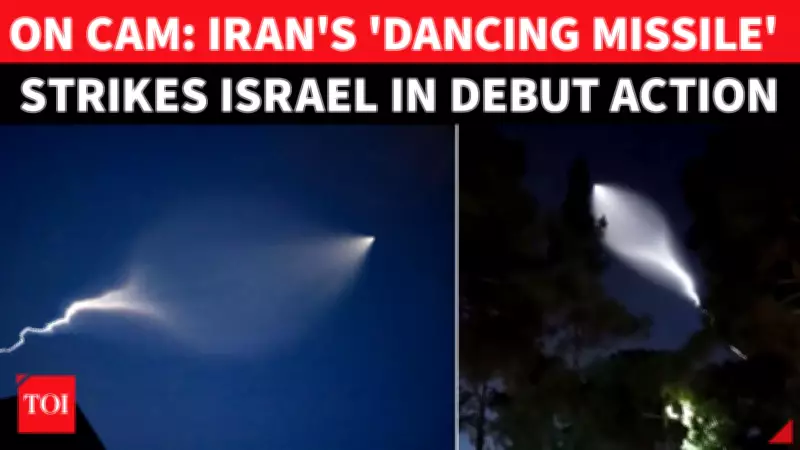
Iran Unleashes Advanced Sejjil 'Dancing Missile' in Major Conflict Escalation
In a significant development that marks a major escalation in the ongoing regional conflict, Iran has deployed its advanced Sejjil ballistic missile for the first time against Israeli and United States targets. The Islamic Revolutionary Guard Corps (IRGC) launched the sophisticated weapon, which is capable of striking objectives up to approximately 2,000 kilometres away, directly challenging defence systems in the region.
Technical Capabilities of the Sejjil Missile
The Sejjil is a two-stage solid-fuel ballistic missile, representing a substantial advancement in Iran's military arsenal. Its solid-fuel propulsion allows for quicker launch preparations compared to liquid-fuel systems, providing Tehran with enhanced operational flexibility. Most notably, the missile has earned the nickname "dancing missile" due to its exceptional manoeuvring capabilities during flight.
This advanced manoeuvrability is specifically designed to evade sophisticated air defence systems, including Israel's renowned Iron Dome. By altering its trajectory unpredictably, the Sejjil poses a formidable challenge to interception efforts, potentially rendering some defensive measures less effective.

Strategic Implications of the Deployment
Military analysts and regional experts emphasize that this deployment signals a dangerous new phase in the conflict. By introducing the Sejjil into active combat operations, Iran is demonstrating a willingness to expand its strike capabilities beyond previous thresholds. The move directly targets both Israeli territory and United States military positions across the Middle East, raising the stakes considerably.
The utilization of such an advanced weapon system suggests Tehran is prepared to engage in prolonged hostilities, with the Sejjil serving as a centrepiece of its expanded arsenal. This development occurs amidst intensifying regional tensions, where previous exchanges have involved drones, conventional missiles, and other military assets.
Regional Context and Broader Conflict
This missile launch is not an isolated incident but part of a broader pattern of escalating military actions. Recent reports indicate simultaneous attacks involving drones and missiles across the region, targeting various nations including Saudi Arabia, Kuwait, and the United Arab Emirates. Furthermore, Iran has issued stark warnings about closing the strategic Strait of Hormuz to American ships, threatening vital global oil shipping routes.
The conflict has already seen significant casualties and infrastructure damage, with incidents such as the bombing of Dubai International Airport and the tragic crash of a US KC-135 aircraft over Iraq. Political rhetoric remains heated, with Iranian leadership vowing a "prolonged battle" and challenging United States terms for conflict resolution.
As the situation continues to evolve, the deployment of the Sejjil missile represents a critical juncture. It underscores Iran's commitment to leveraging its most advanced military technology, potentially altering the tactical dynamics of the conflict and increasing risks of further escalation involving multiple regional and international actors.






