Bhopal's Elite Schools Record Zero Admissions Under RTE Quota, Exposing Critical Implementation Gaps
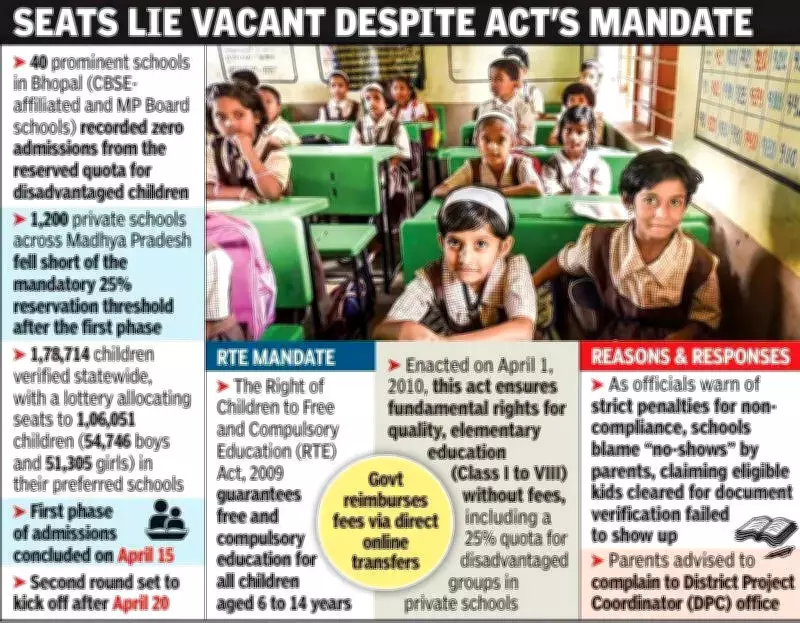
In a stark revelation that highlights significant shortcomings in the implementation of the Right to Education (RTE) Act, approximately 40 prominent CBSE-affiliated and Madhya Pradesh Board schools in Bhopal have reported zero admissions from the reserved quota for disadvantaged children. This alarming situation emerged as the first phase of admissions concluded on April 15, with 1,200 private schools across Madhya Pradesh failing to meet the mandatory 25% reservation threshold.
Mandatory Quota Remains Unfilled Despite Government Efforts
The RTE Act mandates that private unaided schools allocate 25% of their entry-level seats to children from economically weaker sections and disadvantaged backgrounds. The government facilitates this through direct online fee reimbursements to schools. However, sources indicate a troubling pattern: eligible children who cleared document verification simply did not appear to complete formalities, leaving numerous seats vacant in the capital's most prestigious institutions.
Statewide, the initial phase saw robust participation at the outset. Out of 178,714 children who underwent verification, a lottery system allocated seats to 106,051 students—comprising 54,746 boys and 51,305 girls—in their preferred schools. Parents received SMS alerts prompting them to finalize admissions, but follow-through has been particularly dismal in elite educational setups.

All Zero-Admission Schools Are Renowned Institutions
All 40 schools in Bhopal with zero admissions under the RTE quota are well-known CBSE and MP Board institutions, recognized for their high fees and competitive academic environments. The State Education Centre has now publicly released the list of underperforming schools to spur corrective action.
A senior education official issued a stern warning: "Schools that refuse or delay admissions will face strict penalties. Parents must immediately lodge complaints with the District Project Coordinator (DPC) office if they encounter any obstacles."
Conflicting Explanations and Accountability Demands
School managements have countered official claims, arguing that allocated seats remain unfilled due to "no-shows" by parents rather than deliberate non-compliance. They emphasize that they cannot force parents to complete admission procedures once seats are allocated.
However, education officials insist on strict adherence to RTE provisions to fulfill the law's equity promise and bridge the divide between privilege and poverty. "The spirit of the RTE Act is to ensure inclusive education for all children, regardless of their economic background," noted one official. "We cannot allow implementation gaps to undermine this fundamental right."
Second Admission Phase Offers Renewed Hope
With the first phase now closed, attention turns to the second round of admissions, scheduled to commence after April 20. This fresh lottery specifically targets residual vacancies, offering a second opportunity to children who were missed during the initial allocation.
Previous applicants can revisit the online portal, check school-wise seat availability, and submit updated preferences. This process aims to address systemic shortcomings and maximize enrollment under the RTE quota.
Madhya Pradesh's Renewed Commitment Amid Persistent Challenges
Madhya Pradesh's renewed push for RTE compliance highlights the state's commitment to educational equity despite persistent implementation hurdles, particularly in urban elite circles. Bhopal's top schools, long criticized for their lukewarm embrace of the law, now face increased scrutiny and pressure to fulfill their legal obligations.
As the second admission phase approaches, critical questions remain: Will these institutions step up to fill their quotas and honor the Act's spirit? Or will implementation gaps continue to widen, further undermining the dream of inclusive education?
Broader Implications for Educational Equity
This episode raises challenging questions about awareness, accessibility, and accountability in RTE implementation. While rural outreach has shown improvement in recent years, urban apathy and institutional resistance persist as significant barriers.

Education activists are demanding more vigilant monitoring, dedicated helplines for parents, and faster reimbursement processes to ease administrative burdens on schools. They argue that without these systemic improvements, the RTE Act's transformative potential will remain unrealized.
For now, the state government maintains close watch, determined to enforce both the letter and intent of the law. The coming weeks will reveal whether Bhopal's elite schools will finally bridge the gap between policy and practice in India's ongoing quest for educational equity.