CBSE Class 10 Science Exam 2026: A Comprehensive Analysis
The Central Board of Secondary Education (CBSE) conducted the Class 10 Science examination for the academic year 2025-26, drawing widespread attention from students, educators, and parents across India. This high-stakes exam, a crucial milestone in the secondary education journey, has sparked a flurry of reactions and analyses as stakeholders assess its difficulty, content, and implications for student performance.
Exam Structure and Content Overview
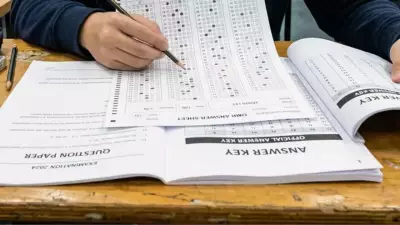
The CBSE Class 10 Science paper for 2026 adhered to the prescribed syllabus, covering key topics from Physics, Chemistry, and Biology. According to initial reports, the question paper was well-balanced, with a mix of theoretical and application-based questions designed to test students' conceptual understanding and problem-solving skills. Sections included multiple-choice questions, short-answer type questions, and long-answer questions, ensuring a comprehensive evaluation of knowledge.
Notably, the paper emphasized practical applications and real-world scenarios, aligning with CBSE's focus on competency-based education. Topics such as electricity, chemical reactions, and life processes were prominently featured, requiring students to demonstrate not just rote memorization but also analytical thinking.

Student Reactions and Feedback
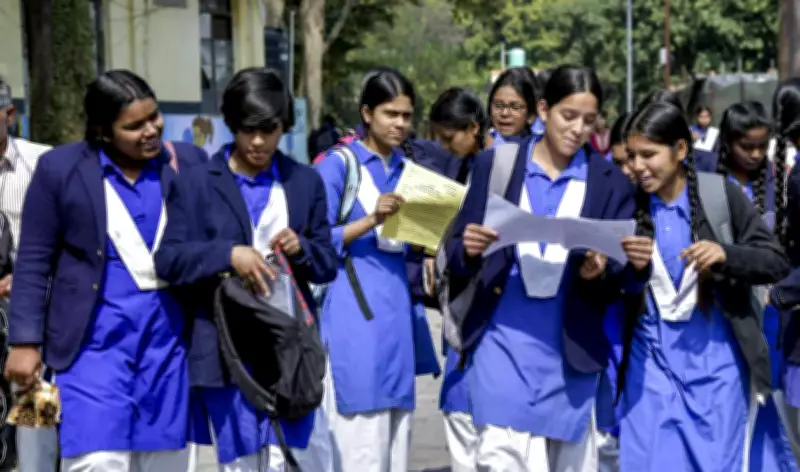
Students who appeared for the exam shared mixed reactions, reflecting the diverse challenges posed by the paper. Many found the Physics section manageable, with straightforward questions on topics like light and electricity. However, some reported that the Chemistry and Biology portions were moderately difficult, particularly questions involving diagrams and numerical problems.
"The paper was fair but required careful time management," said one student from Delhi. "I struggled a bit with the chemical equations, but overall, it was doable if you had prepared well." Another student from Mumbai noted that the emphasis on application-based questions made the exam engaging yet challenging, pushing them to think beyond textbook knowledge.
Common concerns among students included:
- Time pressure in completing all sections
- Complexity of diagram-based questions in Biology
- Need for precise answers in Chemistry calculations
Teacher Insights and Expert Analysis
Teachers and education experts provided valuable insights into the exam's design and difficulty level. Many praised CBSE for maintaining a balanced paper that tested core concepts without being overly tricky. "The paper was aligned with the learning outcomes and encouraged critical thinking," remarked a Science teacher from a reputed school in Kolkata. "It rewarded students who had a deep understanding of the subject rather than just surface-level knowledge."
Experts highlighted that the exam continued the trend of reducing rote learning, with questions that required students to apply concepts to new situations. This shift is part of CBSE's broader efforts to reform assessment patterns under the National Education Policy (NEP) 2020, aiming to foster holistic development and skill-based learning.
Key observations from teachers included:
- The paper was moderately difficult, suitable for average and above-average students
- Emphasis on diagrams and labeling in Biology helped assess practical knowledge
- Physics questions were direct, reducing ambiguity for students
Overall Performance and Trends
Early indications suggest that the overall performance in the CBSE Class 10 Science exam 2026 is expected to be satisfactory, with most students likely to score in the average to good range. The paper's design, which balanced difficulty across sections, may result in a normal distribution of scores without extreme highs or lows. However, final outcomes will depend on individual preparation and marking schemes, which CBSE will announce post-evaluation.
This exam analysis serves as a crucial resource for future batches, offering insights into question patterns and preparation strategies. As CBSE continues to evolve its assessment methods, such feedback from students and teachers plays a vital role in shaping more effective and student-friendly examinations.

In conclusion, the CBSE Class 10 Science exam 2026 has been met with a generally positive response, highlighting the board's commitment to quality education and fair assessment. Stakeholders await the results with anticipation, hoping for outcomes that reflect students' hard work and the exam's balanced approach.