Triple Murder Shakes CIT Campus, Revealing Deep-Rooted Safety and Infrastructure Failures
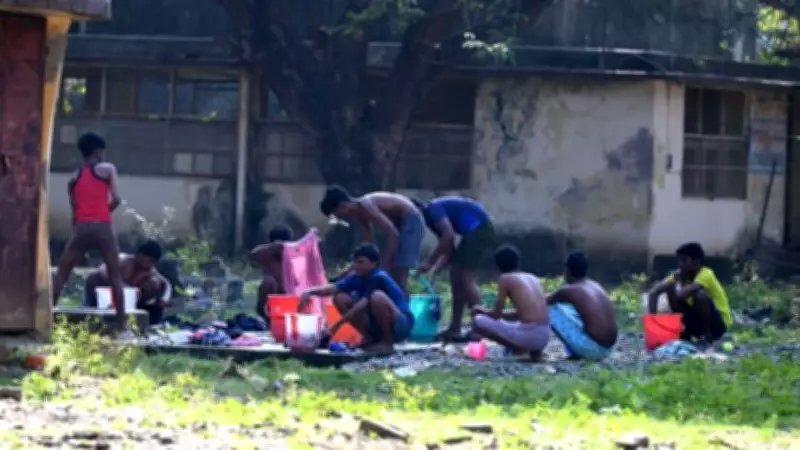
The recent triple murder of a migrant couple and their infant on the sprawling CIT campus along Old Mahabalipuram Road has sent shockwaves through Chennai, exposing alarming safety concerns within this educational hub. This tragic incident has drawn attention to the perilous conditions faced by over 8,000 students from various colleges housed on the campus, where basic amenities are severely lacking.
Students Brave Hazardous Living and Learning Environments
A visit to four industrial training institutes on the campus, including the prestigious Central Polytechnic College (CPC), which boasts nearly 100% placements, revealed a grim reality. Students endure dilapidated classrooms on the verge of collapse, with some forced to sit on the floor during lectures. "We neither have benches nor desks in our workshops. Our legs ache after standing for hours during practical sessions," shared Revanth*, a CPC student, highlighting the physical toll of inadequate facilities.
Hostel conditions are even more dire. Vinod*, a student at the Institute of Printing Technology (IPT), recounted instances of dead frogs and insects found in food, leading to hunger, irregular drinking water supply, and dry toilet taps. Structural issues persist, with cracked walls and damaged ceilings in use despite the Directorate of Technical Education (DOTE) opening new buildings last year. Kumaran, an IPT student, noted, "During admissions, parents were told classes would be held in the new building. However, that was converted into a computer room, and we still study in the old building."

Outdated Equipment and Bureaucratic Hurdles Hamper Education
Laboratory facilities are critically deficient. A first-year CPC student reported non-functional computers, electrical leakages affecting machines, and broken pipettes and burettes in chemistry labs. A staff member emphasized that equipment, such as decade-old CNC machines, does not meet current industry standards, with missing metal printing systems and supporting software. "While 3D printers exist, they are insufficient for modern training needs," the staff member added.
Funding and bureaucratic delays exacerbate these problems. A principal of one college explained that despite high placement rates, no specific funds are allocated by DOTE for maintenance or upgrades. Maintenance expenses rely on student fees, and infrastructure requests face slow approval processes, with only ₹2 lakh to ₹4 lakh spent annually per college. Higher education secretary P Shankar acknowledged being unaware of renovation allocations but promised steps to address issues.
Government Response and Future Plans Amid Ongoing Neglect
While principals blame the Public Works Department (PWD) for inaction, PWD officials point to DOTE for rejecting proposals. A DOTE source indicated that focus has shifted to a ₹94 crore integration project, stalling renovations and new constructions. CPC vice-principal Gopu dismissed concerns, stating students must adapt to demanding conditions, though he mentioned plans to change flooring to ease burdens.
DOTE commissioner S Visakan, after inspecting the campus, pledged corrective measures covering buildings, hostels, and academics. He announced initiatives like German language courses and certification programs in footwear and food technology to upskill students. Additionally, a ₹45 crore Centre of Excellence will soon provide hands-on training in CNC handling, milling, and welding technology. However, these plans contrast sharply with the current neglect, raising questions about implementation timelines and prioritization of student welfare.