Jaipur Educator Reveals Winning Formula for Class 12 History Board Exams
Students preparing for the upcoming Class 12 History board examination should focus on developing a deep conceptual understanding of the subject, mastering structured answer writing techniques, and engaging in consistent practice with previous years' question papers, according to leading subject experts from Jaipur. This strategic approach, they emphasize, is far more effective than relying on rote memorization alone.
Beyond Memorization: The Power of Conceptual Clarity
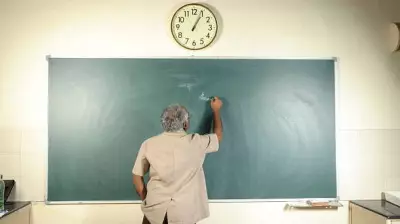
Bhawna Saxena, a respected History teacher at Rukmani Birla Modern High School in Jaipur, stressed that true success in History hinges on grasping the broader historical context and interconnected narratives. "Students must move beyond simply memorizing facts," she advised. "The key is to read NCERT textbooks thoroughly, line by line, and revise them multiple times to build a strong foundational knowledge."
To facilitate this deeper learning, Saxena recommends students create visual aids like flow charts and timelines. These tools help link important dates, significant events, and key historical personalities, making complex sequences easier to recall and understand. She also suggests maintaining a dedicated revision sheet for crucial facts—such as specific dates, names of leaders, and important places—and keeping it in a visible study area for quick, daily review.

Mastering the Art of Answer Writing for Maximum Marks
On the critical skill of framing answers, Saxena provided a clear blueprint, particularly for higher-mark questions. For an 8-mark question, she advises structuring the response into three distinct parts: a concise introduction, a detailed body containing main points supported by relevant facts, and a concluding summary.
"Writing in clear points or short, manageable paragraphs, rather than long, dense blocks of text, makes the answer sheet significantly easier for the examiner to read and assess," she explained. "This clarity can positively influence marking. Furthermore, students should underline important keywords, key phrases, dates, and names to highlight them effectively."
She also underscored the importance of adhering to prescribed word limits for each question. This discipline is essential for managing the limited exam time efficiently and ensuring all sections of the paper are completed.
Strategic Revision and Map Work Practice
Given that History is a theoretical subject where information can be easily forgotten without reinforcement, Saxena insists that revision must be a regular, scheduled activity, not a last-minute cramming session.
A specific and often challenging component is the map work. Saxena advises students to tackle map-related exercises simultaneously with their chapter studies, keeping their map materials organized and ready for revision. She issued an important caution: "While all maps provided in the NCERT textbooks are physical maps, the board exam will present a political map of India. Therefore, students must practice extensively with political maps only to be fully prepared." She added that labels should be applied clearly using arrows and standard symbols where necessary for full marks.
By combining these strategies—deep conceptual learning, disciplined answer structuring, and consistent, smart revision—students from Jaipur and across the country can approach their Class 12 History board exam with greater confidence and a clear path to achieving high scores.