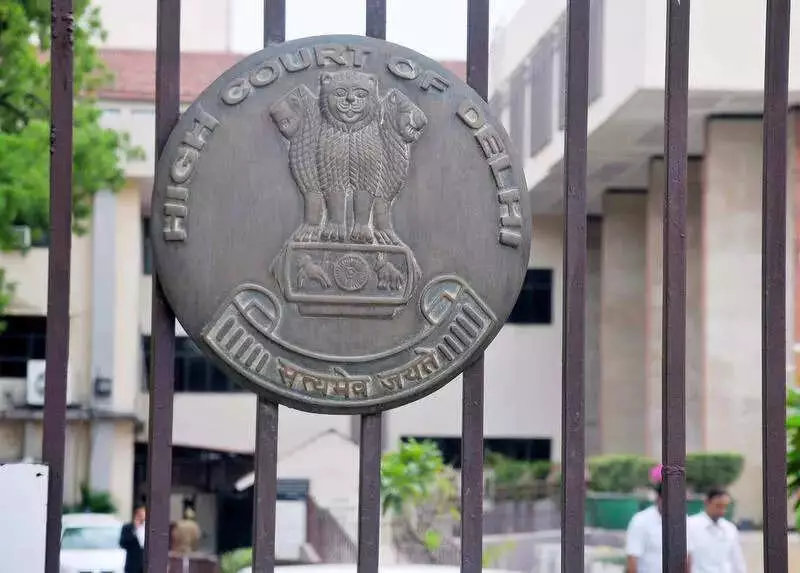
Delhi High Court Approves Cash Subsidy for School Uniforms Under EWS Category
In a significant development for the Delhi government, the High Court on Friday validated its policy of providing cash directly to private school students belonging to the Economically Weaker Section (EWS) and Disadvantaged Group categories, rather than distributing uniforms in kind. This ruling offers substantial relief to the administration, addressing long-standing logistical challenges in uniform provision.
Court Recognizes Operational Difficulties in Uniform Distribution
The bench, comprising Chief Justice DK Upadhyaya and Justice Subramonium Prasad, acknowledged the genuine difficulties faced by authorities in processing individual orders for each student. The court modified its earlier directive that mandated the government to supply uniforms directly, emphasizing the impracticality of the previous approach.
"Undoubtedly, it would be impossible to carry out the exercise of taking measurements of every student, placing orders for different kinds of uniform cloth on the GeM portal, getting the uniforms stitched as per measurements, and finally distributing them before the commencement of a new session," the court observed in its detailed judgment.

DBT Scheme Aligns with Right to Education Act Mandates
The High Court ruled that the move to provide subsidies through Direct Benefit Transfer (DBT) is not contrary to the mandate of the Right to Education (RTE) Act. This decision ensures that uniforms are available to students in a timely manner, without violating statutory provisions.
The court agreed with standing counsel Sameer Vashisht, who argued that the government's decision does not breach the RTE Act or the 2011 Rules. While these regulations mandate the provision of uniforms, they do not explicitly require that uniforms be supplied in kind, allowing for flexible implementation through cash transfers.
Government's Policy and Financial Provisions
The Delhi government had sought modification of an April 13, 2023, order issued in response to a petition by the NGO ‘Justice For All’. The petition had demanded free books, uniforms, and study materials for EWS students in aided and unaided private schools.
In its review plea, the government highlighted operational constraints in procurement and distribution, citing cabinet discussions that underscored these challenges. A new policy was formulated in June 2025, which stipulates payments ranging from Rs 1,250 to Rs 1,700 per student for uniforms, depending on specific criteria.
Court Directs Timely Implementation of Cash Transfers
The High Court directed the Government of the National Capital Territory of Delhi (GNCTD) to ensure that adequate amounts are transferred "well within time and at the earliest" so that students can purchase uniforms before the new academic session begins. This directive aims to prevent any delays that could disadvantage students.
In its verdict, the court found no infirmity in the decision-making process and no indication of mala fide intent. "This court does not find fault with the policy dated June 10, 2025. Resultantly, the April 13, 2023, order is modified to the extent applicable to uniforms," the bench stated, providing clear legal backing for the cash transfer scheme.
Implications for Educational Equity and Administrative Efficiency
This ruling is expected to streamline the uniform distribution process, reducing bureaucratic hurdles and enhancing efficiency. By opting for cash transfers, the government can address individual needs more effectively, allowing families to purchase uniforms that fit properly and meet school requirements.
The decision also reinforces the flexibility within the RTE framework, enabling innovative approaches to fulfill educational entitlements. It sets a precedent for other states grappling with similar logistical issues in implementing welfare schemes for disadvantaged students.
Overall, the High Court's judgment balances legal compliance with practical administration, ensuring that EWS and Disadvantaged Group students receive their entitled benefits without unnecessary delays or complications.