Delhi High Court Takes Strict Action Against School for Fake Student Enrollments
The Delhi High Court has delivered a strong verdict against Richmondd Global School. On Wednesday, the court completely barred the school from running classes XI and XII. It also prohibited the institution from admitting any new students to these senior secondary classes.
Court Initiates Contempt Proceedings and Imposes Heavy Fine
Justice Jyoti Singh took serious note of the school's actions. The court initiated contempt of court proceedings against the school's owner and management. This action came because they violated an earlier undertaking given to the court.
The court ordered the school management to deposit a substantial amount of Rs 75 lakh with the court registry. This money represents fees collected from hundreds of students who were enrolled only on paper. These students never actually attended classes at the school.

CBSE Inspection Reveals Shocking Details
The Central Board of Secondary Education conducted a surprise inspection of the school. CBSE officials suspected something was wrong with the enrollment patterns. Their investigation revealed a disturbing practice.
Students were taking coaching classes elsewhere but paying the school to remain officially enrolled. This arrangement made them eligible to sit for the class XII examination. It also allowed them to qualify for reserved quotas in Delhi's engineering and medical colleges.
Court Allows Transfer of 128 Genuine Students
In a relief measure, Justice Singh permitted 128 students out of 1,300 enrolled in classes XI and XII to transfer to another school. These students can now join James Convent Senior Secondary School in Nihal Vihar.
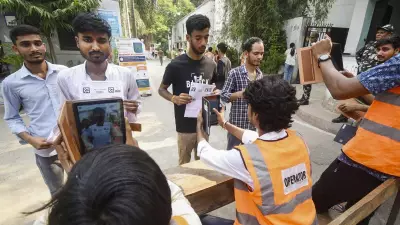
The court gave specific directions for this transfer process. CBSE will open its online portal so these students can apply for examination registration. A team of CBSE officials will visit the school on December 26 at 2:30 pm. They will inspect records and verify the admissions and attendance of these 128 class XII students.
The school must issue transfer certificates to these students within one week. After receiving their certificates, the students can join the new school. They will need to pay three months' quarter fee plus any applicable examination or late fees.
Court Issues Strict Directives to School Management
The high court ordered school chairman Nidhi Gupta and manager Rishabh Gupta to file separate affidavits. These affidavits must confirm that no further students are being admitted to the school.
The court also directed the school to disseminate important information. Students currently in classes X and XI must be informed that they will not be promoted to classes XI and XII in the next academic session. This information must also appear prominently on the school's notice board.
Special Concession with Clear Limitations
The court appreciated the role of CBSE standing counsel M A Niyazi in facilitating the student transfers. However, Justice Singh made it clear that this concession has strict limitations.
CBSE permitted the transfer of 128 students as an exceptional measure. The court noted this was due to extraordinary circumstances. Neither this concession nor the court's order will be treated as a precedent for other cases.
The court specifically stated that this arrangement does not apply to students currently studying in class XI at the school. It also does not apply to any other similar cases that might arise in the future.
Background of the Case
The Delhi High Court was hearing petitions filed by the school and some of its students. These petitions challenged CBSE's decision to withdraw the school's affiliation. The court's verdict represents a significant development in this ongoing legal battle.
The court's actions send a strong message about maintaining educational standards. They emphasize the importance of genuine student enrollments and proper school functioning. This case highlights the consequences institutions face when they violate educational norms and court directives.