Delhi University Issues Strong Rebuttal to Rahul Gandhi's Caste-Based Allegations
In a significant development, Delhi University (DU) has categorically dismissed allegations made by Congress leader and Leader of Opposition in the Lok Sabha, Rahul Gandhi, that the institution uses interviews to eliminate students based on their caste background. The university issued a detailed statement late on Friday via social media platform X, firmly rejecting the claims and calling for factual verification before such statements are made.
University Clarifies Standard Admission Process
The official statement from Delhi University emphasized that the standard admission process for most undergraduate and postgraduate programs does not mandate interviews. The primary criterion for student admissions is the Common University Entrance Test (CUET) scores, which form the backbone of the selection mechanism. This clarification aims to address the core of Gandhi's allegations directly and provide transparency regarding the university's admission protocols.
"The University of Delhi admits students primarily based on the CUET scores, and the standard admission process does not mandate interviews for most undergraduate and postgraduate programmes," the university stated explicitly in its post. This point underscores the institution's commitment to a merit-based and standardized evaluation system that minimizes subjective elements in student selection.

Context of Rahul Gandhi's Remarks
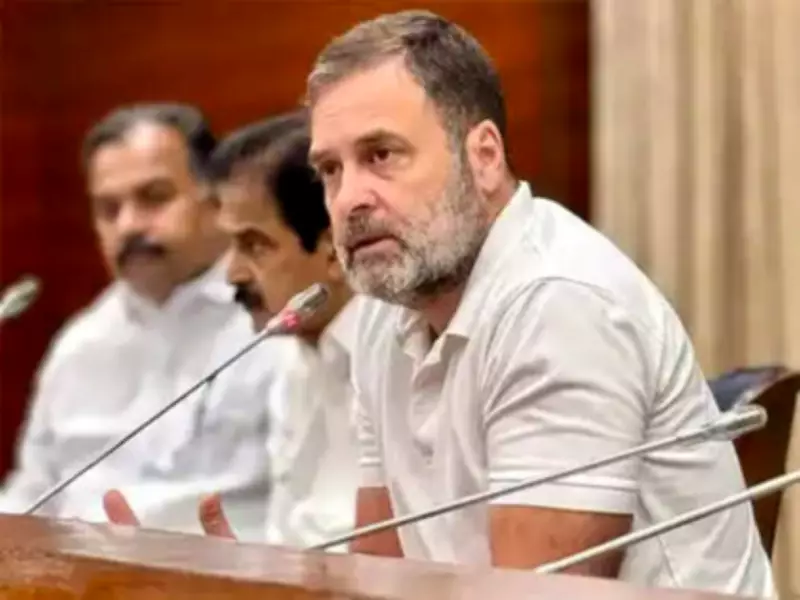
The controversy stems from remarks made by Rahul Gandhi during an event in Lucknow on Friday, commemorating the birth anniversary of Bahujan Samaj Party (BSP) founder Kanshi Ram. Gandhi alleged that Delhi University employs interviews as a tool to discriminate against students from marginalized communities.
"I had gone to the Delhi University. Interview is just a way to eliminate students. They ask what your caste is and then you fail in the interview," Gandhi claimed during his address. He further expanded his criticism to target the Rashtriya Swayamsevak Sangh (RSS), asserting that the organization lacks representation from Other Backward Classes (OBC), Dalit, and Adivasi communities among its senior pracharaks and leaders, which he described as being "completely against the Constitution."
University's Response to Recruitment References
In its rebuttal, Delhi University also addressed potential confusion regarding recruitment processes, such as faculty positions, which might involve interviews. The statement highlighted that the university has recruited thousands of teachers across all categories in the recent past, emphasizing its commitment to inclusive hiring practices.
"If the Leader of Opposition was referring to recruitments (such as faculty positions), the University in the recent past has recruited thousands of teachers across all categories. We strongly object to such comments, as they create a non-conducive environment in the University. The Leader of Opposition should have verified the facts before making such a statement," the university added, tagging the Ministry of Education for further context.
Broader Controversy and Academic Community Reaction
The allegations have sparked further debate within the academic community. The Indian National Teachers' Congress (INTEC), along with several Delhi University professors, including academic and executive council members, have pointed to public records indicating that in multiple university departments, qualified candidates under Scheduled Caste (SC), Scheduled Tribe (ST), and Other Backward Classes (OBC) categories were declared "not found suitable (NFS)" after interview stages for teaching positions, despite numerous advertised posts.
This aspect of the controversy highlights ongoing discussions about representation and fairness in higher education recruitment, adding layers to the initial allegations made by Gandhi. The university's response, however, focuses squarely on the student admission process, seeking to clarify misconceptions and uphold its institutional integrity.

As the situation develops, the exchange underscores the sensitive nature of caste-based discussions in Indian education and the importance of accurate information in public discourse. Delhi University's firm stance aims to reassure stakeholders about its adherence to equitable practices while calling for responsible commentary from political figures.