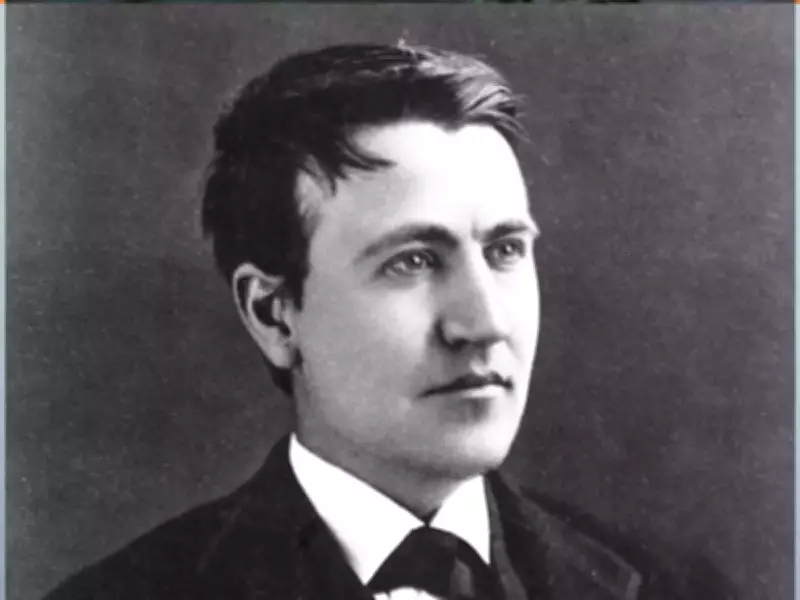
Thomas Edison's Enduring Wisdom: Transforming Failure into Learning for Students
Thomas Alva Edison, one of history's most prolific inventors, once famously declared, "I have not failed. I've just found 10,000 ways that won't work." While this statement is frequently shared as motivational inspiration, its true significance extends far beyond simple encouragement. For students navigating today's demanding academic landscapes—filled with competitive exams, constant evaluations, and high-pressure systems—Edison's perspective offers a revolutionary framework for understanding the learning process itself.
Lesson 1: Failure as Valuable Information, Not Final Judgment
Edison's core insight was not that failure feels pleasant or should be celebrated. Rather, he recognized that every unsuccessful attempt generates crucial, actionable information. Each experiment that didn't yield the desired result provided specific data about what approaches were ineffective, thereby narrowing the possibilities for subsequent attempts.
Students often internalize a very different message: that mistakes and low scores represent definitive proof of personal inability. A poor test result becomes a judgment of character rather than feedback on understanding. Edison's methodology suggests a powerful alternative approach. When a student answers a question incorrectly, it precisely identifies where their comprehension breaks down. When an application gets rejected, it reveals what qualities the selection system truly values.

Learning accelerates dramatically when students begin to treat failure as diagnostic data rather than as a reflection of their identity. This shift transforms setbacks from endpoints into starting points for improvement.
Lesson 2: Recognizing Invisible Progress During the Journey
The notion of discovering "10,000 ways that won't work" sounds extraordinary in retrospect, but the daily reality was far more mundane. It involved countless hours in the laboratory, conducting experiments that led nowhere, and taking notes that never translated into immediate breakthroughs. The progress was largely invisible while it was happening.
Students experience a parallel phenomenon. They might spend hours revising complex concepts without seeing immediate improvement in their grades. They might complete numerous practice tests before their scores begin to reflect their growing understanding. This frustrating gap between substantial effort and visible results frequently leads students to abandon their efforts prematurely.
Edison's lifelong process serves as a vital reminder that meaningful progress often exists long before tangible success becomes apparent. The work done during seemingly unproductive periods frequently lays the essential foundation for future achievement.
Lesson 3: The Supreme Importance of Persistence Over Early Success
Edison's famous quotation makes no mention of innate talent, genius, or rapid discovery. Instead, it emphasizes sheer endurance and determination. His monumental success with the incandescent light bulb did not occur because his initial ideas were correct; it happened because he remained committed to solving the problem far longer than most people would have considered reasonable.
Modern education systems often disproportionately reward early success. Students who grasp concepts quickly are frequently labeled as "strong" or "gifted," while those who require more time may internalize negative beliefs about their capabilities. Edison's experience presents a compelling counter-narrative: staying engaged with difficulty can ultimately matter more than starting with apparent ease.
For students who struggle initially with certain subjects or skills, persistence should not be viewed as a weakness or deficiency. It represents a deliberate and powerful strategy for mastering complex material through sustained effort.

Lesson 4: Learning as a Cumulative, Non-Linear Process
In Edison's inventive work, every failed attempt informed and refined the subsequent approach. Nothing was truly wasted; each outcome contributed to a growing body of knowledge. Students, however, often expect learning to follow a perfectly linear trajectory: understand chapter one completely, then master chapter two, then succeed on the final exam.
In reality, genuine learning is rarely so straightforward. It frequently loops back on itself, with concepts becoming clear only after multiple exposures from different angles. Understanding deepens through repetition, revision, and re-contextualization.
Edison's perspective grants students permission to revisit, revise, and rethink material without interpreting these actions as falling behind. It validates the iterative nature of true comprehension, where knowledge builds cumulatively through cycles of attempt, evaluation, and adjustment.
When taken seriously, Edison's statement is less about blind optimism and more about adopting a specific, effective methodology. It challenges students to alter how they measure their own progress—not by how frequently they succeed on the first try, but by how much they learn from what does not work initially. This mindset shift can reduce anxiety, increase resilience, and ultimately lead to more profound and lasting educational outcomes in an increasingly competitive academic world.