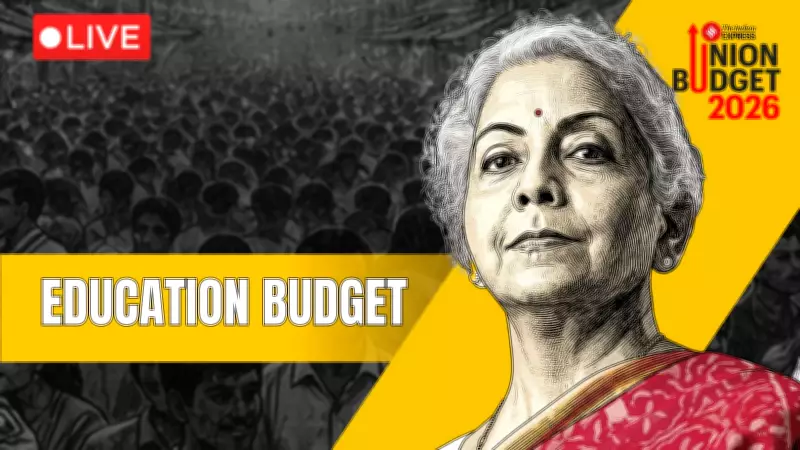
Union Finance Minister Nirmala Sitharaman is set to present the highly anticipated Education Budget for the 2026-27 financial year on Sunday, February 1, 2026. This budget presentation follows the tabling of the Economic Survey 2025-26 in Parliament on Thursday, which has already highlighted critical challenges and priorities for the education sector in India.
Key Insights from the Economic Survey 2025-26
The Economic Survey 2025-26, presented by Finance Minister Nirmala Sitharaman, underscores a pressing need to improve student retention beyond Class 8, as secondary age-specific net enrollment rates remain disappointingly low. This issue is compounded by an uneven distribution of schools across the country.
School Infrastructure and Distribution Challenges
According to the survey, a significant 54 percent of schools in rural areas offer only foundational or preparatory education, while a mere 17.1 percent provide secondary education. This disparity points to a structural gap that must be addressed to ensure equitable access to quality education for all students, particularly in underserved regions.

Budget Expectations and Historical Context
In the lead-up to the budget presentation, the education sector has been advocating for an allocation of 6 percent of the Gross Domestic Product (GDP) to the public education system. Reflecting on previous budgets, in 2025, the government allocated Rs 1,28,650.05 crore to education, marking a 6.65 percent increase from the 2024 allocation of Rs 1.12 lakh crore, which itself was a 13 percent rise from 2023.
Higher Education and Quality Concerns
The Economic Survey also addresses higher education, acknowledging the rapid expansion of institutions and student enrollment over the past decade. However, it flags serious concerns regarding quality, faculty shortages, and uneven research capacity. To enhance global competitiveness, the survey calls for:
- Greater institutional autonomy
- Stronger academic leadership
- Deeper integration of research and innovation
Focus on Skill-Oriented Learning
Emphasizing the need for practical education, the survey highlights that traditional classroom models often fail to bridge the gap between theory and application. It advocates for:
- Increased emphasis on vocational education
- Expanded internship opportunities
- Enhanced industry collaboration
These measures are deemed essential to improve employability and better align educational outcomes with the evolving demands of the labor market.
Previous Initiatives and Future Prospects
In the previous Union Budget, the government committed to adding 75,000 more seats in medical colleges over the next five years and boosting infrastructure for IITs established after 2014. Additionally, in 2025, allocations were increased for bodies such as the University Grants Commission (UGC) and the National Council of Education Research and Training (NCERT) under the Ministry of Education.
As Finance Minister Nirmala Sitharaman prepares to unveil the Education Budget 2026, stakeholders across the sector are keenly awaiting details on how these challenges will be addressed through strategic funding and policy initiatives. The budget is expected to set the tone for educational reforms aimed at fostering inclusivity, quality, and innovation in India's education landscape.