The Essential Foundation: Why Social-Emotional Skills Matter More Than Ever
In today's rapidly evolving world, children are growing up in environments that demand far more than just academic proficiency and technical knowledge. The modern landscape requires young individuals to develop essential social-emotional competencies including empathy, collaboration, and a strong sense of shared responsibility to successfully navigate both social interactions and learning environments. From classroom settings to playground activities, we frequently observe children instinctively helping one another, sharing limited resources, or discovering innovative ways to work together toward common goals.
How Early Experiences Shape Lifelong Values
These everyday observations powerfully demonstrate how early experiences within family structures and community contexts shape not merely temporary behaviors, but enduring values like cooperation, kindness, and emotional resilience. Multiple research studies consistently indicate that children who feel genuinely supported within their home environments and actively participate in community activities are significantly more likely to develop robust social skills and enhanced abilities to navigate various challenges throughout their lives. These small, repeated acts of empathy and collaboration gradually transform into habitual patterns that guide interpersonal relationships, teamwork dynamics, and leadership approaches.
The Crucial Role of Family and Community in Value Formation
Children develop the majority of their social and emotional foundation within family settings, but the values they internalize extend far beyond domestic walls. Research consistently demonstrates that secure family attachments combined with active participation in community life contribute substantially to emotional resilience, prosocial behavior patterns, and overall psychological well-being. International organizations like UNICEF emphasize through their social and behavior change initiatives how engaging families and communities through meaningful dialogue, active participation, and collaborative efforts fosters positive social norms and behaviors that significantly benefit children's holistic development.

The Psychology Behind Social Learning
Psychologists explain this developmental process through established social learning theory, which posits that children observe and model behaviors they experience in their immediate environments. This means that consistent acts of kindness, cooperation, and shared responsibility witnessed within families and communities can become internalized as personal values. For instance, it's common to observe a child patiently helping a sibling understand a complex homework problem after witnessing a parent explain concepts with similar patience, or a student voluntarily sharing materials with a classmate who forgot their supplies, reflecting behaviors they've observed in home or school settings.
During structured group activities, children frequently negotiate roles, distribute tasks equitably, or offer encouragement to peers, often imitating positive interactions they've witnessed from adults or older children. These everyday occurrences demonstrate how children gradually internalize prosocial behaviors, thereby reinforcing empathy, collaboration, and community consciousness—key values that guide their social interactions and educational experiences throughout development.
Educational Institutions as Value Reinforcement Centers
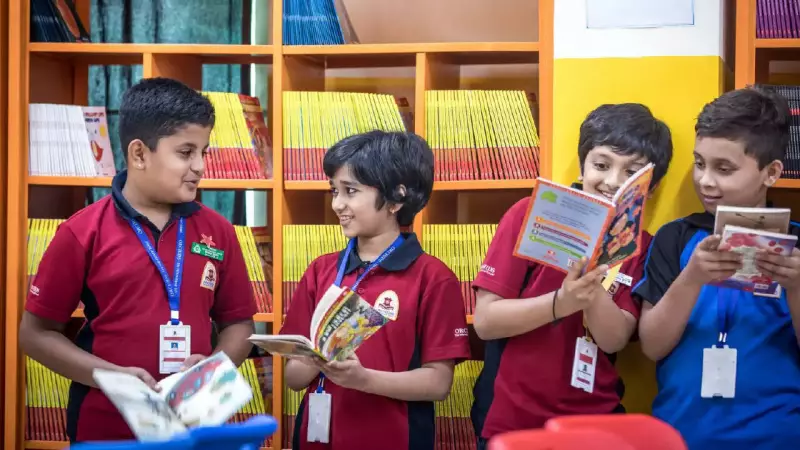
At forward-thinking educational institutions like Orchids The International School, this developmental philosophy forms the cornerstone of the learning experience. Classrooms are intentionally designed to provide structured opportunities for students to observe, practice, and reflect upon collaborative behaviors, helping them internalize these values through meaningful, hands-on experiences.

Shruti Maheshwari, Primary Head at Orchids The International School, emphasizes this holistic approach: "Children's development cannot be viewed exclusively through an academic lens. Emotional resilience, genuine empathy, and a profound sense of belonging are equally critical to long-term well-being. At our institution, this belief translates into consciously constructing environments where strong family engagement, meaningful peer interaction, and authentic community participation are embedded into everyday learning experiences."
Creating Alignment Between Home and School
"By establishing consistent touchpoints between home and school environments," Maheshwari continues, "children receive comprehensive support in developing prosocial behavior patterns, emotional security, and social responsibility from their earliest educational years. When families, schools, and communities work in deliberate alignment, it represents a long-term investment in healthier social norms and more resilient societies. Ultimately, nurturing compassionate, emotionally grounded individuals is equally important as developing capable academic learners."
Schools as Extensions of Family and Community Networks
While families establish the foundational values, schools play an indispensable role in reinforcing these principles through daily interactions and carefully structured activities. Orchids The International School extends these developmental principles by providing students with practical, hands-on opportunities to apply observed behaviors within supportive, real-world contexts. Collaborative projects, peer mentoring initiatives, and community engagement programs allow students to experience the tangible impact of their actions firsthand.
Research Supporting Collaborative Approaches
Substantial evidence supports this educational methodology. A comprehensive 2018 study published in the Journal of School Psychology found that students participating in structured collaborative learning programs demonstrated significant improvement in conflict resolution abilities, communication skills, and teamwork capabilities. Another study published in Developmental Psychology indicates that children regularly exposed to mixed-age or multicultural learning environments develop measurably higher levels of empathy and adaptability, effectively preparing them to engage thoughtfully with increasingly diverse communities.
The innovative concept of microlearning also proves valuable within this context. Contrary to traditional teaching methods, breaking down complex topics into bite-sized, easily comprehensible modules can enhance student attention spans, promote information retention, and potentially improve overall academic success rates.
Practical Implementation in Educational Settings
At Orchids The International School, classrooms actively encourage inquiry-based learning, substantive discussion, and practical application rather than rote memorization. Students regularly engage in problem-solving activities, group-based learning projects, and reflective exercises that systematically reinforce collaboration and shared responsibility. By celebrating progress and effort alongside final outcomes, children develop confidence in their ability to grow and adapt—skills becoming increasingly valuable in a world characterized by rapid technological and social change.
"It becomes remarkably natural for children to develop empathy, resilience, and self-awareness when learning experiences are grounded in community consciousness and collaborative practice," adds Shruti Maheshwari. "While academic knowledge remains crucial, children learn to respect diverse perspectives, regulate emotions effectively, and articulate thoughts clearly when they work collectively on shared challenges. At Orchids, community-based and collaborative learning is designed thoughtfully to strengthen children's social and emotional development comprehensively. Such experiences prepare children not merely to succeed individually, but to contribute meaningfully within teams and communities throughout their lives."
Preparing Children for an Interconnected Future
Empathy, collaboration, and shared responsibility represent far more than desirable personality traits—they constitute essential skills that equip children to navigate an increasingly complex and rapidly changing global landscape. When children grow up supported by nurturing families, engaged within their communities, and guided by progressive educational institutions like Orchids The International School, they develop crucial resilience, adaptability, and relationship-building capabilities that complement academic learning and technological proficiency.
Weaving Values into Everyday Experiences
By intentionally weaving strong family bonds, community values, and collaborative learning into everyday educational experiences, parents and schools collectively create environments where children feel genuinely supported, confident in their abilities, and motivated to contribute positively to society. The small, consistent acts of cooperation and kindness practiced during childhood form the foundational building blocks for a generation capable of constructing a more empathetic, collaborative, and interconnected society in the future.