Goa's School Consolidation Strategy Meets Resistance as Closures Mount
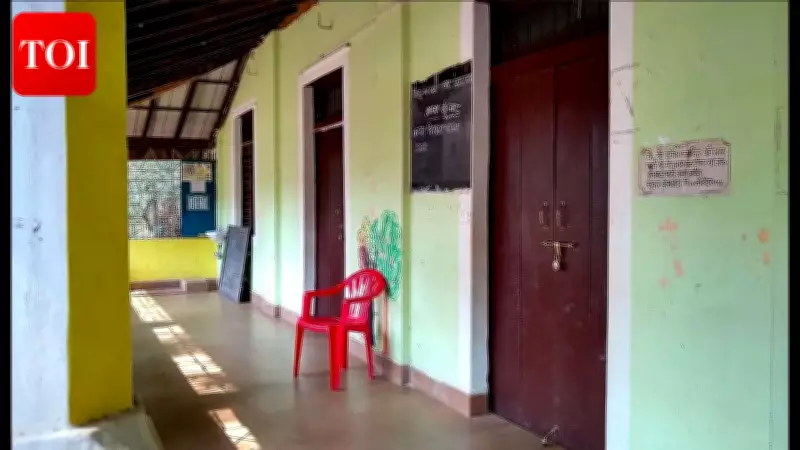
In a significant development for Goa's education landscape, the state government has been forced to close 47 government primary schools since 2021 due to critically low student numbers. This stark reality underscores the ongoing challenge of maintaining viable educational institutions in the face of declining enrolment. Concurrently, the state has pursued a strategic approach of merging such under-enrolled schools with neighboring institutions to avert further shutdowns, though this initiative is encountering growing opposition from parents concerned about increased travel distances for young children.
Merger Data Reveals Shifting Trends
Data presented during the recently concluded state assembly session provides a detailed picture of the merger efforts. Over the past six years, 18 government primary schools with low enrolment have been amalgamated with nearby government primary schools. The breakdown by academic year is telling:
- 2020-21: Eight schools merged
- 2021-22: Three schools merged
- 2022-23: Two schools merged
- 2023-24: Four schools merged
However, the momentum has noticeably slowed. In the 2024-25 academic year, no mergers could be executed, and only one school was successfully merged in the current 2025-26 year. This deceleration is directly attributed to parental pushback, with families expressing concerns that consolidation forces children aged six to nine to travel longer distances to attend school, posing logistical and safety challenges.

Historical Context and Rationale Behind Mergers
The Goa government first initiated the policy of amalgamating low-enrolment schools with neighboring ones in 2013. Initially, the project stalled due to strong objections from parents. Plans were revived in subsequent years, leading to the successful consolidation of several institutions. The strategy is grounded in a pragmatic assessment of resource allocation.
According to state education rules, one teacher is allocated for every 24 students. Consequently, schools with 24 or fewer pupils are entitled to only a single teacher. This often results in a solitary educator managing Classes I to IV simultaneously, while also handling administrative duties, with no headmaster or clerical support. Such conditions frequently exacerbate enrolment declines, creating a vicious cycle that ultimately leads to school closures.
The Strategic Imperative and Ongoing Challenges
The state's rationale for mergers is clear: by combining a government primary school on the brink of closure with the nearest state-run primary school, authorities aim to pool resources. This consolidation is intended to ensure sufficient teaching staff, improved infrastructure facilities, and overall better educational resources for students. The goal is to enhance the quality of education through more sustainable institutional frameworks.
Despite these intentions, the strategy faces significant hurdles. Parental resistance remains a formidable obstacle, as families prioritize proximity and convenience for their young children. The decline in merger numbers reflects this tension, highlighting the delicate balance between administrative efficiency and community needs. As Goa continues to navigate these challenges, the future of its primary education system hangs in the balance, with the state seeking solutions that both preserve access and ensure quality in an evolving demographic landscape.