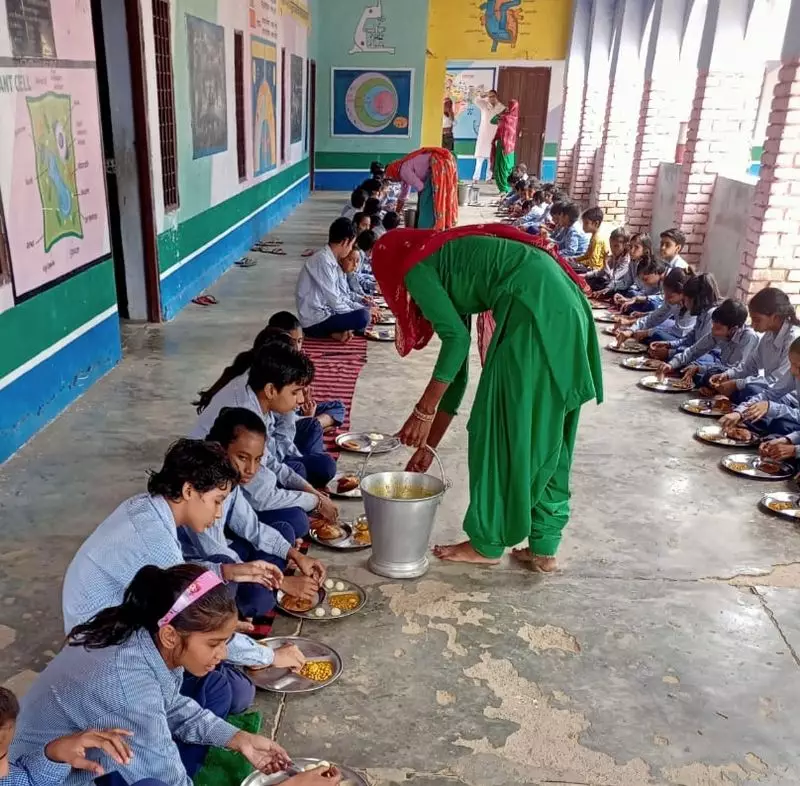
The Haryana Education Department has issued a clear and firm directive to its elementary education officers across the state, mandating that the approximately 28,000 cook-cum-helpers employed under the PM Poshan scheme cannot be engaged in any duties outside their defined role of meal preparation. This move aims to streamline the implementation of the flagship school meal program and ensure its primary objective—providing nutritious food to children—is not compromised.
Directive from the Director of Elementary Education
The order was formally communicated by Dr. R. C. Sharma, the Director of Elementary Education in Haryana. In his communication to all District Elementary Education Officers (DEEOs) and Block Elementary Education Officers (BEEOs), Dr. Sharma emphasized that the sole responsibility of the cook-cum-helpers is to prepare and serve the mid-day meals to students. The directive explicitly states that these staff members must not be assigned any other work within the school premises, a practice that has been reportedly observed in some institutions.
This clarification comes as a reinforcement of the existing guidelines governing the PM Poshan Abhiyaan (formerly known as the Mid-Day Meal Scheme). The department's stance is that diverting the attention and labor of these kitchen staff to ancillary tasks directly impacts the quality and timely serving of meals, which is the core of the program.

Scope and Rationale Behind the Order
With nearly 28,000 cook-cum-helpers deployed in schools across Haryana, the directive has a wide-ranging impact. The rationale is twofold: to uphold the sanctity of the nutritional program and to protect the defined work profile of these employees. Often, in resource-constrained school environments, support staff can be pulled into various administrative or maintenance chores.
The Education Department's order seeks to put an end to this. By ensuring cook-cum-helpers focus exclusively on kitchen duties, the department aims to achieve:
- Consistent and hygienic meal preparation.
- Timely serving of food to students.
- Strict adherence to menu guidelines and nutritional standards.
- Clear accountability for the kitchen staff's output.
The directive places the onus of compliance squarely on the District and Block Elementary Education Officers. They have been instructed to ensure strict adherence to these guidelines in all schools under their jurisdiction. This top-down instruction is expected to standardize practices and eliminate any local discrepancies in how the cook-cum-helpers' time is utilized.
Implications for School Administration and Future Compliance
The order has significant implications for day-to-day school administration. Principals and headmasters of elementary schools will now need to ensure that no non-kitchen tasks are delegated to the cook-cum-helpers. This may require schools to re-evaluate their support staff management and possibly seek alternative arrangements for other minor duties.
Furthermore, the directive underscores the Haryana government's commitment to strengthening the PM Poshan scheme as a critical tool for combating classroom hunger and malnutrition. By safeguarding the dedicated workforce of the scheme, the state hopes to improve the overall effectiveness and reliability of the program. The success of this directive will depend on vigilant monitoring by the education officers and a cooperative approach from school authorities to prioritize children's nutritional needs above administrative convenience.
This move is seen as a step towards professionalizing the role of cook-cum-helpers and recognizing their specialized contribution to the school ecosystem. It aligns with broader efforts to ensure that welfare schemes are implemented with focus and precision, delivering their intended benefits to the target beneficiaries—the students of Haryana.