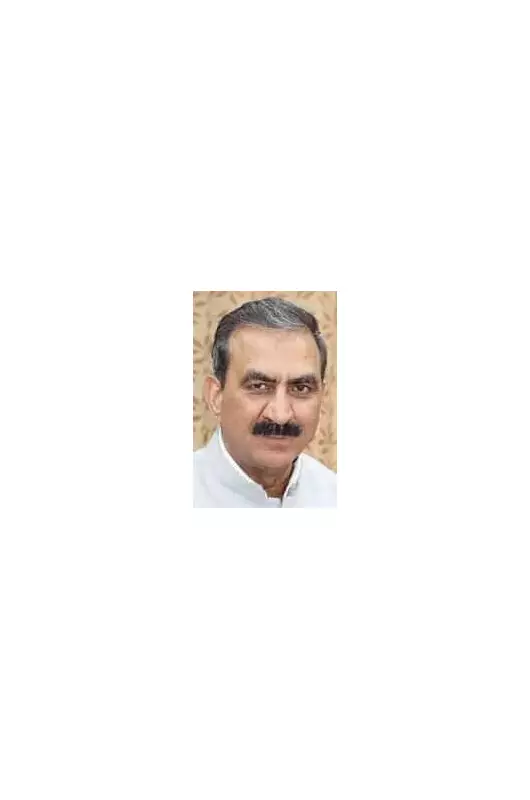
In a major overhaul of its education framework, the Himachal Pradesh government has rolled out a groundbreaking School Cluster System statewide. Chief Minister Sukhvinder Singh Sukhu announced the initiative on Monday, highlighting its role in breaking the isolation of remote, standalone schools and ensuring equitable, quality education for every child.
The Hub-and-Spoke Model: A New Blueprint for Education
The system operates on a hub-and-spoke model, creating a network of 1,968 school clusters across the hill state. Each cluster is anchored by a senior secondary school functioning as the administrative and resource hub. Around seven to eight neighboring primary, middle, and high schools act as satellite spokes under its guidance.
This structure allows students from smaller, often resource-starved schools to access advanced facilities at their designated hub school. These shared resources include:

- Modern ICT (Information and Communication Technology) labs
- Fully equipped science laboratories
- Extensive libraries
- Multi-purpose sports complexes
The principal of the hub school bears the responsibility for enhancing educational quality from the pre-primary level up to Class 12 across all satellite schools in their cluster.
Addressing Past Challenges: Consolidation and Rationalisation
Chief Minister Sukhu stated that the cluster system tackles legacy issues from the previous administration, where schools were reportedly opened without scientific planning. This led to critically low student enrolment and placed a significant financial burden on the state.
Following a comprehensive review, the current government undertook a massive consolidation exercise:
By December 31, 2025, approximately 770 primary and middle schools with zero enrolment were denotified. Furthermore, 532 schools with fewer than five students were merged with nearby institutions. The government also downgraded or closed 21 senior secondary and 21 high schools due to persistently low student numbers.
Teacher deployment was also rationalized to improve student-teacher ratios. Educators were transferred from overstaffed urban schools to fill gaps in remote, underserved areas.
Tangible Results and Complementary Reforms
The impact of these systemic changes is already visible. Sukhu revealed that Himachal Pradesh's ranking in the National Achievement Survey jumped from 21st to an impressive 5th position by June 2025, marking a dramatic improvement in learning outcomes.
This success is bolstered by several parallel reforms introduced by the state government:
- Introducing English as a medium of instruction from Class I to build foundational language skills.
- Launching Rajiv Gandhi Day Boarding Schools in every assembly constituency to provide extended learning hours and support.
- Initiating international exposure visits for both teachers and students to global best practices in education.
The combined effect of the School Cluster System and these supporting policies signifies a transformative phase for Himachal Pradesh's education sector, aiming to bridge the urban-rural divide and build a more robust and inclusive learning environment for its future generations.