Hubballi Schools Implement Monthly 'No Bag Day' for Hands-On Learning
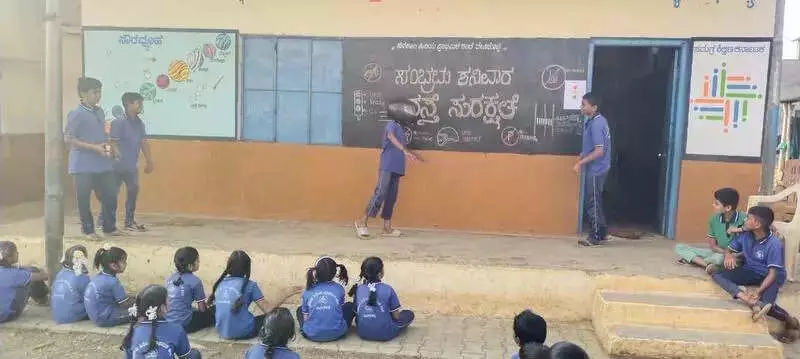
Government schools in Hubballi recently held 'No Bag Day' activities. This event formed part of 'Sambhrama Shanivar', observed on the third Saturday of each month. Students attended school without their usual textbooks or bags. They engaged in experiential learning activities instead.
National Education Policy Drives the Initiative
The initiative follows recommendations under the National Education Policy-2020. It aims to provide practical exposure beyond traditional classroom settings. Schools organized various programmes, including road safety demonstrations. Children actively showed traffic rules and participated in awareness activities.
The Department of School Education Research and Training issued a circular. It directed all schools to observe 'No Bag Day' every third Saturday. Extracurricular activities on this day received a positive response from participants. Each month features a specific theme. Activities cover topics like drug abuse prevention, media and internet use, nutrition, health, and sanitation.

Widespread Participation Across Schools
FV Manjannavar, a junior lecturer at DIET, reported strong participation. He stated that 80% of government schools observe 'No Bag Day' monthly. "We received instructions to encourage other schools to conduct this programme actively," Manjannavar explained. Students from Class 1 to 8 participated actively in the activities.
Around 700 government schools, including PM Shri schools and TCW schools, observed the day. The programme aims to make learning enjoyable and reduce the burden of heavy school bags. Authorities ordered its organization in all schools across the state.
Developing Civic Consciousness Through Modules
To develop civic consciousness, the initiative engages children in multifaceted activities. Officials prepared ten self-explanatory modules and a guidebook. These modules operate at three levels: awareness, experience, and observation. Activities allow students to undertake tasks on their own.
Schools received instructions to organize various programmes. These include awareness sessions, demonstrations, drawing, painting, drama, and special classes. The approach fosters independent learning and creativity.
Addressing Practical Concerns and Benefits
Maruthi Bhajantri, incharge headmaster at Government HPS in Chalamatti, highlighted a key issue. He noted that school bags are becoming too heavy for children. "We implemented this programme to address that problem," Bhajantri said. He believes 'No Bag Day' will boost children's intellectual levels through co-curricular activities.
"Every month, on the third Saturday, we organize various programmes," he added. This regular schedule ensures consistent engagement beyond academic routines.
Student Perspectives on the Programme
Students expressed support for the initiative. Priyamani, an eighth-class student, and Chandan Matrabanavar shared their views. They stated that 'No Bag Day' helps children get involved in activity-based learning. "Every month, we participate in this programme without bags and textbooks," they explained. Their feedback underscores the programme's practical impact on daily school life.
The 'No Bag Day' initiative in Hubballi represents a shift towards more dynamic education. It aligns with broader educational reforms while addressing immediate concerns like bag weight. By integrating monthly themes and hands-on activities, schools create a balanced learning environment for students.