Rajasthan High Court Issues Directions in Neerja Modi School Affiliation Case
The Rajasthan High Court in Jaipur delivered a significant order on Friday, providing a procedural pathway for the Neerja Modi School in its dispute with the Central Board of Secondary Education (CBSE) over the cancellation of its affiliation.
Court's Key Directives to the School and CBSE
A single-judge bench presided over by Justice Bipin Kumar Gupta issued clear instructions to both parties involved in this high-profile education matter.
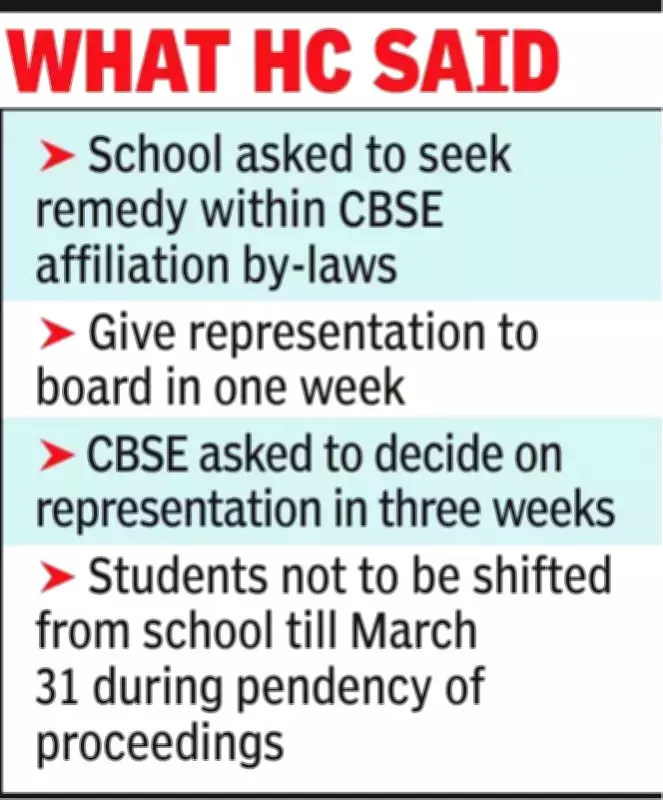
- The court directed the Neerja Modi School to seek statutory remedy from the CBSE rules against the cancellation of its affiliation.
- The school must submit a detailed representation to the CBSE board within one week from the date of the order.
- The bench ordered the CBSE to consider and decide this representation expeditiously, preferably within three weeks, and strictly in accordance with the law.
Protection for Students During Proceedings
In a crucial interim measure, the court provided protection for the students currently enrolled at the institution.

The bench explicitly ordered that no student should be shifted from the school until March 31 during the pendency of the representation proceedings before the CBSE.
This directive aims to ensure educational continuity and stability for the affected students while the statutory process unfolds.
Court's Clarification on the Nature of Its Order
Justice Gupta's bench offered important clarifications about the scope and limitations of its intervention in this case.
The court made it clear that it was not interfering with the CBSE's original order to cancel the school's affiliation.
Furthermore, the bench stated that the school would not receive any substantive relief merely on the basis of the present proceedings before the High Court.
This clarification underscores that the court's role was to ensure proper procedural compliance rather than to overturn the CBSE's substantive decision at this stage.
Broader Implications for Educational Institutions
This case highlights the critical relationship between educational institutions and regulatory bodies like the CBSE.
The court's emphasis on seeking statutory remedies first reinforces the principle that administrative bodies should have the opportunity to address grievances through their established mechanisms before judicial intervention occurs.
The order demonstrates how courts can balance regulatory authority with procedural fairness while safeguarding student interests during such disputes.