From Crime Hub to Learning Center: Jamtara's Symbolic Transformation
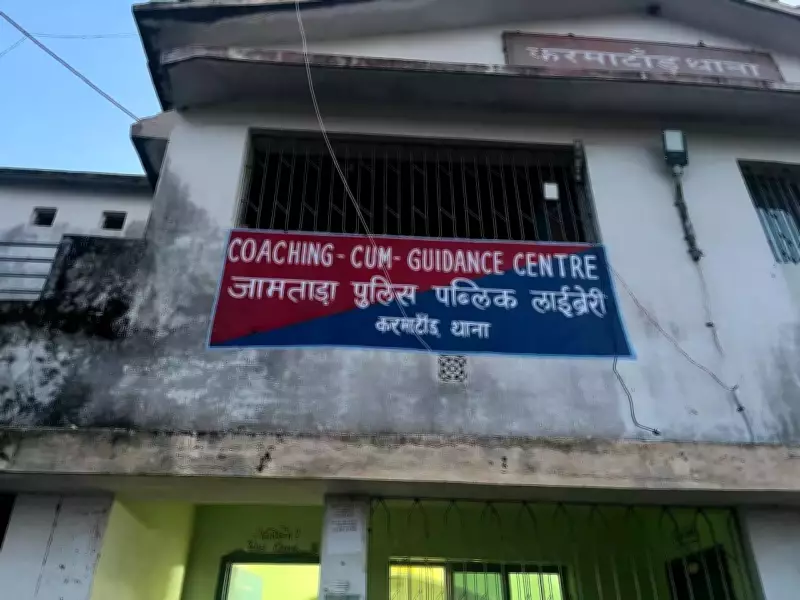
In a remarkable turnaround for a district more frequently associated with digital fraud than academic pursuits, a disused police station in Jamtara's Karmatar area has been completely repurposed. The former law enforcement building now functions as a vibrant library and integrated coaching center dedicated to serving the local youth population. This innovative facility, which officially opened its doors in April 2024, represents a conscious effort to rewrite the area's narrative.
A Facility Equipped for Modern Learning
The newly inaugurated center is not a bare-bones operation. It has been thoughtfully outfitted with contemporary educational tools to support effective learning. The infrastructure includes reliable Wi-Fi connectivity, a projector for digital presentations and visual aids, along with other fundamental learning resources. This setup ensures that students have access to both traditional study materials and modern technology, creating a holistic environment for academic growth and skill development.
Reclaiming a Legacy in a Historic Locale
The location of this transformation carries profound symbolic weight. Karmatar is a place deeply embedded in India's social reform history. It was here that the legendary Ishwar Chandra Vidyasagar, a towering figure in the 19th-century movement for education and social change, spent a considerable portion of his life advocating for knowledge and progress. For decades, his legacy defined the area. However, in more recent times, public perception shifted dramatically. The region, and Jamtara district at large, became nationally infamous as a concentrated hub for cybercrime activities, overshadowing its educational heritage.

A Deliberate Initiative to Offer Alternatives
The concept to reclaim this space was both straightforward and intentional. The driving force behind the project was Dr. Ehtesham Waquarib, the former Superintendent of Police for Jamtara. He explained that the police station building had been vacant and unused for approximately a year following its relocation to newer premises. Seeing an opportunity, he spearheaded the conversion.
"The core objective was to provide a genuine opportunity for children who possess the ambition to build a better future," stated Dr. Waquarib. "While it is true that a segment of the youth here gets lured into the world of cybercrime due to various factors, there exists a significant, often silent, majority who are eager to study, learn, and advance through legitimate means. This center is specifically for them—to nurture their aspirations and provide a positive pathway."
Part of a Broader Educational Revival in Jharkhand
This initiative in Jamtara is not an isolated case. It mirrors a wider, concerted push across the state of Jharkhand to rejuvenate public libraries and re-establish them as active community learning spaces. Earlier this year, in January 2024, the East Singhbhum district administration launched a substantial book donation campaign aimed at revitalizing the historic Dinshaw Memorial Library, which was originally established back in 1939.
Similarly, in the district of Deoghar, a collaborative project is currently in progress. The local district administration has joined forces with a public sector bank to modernize and upgrade an existing public library, transforming it into a fully digital facility. These parallel efforts across different districts signal a quiet yet determined statewide attempt to bring reading spaces and community-centric education back to the forefront of public life, countering the drift towards digital disengagement and crime.
The transformation of the Jamtara police station stands as a powerful physical metaphor—a place once meant to detain those who broke the law is now a place to empower youth to build a lawful and educated future, reconnecting the area with the noble legacy of Vidyasagar himself.