JNU and Delhi University Students Rally in Song Against Administrative Crackdowns
In a powerful display of defiance, students at Jawaharlal Nehru University (JNU) and Delhi University (DU) raised their voices through songs and poetry on Thursday, asserting their right to dissent in the face of unprecedented administrative measures. The gatherings highlighted growing tensions over what student groups describe as a systematic clampdown on protest and representation across campuses.
JNU Faces Rustication of Elected Union Panel
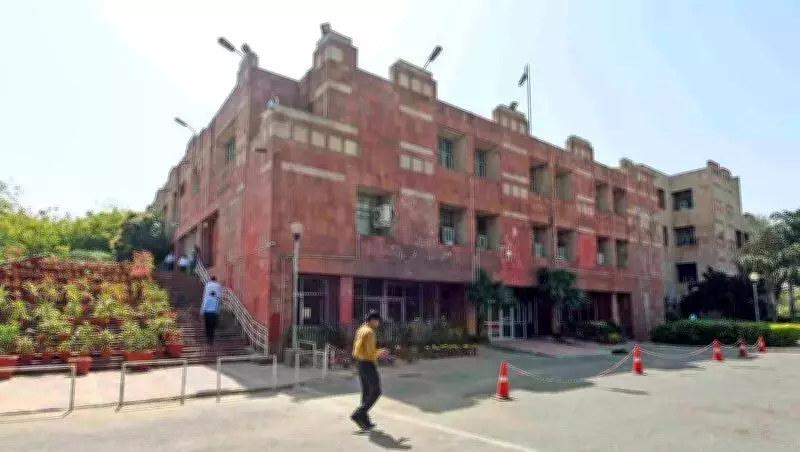
At JNU, the protest centered on the rustication of the entire elected students' union panel, a move that has left the university without elected student representation for at least the next eight months until fresh polls are held. The disciplinary action stems from alleged damage to university property during a demonstration last year against the installation of a facial recognition-based entry system in the central library, which students had opposed.
Following the rustication, members of the panel were served hostel eviction notices this year and barred from the campus. In response, supporters have been attending classes in the open, with some teachers and academic units announcing boycotts in solidarity. Student leaders have issued a series of demands, including:

- Revocation of the rustication orders
- Withdrawal of hostel eviction notices and fines
- Repeal of the CPO manual that penalizes protests on campus
Lines from "Hum Dekhenge", a poem by Faiz Ahmed Faiz associated with political resistance, echoed through a park near the School of Languages, where students have maintained an encampment for four days. The JNU administration has not responded to the ongoing protest.
Delhi University Imposes Month-Long Ban on Gatherings
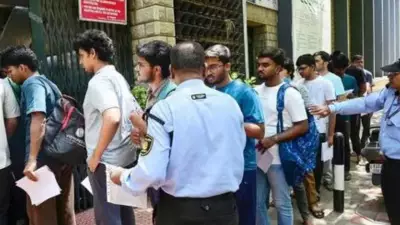
Meanwhile, at Delhi University, protests unfolded under heavy police presence on North Campus, where a month-long blanket ban on public gatherings and protests is in force. The ban, imposed after a violent scuffle during a protest against the Supreme Court's interim stay on UGC anti-discrimination regulations, has raised concerns that even academic gatherings, such as study circles, are being curtailed.
Despite a prohibitory order barring gatherings of more than five people, Left-affiliated organizations and general student bodies, including the All India Students' Federation (AISF), All India Democratic Students' Organisation (AIDSO), Parivartankami Chhatra Sanghatan (Pachhas), and Krantikari Yuva Sangathan (KYS), attempted to march near the arts faculty. Heavy police deployment stopped the march, but protesters regrouped at a back gate to continue their demonstration.
Songs again served as the language of protest, with a visually impaired student beating a dhapli and singing a satirical verse that has circulated widely on social media as political commentary. Manoj Kumar, proctor of Delhi University, stated, "Some student groups attempted to defy the prohibitory order and hold a protest near the campus. University security officials and police personnel prevented them from entering the premises. We urge students to maintain order."
Broader Implications and Campus Comparisons
The situation at DU stands out compared to other universities in Delhi, such as Jamia Millia Islamia and Ambedkar University Delhi, where protests are restricted to designated areas. DU's order applies across the entire campus, intensifying fears of a broader suppression of student activism.
Student groups at both universities have demanded the withdrawal of the administrative actions, framing them as attacks on democratic rights. The Delhi University Teachers' Association has sought a review of the ban, highlighting its potential impact on academic freedom.
As tensions simmer, the use of cultural expressions like poetry and music underscores the resilience of student movements in navigating institutional pressures. The ongoing protests reflect a critical moment in campus politics, with implications for dissent and governance in higher education across India.