JNU Makes History with Unprecedented Rustication of Entire Student Union Panel
In a landmark decision that has sent shockwaves through academic circles, Jawaharlal Nehru University has rusticated its entire four-member students' union panel, abruptly ending their tenure just three months after election. This marks the first time in the prestigious university's history that such comprehensive action has been taken against elected student representatives.
University Left Without Elected Student Representation
The unprecedented rustication means that JNU, which ranks second in the National Institutional Ranking Framework, will be without elected student representation for the next eight months. The rusticated office-bearers have been declared out of bounds for two semesters and have been directed to vacate the campus for the duration of their punishment.
The action triggered an immediate university-wide strike on Thursday, with numerous students boycotting classes in protest against what they term as arbitrary administrative decisions.

Proctorial Inquiry Leads to Severe Penalties
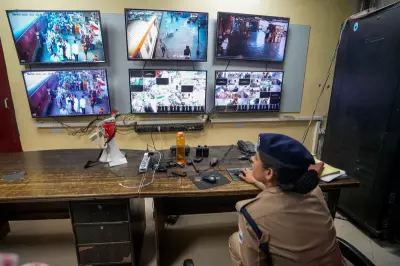
The rustication order, issued on February 2, followed a proctorial inquiry into allegations that students vandalized university property during a protest at the Central Library in November. The inquiry concluded that students were responsible for damaging the facial-recognition-based entry gate system, resulting in what the university claims was a financial loss of nearly ₹20 lakh.
The administration further alleged that two female security personnel sustained injuries while attempting to stop the protesting students. Students had previously argued that the new entry system restricted movement and access, reflecting what they called misplaced priorities when the library was facing acute space shortages.
Financial Penalties and Broader Consequences
Beyond the four office-bearers, former JNUSU president Nitish Kumar has also been rusticated. All five individuals have been ordered to pay a fine of ₹20,000, while eight other students face penalties of ₹19,000 each. University officials have stated that these amounts must be paid by February 13, with further action possible for non-compliance.
Responding to mounting protests and questions about the absence of student representation, JNU administration officials emphasized that they are seeking legal counsel and that all actions have been taken strictly in accordance with the university's disciplinary rules. They confirmed that no separate or interim elections will be held to appoint another students' union, with the next JNUSU elections proceeding according to the usual schedule.
Concerns Over Election Process and Student Autonomy
Student representatives have raised significant concerns about the absence of a caretaker union during this transitional period. In JNU, the caretaker union traditionally plays a crucial role in initiating the process to constitute the election committee that oversees JNUSU elections. The university's elections have historically been entirely student-run, with no administrative intervention.
Former JNUSU president Nitish Kumar expressed apprehension that the university administration might step in to appoint an election committee, a practice common in Delhi University but foreign to JNU's tradition of independent student governance. "The election process in JNU has historically been conducted independently by students," Kumar emphasized.
Political Reactions and Solidarity Movements
During Thursday's strike, students demanded the immediate revocation of rustication orders and withdrawal of all imposed fines. At a press conference held at the Press Club of India, student groups characterized the administration's actions as "arbitrary" and "deliberate," alleging they were designed to suppress student mobilization against the UGC equity regulations and the Viksit Bharat Shiksha Adhishthan Bill, 2025.
Rajya Sabha MP Manoj Jha, present at the conference, stated, "The university is a space for dialogue, not a fortress of surveillance. Targeting student leaders for defending social justice is a sign of institutional weakness, not strength."

The press conference saw participation from representatives of teachers' organizations, while student groups from other universities and political organizations, including the Congress-backed NSUI, expressed solidarity with the rusticated students.
Looking Forward: Implications for University Governance
According to Lyngdoh Committee guidelines governing students' union elections in universities, elections must be held within six to eight weeks after the completion of all admissions. In JNU, the final phase of admissions typically concludes around late October, setting the timeline for future electoral processes.
The current situation presents significant challenges for student governance and representation at one of India's premier educational institutions, raising broader questions about administrative-student relations and the preservation of democratic processes within academic environments.