Dr. APJ Abdul Kalam's Vision: Education as a Chain of Habits, Not a Race for Marks
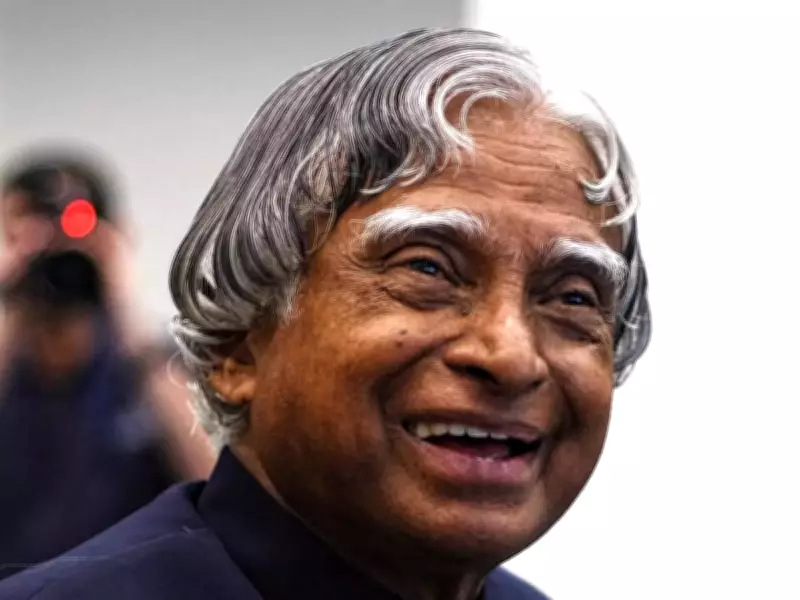
Dr. APJ Abdul Kalam, India's beloved former President and visionary scientist, frequently emphasized that education should not be viewed as a mere competition for high scores. Instead, he described it as a chain of habits that fundamentally shapes an individual's growth and development. In one concise yet powerful statement, he outlined this chain with remarkable clarity: Learning leads to creativity. Creativity leads to thinking. Thinking leads to knowledge. For students grappling with the pressures of exams, academic uncertainty, and performance anxiety, this quote offers far more than simple inspiration—it provides a practical framework for meaningful education.
Five Transformative Lessons Students Can Learn from Dr. Kalam's Philosophy
1. Learning is the Starting Point, Not the Finish Line
Dr. Kalam strategically places learning at the very beginning of his educational chain, rather than treating it as an endpoint. Students are often conditioned to believe that learning is primarily about outcomes such as grades, ranks, or college admissions. However, in Kalam's perspective, learning serves as an essential input—the raw material from which all else derives. What students read, observe, practice, and question forms the foundational base upon which creativity and knowledge are built.
This paradigm shift moves the focus away from mere performance and redirects it toward the process of learning itself. It reassures students that learning retains its intrinsic value even when it does not immediately yield tangible results. The core purpose of learning is to prepare the mind for subsequent stages of intellectual and personal development.

2. Creativity Grows from Exposure, Not Inherent Talent
Creativity is frequently misconstrued as a rare gift possessed only by a select few students. Dr. Kalam, however, directly links creativity to the act of learning. His message is straightforward: creativity is not separate from academic study; it naturally emerges when students engage with diverse ideas, complex problems, and varied perspectives that extend beyond their standard syllabus.
For students, this implies that creativity does not necessitate dramatic, groundbreaking discoveries. It can begin with small, intentional actions such as connecting concepts from different chapters, questioning why a particular method works, or imagining real-world applications of classroom theories. The broader and more varied a student's learning experiences, the greater the opportunity for creative thought to flourish.
3. Thinking is an Active Skill, Not Passive Absorption
In Dr. Kalam's sequence, creativity serves as the catalyst for thinking. This highlights that thinking is not an automatic or passive process but rather an active skill that demands genuine engagement. Students often confuse repetition with true understanding, where memorizing notes might feel productive but fails to activate deeper cognitive processes.
Thinking truly begins when students start to test ideas, challenge assumptions, and articulate concepts in their own words. This stage often involves encountering confusion, which should not be viewed as a failure. Instead, it signals that the mind is actively working and processing information. Dr. Kalam's framework validates this struggle as an integral part of intellectual growth and development.
4. Knowledge is Constructed, Not Delivered
The quote culminates with thinking leading to knowledge. Here, knowledge is not merely information handed down by teachers or textbooks; it is something that must be constructed through personal effort. This represents a crucial correction to how many students perceive education.
When knowledge is seen as something to be passively received, students tend to wait for it to be delivered. Conversely, when viewed as something to be actively built, students take ownership of their learning journey. They proactively seek clarity, request feedback, and revisit ideas to deepen understanding. This approach equips students not only for academic exams but also for real-world scenarios where predefined answers are unavailable.

5. Education is an Interconnected Chain with Consequences
Dr. Kalam's quote functions as a cohesive chain where each link is interdependent. If one link is weakened or removed, the entire system suffers. For instance, if learning is reduced to rote memorization, creativity diminishes. Without creativity, thinking becomes superficial, and without deep thinking, knowledge remains fragile and incomplete.
Ultimately, education is not about proving one's intelligence but about developing it progressively. Learning nourishes creativity, creativity hones thinking, and thinking solidifies knowledge. For students who embrace this sequential approach, education transforms from a source of anxiety into a guided journey of discovery and empowerment.