Karnataka Headmaster's Home Library Initiative Transforms Education in Madnal Village
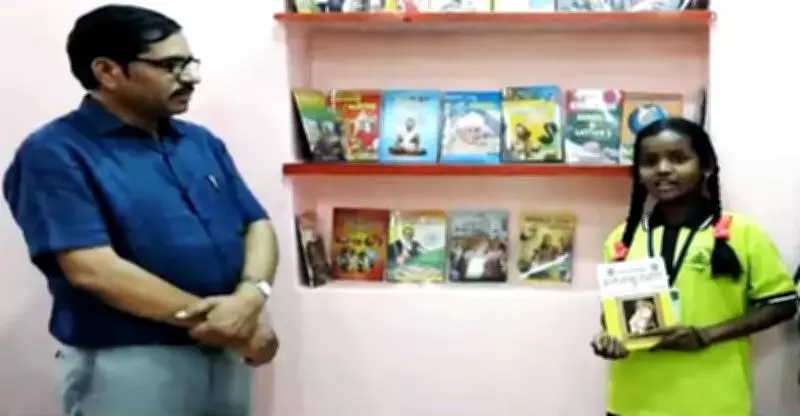
In a remarkable demonstration of grassroots innovation, a government school headmaster in Karnataka's Kushtagi taluk has launched a transformative campaign to cultivate reading habits among students, effectively countering the pervasive influence of digital screens. Sharanappa Tumarikoppa, headmaster of the government higher primary school in Madnal village, has pioneered the 'Maguvina Mane Granthalaya' (Child's Home Library) initiative, setting up mini libraries in homes to provide children with easy access to books.
Community-Driven Approach to Reduce Screen Dependency
The primary objective of this innovative program is to diminish children's reliance on mobile phones and television by offering a compelling alternative. Tumarikoppa personally engages with parents, persuading them to establish small reading spaces within their households. For families unable to afford books, the headmaster mobilizes donations to ensure every child can benefit from a home library. To date, approximately 100 homes have been equipped with these libraries, with an ambitious target of exceeding 200 installations.
Parents have reported significant positive changes since the initiative's implementation. Sridevi Patil, a local parent, shared, "Since we created a library at home, our children's screen time has reduced dramatically. Sharanappa sir also awards special prizes to students who read books quickly and explain their content. Now, even neighborhood children gather together to read, fostering a collaborative learning environment."

Strategic Focus on Meaningful Alternatives
Sharanappa Tumarikoppa emphasizes that merely restricting television or mobile phone usage is ineffective without providing engaging substitutes. Under the home library initiative, students receive a curated selection of easy-to-read books, including vachanas, moral stories, and titles on national leaders and science. This diverse collection has successfully increased reading time among participants, making literature an integral part of their daily routines.
Madnal village School Development and Monitoring Committee (SDMC) president Sharanappa Hatti has warmly endorsed the program, noting that children are delighted with the home libraries and are dedicating more time to reading alongside their standard textbooks.
A Legacy of Educational Innovation
This is not Sharanappa Tumarikoppa's first foray into revolutionizing government school education. Previously, while serving as a cluster resource person for Menedal and Sanganal clusters in Kushtagi taluk, he pioneered the introduction of smart classes in government schools through community support. Despite lacking assured government funding, he secured public contributions and invested personal resources to initiate smart classes in 12 schools.
Inspired by his efforts, former MLA Amaregouda Bayyapur later secured government funds to expand smart classes to numerous additional schools. Consequently, Kushtagi taluk now boasts one of the highest numbers of smart classrooms in the district, a achievement widely attributed to Tumarikoppa's dedicated endeavors.
Expanding Influence and Replication
The 'child's home library' concept is gaining traction beyond Madnal village, attracting attention from other school clusters. Teachers from neighboring areas have expressed interest in replicating this model in their own institutions. Much like the earlier smart class initiative, the home library campaign is rapidly gaining momentum throughout Kushtagi, showcasing the power of community-driven educational reforms.
This initiative underscores how proactive leadership and community involvement can address common criticisms of government schools, such as inadequate facilities, by creating sustainable, impactful solutions that directly benefit students' academic and personal development.