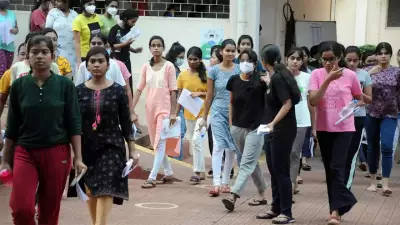
Gone are the days when education had a clear finish line. The world of knowledge is in constant motion, rendering what was learned just five years ago potentially obsolete. Jobs evolve, tools get upgraded, and even the "correct" answers shift with context. This reality can be deeply unsettling, especially for parents who were raised with the belief that learning concludes with a degree or a diploma.
The School's Role and Its Limits in a Fast-Paced World
While formal schooling remains critically important, it can no longer bear the entire burden of a child's education. No standard curriculum can possibly keep pace with the breathtaking speed at which the world now transforms. Children intuitively grasp this gap, even if they lack the vocabulary to express it. The void left by this rapid change is filled not by more information, but by attitude and approach.
The fundamental goal, therefore, shifts from merely imparting static facts to equipping children with the ability to keep learning when those facts inevitably change. Do children view learning as a chore to be endured for passing exams? Or do they see it as a natural, driven by curiosity, a need to solve problems, or a desire to better understand their world? This foundational mindset is most often cultivated not in the classroom, but within the home.

Fueling the Engine: Cultivating Curiosity and a Safe Space for Mistakes
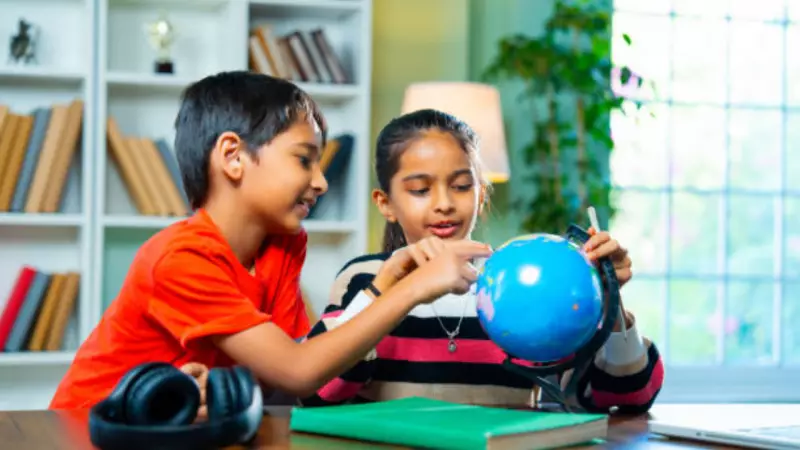
Curiosity is the non-negotiable engine of lifelong learning. It propels individuals to ask questions not out of obligation, but from a genuine desire to know more. This trait flourishes under permission, not pressure. When a child asks "why," the instinct might be to provide a quick answer. A more powerful approach is to pause, sit with the question, and ask what they think. Wonder aloud together, demonstrating that questions are journeys, not races to a conclusion. Sometimes, the value lies in not knowing immediately.
In this environment, mistakes must be reframed from being the enemy to being vital parts of the process. If being wrong always leads to embarrassment, children will retreat to safe, unexplorative zones. When missteps are discussed openly—what didn't work and what could be tried next—learning feels less risky. The focus should consistently be on effort and strategy, not solely on the outcome.
Modeling the Mindset: From Memorization to Motivated Learning
Children absorb what they observe far more than what they are told. When they see adults reading, asking questions, tackling new skills, and working through confusion, they internalize learning as a normal, lifelong activity. Simple phrases like, "I didn't know that either" or "I'm still figuring this out" are powerful. They shatter the myth that learning ends with adulthood and give children explicit permission to remain perpetual growers.
Ultimately, motivation will always trump rote memorization. Facts can be retrieved with a quick search, but intrinsic drive cannot. Children who *want* to learn will find a way. Instead of a relentless push for achievement, tuning into a child's genuine interests—what makes time disappear for them—creates a powerful anchor. Learning sticks when it connects to something they genuinely care about. This doesn't mean avoiding difficult subjects, but rather providing a compelling reason to engage with them.
When knowledge evolves quickly, feeling behind is inevitable. Lifelong learners differentiate themselves by not panicking. They adapt, ask new questions, and start again. Parents and educators can build immense resilience by normalizing this feeling. Admitting, "This is new to me too," instead of pretending to have all the answers, fosters honesty and strength. Raising lifelong learners isn't about creating experts in fixed fields, but about nurturing individuals who remain curious, flexible, and open—people who won't freeze when the rules of the game change. While the world's constant shifts are beyond our control, helping children fall in love with the process of learning, even when it's uncomfortable, is a gift that will serve them long after today's facts have faded.