Maharashtra Education Department Takes Strong Stand Against School Vendor Compulsion
The Maharashtra State Education Department has implemented a significant policy change that directly benefits parents and students across the state. In a decisive move, the department has officially prohibited private schools from compelling parents to purchase uniforms, textbooks, notebooks, or any other learning materials exclusively from specific vendors or the schools themselves.
Ending Long-Standing Practices That Increased Financial Burden
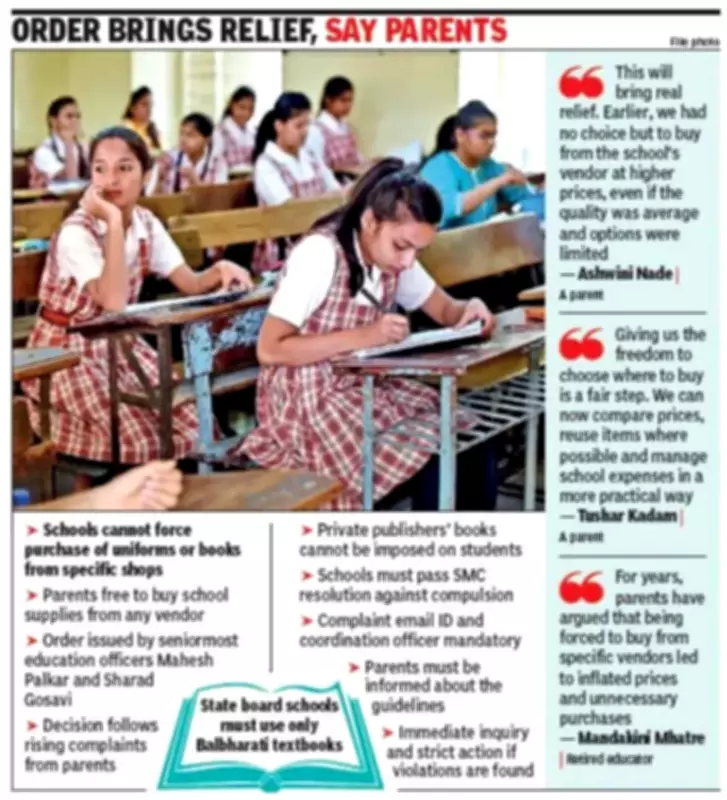
This groundbreaking circular, issued jointly by Director of Education (Secondary and Higher Secondary) Mahesh Palkar and Director of Education (Primary) Sharad Gosavi, comes as a response to mounting complaints from parents throughout Maharashtra. For years, numerous schools had allegedly insisted that parents buy essential school items only from authorized sellers, leaving families with limited options and reduced bargaining power.
Parents are now completely free to purchase these necessary items from any shop or vendor of their choice, effectively ending a practice that frequently resulted in higher costs and restricted selection. This policy shift represents a substantial victory for consumer rights within the education sector.

Comprehensive Guidelines and Enforcement Mechanisms
The education department has established clear and comprehensive instructions for school managements to ensure proper implementation of the new rules:
- Schools must pass a formal resolution within their School Management Committees (SMCs) explicitly stating that no compulsion will be imposed regarding the purchase of uniforms or study materials
- Each school is required to appoint a dedicated coordination officer specifically tasked with handling related issues
- Institutions must establish a formal complaint mechanism, including a dedicated email address for grievances
- Schools have an obligation to actively inform parents about these new rights and guidelines
Furthermore, the circular reinforces that state board schools must utilize only officially approved Balbharati textbooks and cannot force students to purchase books published by private companies.
Strict Penalties for Non-Compliance
The department has outlined serious consequences for schools that violate the new regulations. When the education office receives complaints from parents, concerned education or administrative officers will conduct immediate investigations. If allegations are substantiated, schools will face strong administrative and penal actions.
While the exact fine amounts will vary depending on the nature and severity of complaints, the department has made it clear that violations will not be tolerated. This represents a significantly tougher stance against unfair practices within educational institutions.
Parental and Expert Reactions
Education experts have welcomed the move, suggesting it could bring substantial relief to thousands of families, particularly those struggling with escalating school-related expenses. The policy addresses fundamental concerns about transparency and financial fairness in education.
"This will bring real relief to parents," said Ashwini Nade, a parent affected by previous practices. "Earlier, we had no choice but to buy from the school's vendor at higher prices, even when quality was average and options were limited."
Tushar Kadam, another parent, expressed appreciation for the new freedom: "Giving us the choice of where to purchase school supplies is a fair and practical step. We can now compare prices, reuse items where possible, and manage school expenses more effectively."
Retired educator Mandakini Mhatre noted that "for years, parents have argued that being forced to buy from specific vendors led to inflated prices and unnecessary purchases. This policy change addresses those legitimate concerns."
Implementation Challenges and Future Outlook
While the circular represents a significant policy advancement, its ultimate success will depend on effective implementation and parental awareness. The department's ability to enforce the regulations consistently across the state, combined with parents' willingness to report violations, will determine the policy's real-world impact.

Director Mahesh Palkar emphasized that the new guidelines aim to ensure greater transparency and reduce the financial burden on families. By empowering parents with purchasing choices and establishing clear accountability mechanisms, the Maharashtra Education Department has taken a substantial step toward creating a more equitable educational environment for all stakeholders.