Maharashtra Education Minister Advocates for Systemic Overhaul to Prepare Students for Global Stage
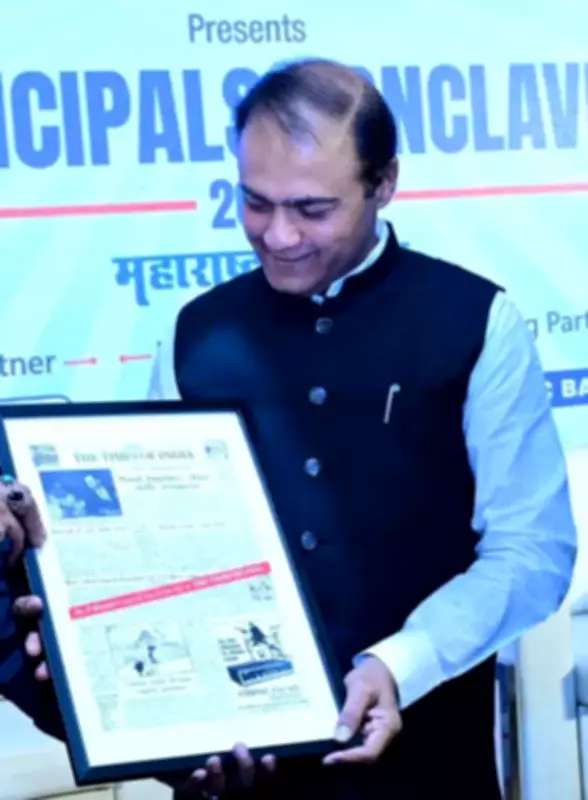
Nagpur: In a significant address at the TOI Principals Conclave 2026, Maharashtra's Minister of State for School Education, Dr Pankaj Bhoyar, articulated a compelling vision for a future-ready education system designed to empower students to compete on the global platform. While championing this transformative agenda, the minister candidly acknowledged the persistent operational hurdles confronting schools, including regulatory overlaps, staffing deficiencies, and procedural delays in compliance.
Architects of the Future: Principals and Government's Commitment
Speaking as the chief guest, Dr Bhoyar lauded school principals as the "architects of the future," underscoring the state government's unwavering dedication to systemic transformation within the education sector. He emphasized that the core focus areas are achieving academic excellence, ensuring global readiness, fortifying infrastructure, and broadening student exposure to diverse learning experiences.
"Maharashtra is actively developing futuristic model schools. Talent is ubiquitous, but opportunities are not. Our primary mission is to bridge this critical gap," declared the minister, highlighting the state's proactive initiatives.

Flagship Programs and International Collaborations
Dr Bhoyar detailed several flagship programs aimed at elevating educational standards. The CM Vidnyan Vari initiative is set to facilitate student visits to premier scientific institutions like ISRO and NASA, while the CM Digital Abhiyan will deliver standardized academic content across digital platforms. Furthermore, the state board syllabus has been comprehensively reformatted to align with the National Education Policy (NEP), ensuring parity with national educational boards.
In a move toward internationalization, the minister pointed to groundbreaking Memorandums of Understanding with Cambridge. These agreements will introduce international pedagogical frameworks for government school students and launch a climate awareness program offering internationally recognized certification.
Addressing Systemic Challenges and Operational Hurdles
During an interactive question-and-answer session, Minister Bhoyar directly addressed concerns from school principals regarding bureaucratic complexities involving multiple authorities and compliance delays. He assured that digitization processes are being accelerated to streamline administrative procedures, though he openly admitted to initial difficulties in the rollout of the Shalarth ID system.
"That was a challenging phase, but we are now actively strengthening the system to ensure smoother implementation," he stated, acknowledging past setbacks while projecting a path forward.
Inclusive Policy Framework and Infrastructure Development
Dr Bhoyar announced pivotal policy decisions to foster inclusivity. Representatives from CBSE and ICSE schools will be formally integrated into district-level decision-making processes, ensuring they are no longer excluded from critical discussions affecting all educational institutions. Additionally, the state government will amend existing rules to enable teachers from unaided schools to participate in government-sponsored training programs conducted by District Institutes of Educational Training.
On the infrastructure front, government schools are poised for major upgrades under the PM Shri Schools scheme, with plans to develop holistic 'model schools' that prioritize the academic, physical, and mental well-being of students. The minister also clarified that the induction of BPed teachers would not result in a reduction of regular teaching staff and indicated that age-related criteria for teachers would be reviewed.
Statistical Insights and Future Initiatives
Providing a statistical overview, Dr Bhoyar noted that Maharashtra boasts 1.07 lakh schools, with approximately 65,000 being government-run institutions. He acknowledged existing manpower shortages despite an 80% staffing rate and pledged decisive action on examination center issues and RTE admission fraud cases.

In a thrilling update for aspiring young scientists, final approval is imminent for a proposed trip to NASA in the United States for 21 top-performing students from the state-level science exhibition. "Such immersive exposure is instrumental in fostering curiosity and expanding academic horizons," remarked MoS Bhoyar, underscoring the value of experiential learning.
The minister also confirmed that kindergartens are now being formally registered by the government, marking a step toward greater oversight and standardization in early childhood education.