Maharashtra's MHT-CET 2026 Kicks Off with Unprecedented Student Participation
Nagpur: The Maharashtra State Common Entrance Test Cell is gearing up for a landmark engineering entrance examination as over 4.79 lakh students are set to appear for the first phase of the MHT-CET PCM group examinations starting April 11. This massive turnout represents a significant milestone in the state's technical education landscape, marking the official rollout of a new two-attempt system designed to align with national-level testing patterns.
Examination Schedule and Format Details
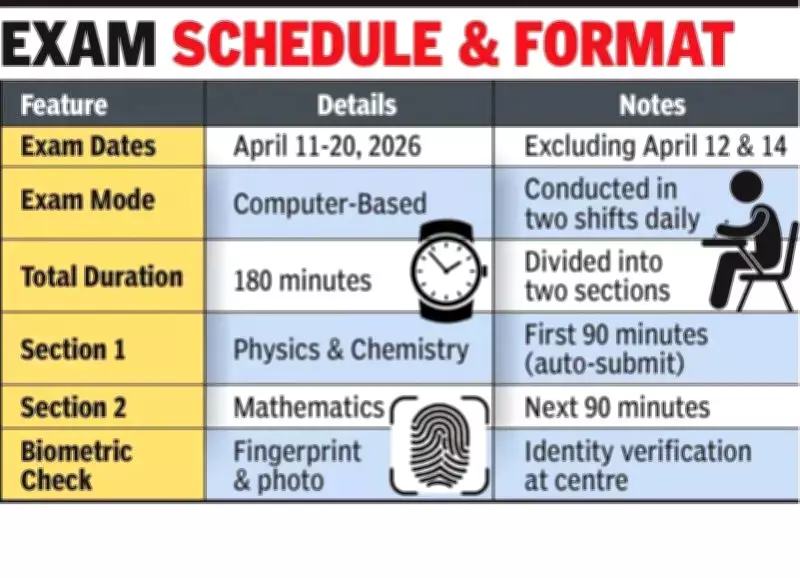
The computer-based examination, conducted for admissions to engineering, pharmacy, and agriculture courses for the 2026-27 academic year, will be held across 198 centers spanning all 36 districts of Maharashtra. The testing window runs from April 11 to April 20, with examinations scheduled daily except for April 12 and April 14. Each day will feature two separate sessions to accommodate the enormous number of candidates.
The examination format has been structured to ensure comprehensive assessment:

- Total Duration: 180 minutes
- Section 1: Physics and Chemistry (90 minutes, auto-submit)
- Section 2: Mathematics (90 minutes)
- Verification Process: Biometric fingerprint and photo identification at each center
Revolutionary Two-Attempt System Implementation
In a groundbreaking policy shift, candidates are now being offered two opportunities to take the MHT-CET examination. While the first phase runs through April, the second attempt is scheduled between May 14 and May 16. This strategic move follows directives from Higher and Technical Education Minister Chandrakant Patil, bringing Maharashtra's examination structure closer to national formats like the Joint Entrance Examination (Main), which already offers multiple attempts.
"If a student appears for both attempts, the higher percentile will be considered for admission," clarified CET authorities, while emphasizing that appearing for at least one attempt remains mandatory for all registered candidates.
Record-Breaking Registration Numbers and Demographic Breakdown
The PCM group alone has witnessed a substantial increase of 15,070 registrations compared to the previous year, with total applicants jumping from 4,64,262 in 2025 to 4,79,332 for just the first attempt in 2026. The demographic distribution reveals:
- 2,89,707 male candidates
- 1,89,604 female candidates
- 21 transgender candidates
- 2,750 orphan candidates
- 2,060 persons with disabilities
When considering both attempts, the total registration count reaches an astonishing 7,75,885 students, reflecting a dramatic surge in participation over the past four years. This represents a remarkable growth from 3,13,731 registrations in 2023-24 to nearly 7.76 lakh in the current academic cycle.
Impact on Technical Education and Future Implications
The introduction of multiple attempts is expected to create a dual effect on Maharashtra's technical education ecosystem. While providing students with reduced examination pressure and additional opportunities to showcase their capabilities, it simultaneously intensifies competition for coveted seats in engineering, pharmacy, and agriculture programs.
Education officials note that this policy evolution reflects Maharashtra's commitment to expanding its technical education pipeline in synchronization with national skilling initiatives and higher education trends. The state's alignment with national examination patterns demonstrates a forward-thinking approach to educational reform that prioritizes student flexibility while maintaining rigorous academic standards.
As the first phase commences, all eyes are on how this new examination structure will influence admission patterns, student performance, and the overall quality of technical education in Maharashtra. The successful implementation of this two-attempt system could potentially serve as a model for other state-level entrance examinations across India.