Mumbai Study Exposes AI's Homework-Focused Use in Civic Schools
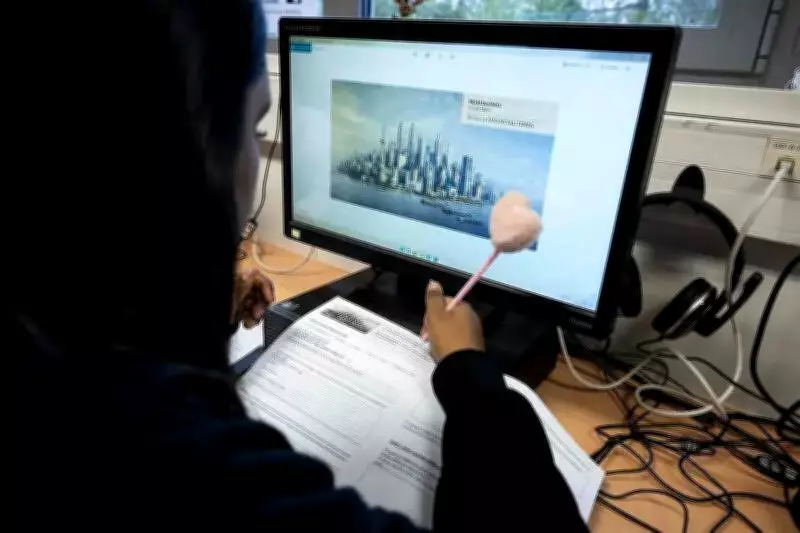
A comprehensive joint study conducted by the Salaam Bombay Foundation and NMIMS School of Business Management has uncovered a significant trend in Mumbai's civic schools. The research reveals that an overwhelming 80% of students are aware of artificial intelligence tools. However, their application is predominantly centered around practical tasks like homework completion, language translation, and problem-solving rather than fostering deeper conceptual understanding or curiosity-led exploration.
Methodology and Key Findings
The study engaged 1,050 Class IX students across 20 public schools in Mumbai, supplemented by in-depth focus group discussions with 12 educators. It identified several critical issues emerging from the informal adoption of AI in educational settings. While awareness levels are notably high, the usage patterns remain largely exposure-driven and unstructured. Students frequently rely on AI platforms to solve mathematics problems, translate languages, and finish assignments, with minimal evidence of using these technologies to explore concepts beyond the prescribed syllabus or to satisfy intellectual curiosity.
Rising Concerns: Cognitive Offloading and Behavioral Shifts
A primary concern highlighted in the report is the phenomenon of cognitive offloading, where students increasingly transfer mental effort onto AI systems. Researchers observed a distinct behavioral shift from studying to searching, characterized by reduced emphasis on independent problem-solving, deep engagement with textbooks, active participation in classroom discussions, and the development of patience for effort-based learning. This trend was found to be more pronounced among male students, indicating potential gender-based disparities in AI interaction patterns.

Teacher Perspectives and Classroom Realities
Educators participating in the study confirmed that AI has already permeated classroom environments, yet its integration remains fragmented and informal. Several teachers reported noticeable declines in student attention during lessons, a tendency to skip traditional note-taking, and a growing reliance on AI-generated shortcuts for assignments instead of employing independent reasoning and critical thinking skills.
The Core Challenge: Unregulated Adoption Without Pedagogy
The report emphasizes that the fundamental issue lies not with artificial intelligence itself, but with its unregulated adoption in the absence of a clear pedagogical framework. High exposure combined with trial-and-error usage, without structured classroom guidance, risks creating habitual dependency on these tools. This scenario could undermine the development of essential cognitive abilities and self-reliant learning habits among students.
Persistent Digital Inequalities and Access Barriers
The study also shed light on persistent and troubling inequalities in AI access. More than half of the surveyed students reported significant barriers, including shared digital devices and unreliable internet connectivity. Furthermore, students from English-medium schools and families with higher educational backgrounds demonstrated substantially greater familiarity and usage levels with AI tools. This disparity suggests that, rather than bridging existing learning gaps, AI may inadvertently reinforce and widen them, exacerbating the digital divide.
Expert Insights and Recommendations
Vivek Sawant, Chief Mentor at Maharashtra Knowledge Corporation Limited (MKCL), expressed growing concern that students might begin to "offload all thinking" onto AI platforms. He advocated for a systemic shift away from predictable exam patterns and rote learning, proposing that students be taught to use AI as a complementary tool that enhances rather than replaces human intelligence.

Eva Chopra of the LEAD Group, which focuses on developing educational technologies and curricula, suggested that AI models in education can be intentionally designed to promote curiosity and critical thinking. "AI models can be designed in such a way that they promote curiosity and critical thinking which schools can use, instead of typical AI models which spoon-feed answers to students," she explained, highlighting the potential for more pedagogically sound AI applications.
Strategic Recommendations for the Future
The study concludes with a series of actionable recommendations to harness AI's potential responsibly in education. These include a shift towards analytical and application-based assessments, significant improvements in digital infrastructure and reliable internet access, the development of curriculum-linked AI tools, and comprehensive hands-on teacher training prior to wider classroom integration.
Vivek Sawant also issued a caution regarding the early introduction of digital devices, advising that screens should not be provided to students before Class VIII and should only be introduced when children have reached a relative level of mental maturity.
The report underscores a crucial imperative: as artificial intelligence becomes increasingly embedded in school learning ecosystems, the focus must urgently shift from mere access to ensuring structured, equitable, and academically guided use. This transition is essential to prevent the reinforcement of educational inequalities and to foster an environment where AI serves as a catalyst for genuine intellectual growth rather than a shortcut that undermines foundational learning skills.