Major Overhaul Proposed for NEET-UG Admissions System
A significant transformation in the NEET-UG admissions process may be imminent, with authorities considering a fundamental shift from the current percentile-based eligibility criteria to a percentage-based system. This proposed change aims to substantially improve the quality of entrants into medical and dental education programs across India.
Current System and Proposed Changes
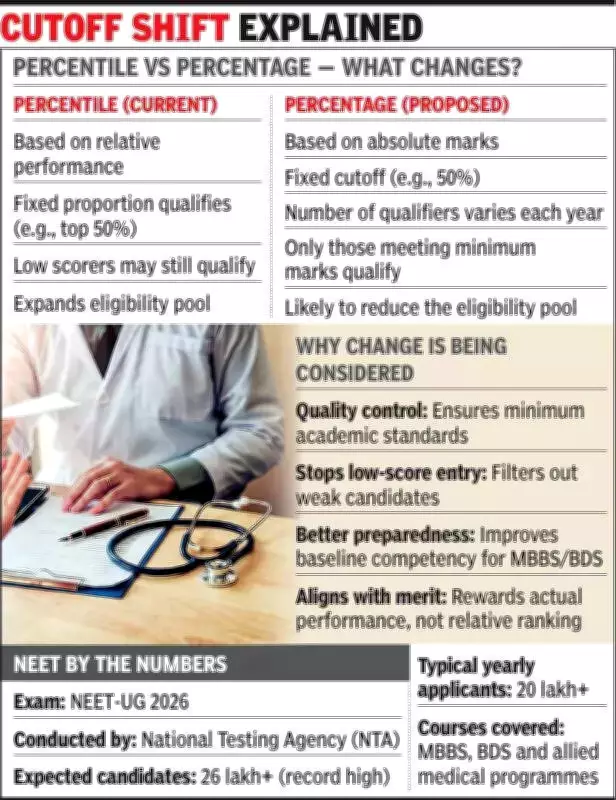
Under the existing framework, students must achieve at least 50% marks in their Class 12 examinations and then qualify for NEET-UG based on percentile scores. This percentile system determines eligibility through relative performance, meaning candidates can qualify even with comparatively low marks if the overall examination scores are generally low that year.
Dr. Aruna Vanikar, former president of the Undergraduate Medical Education Board at the National Medical Commission, explained the rationale behind the proposed shift. "At present, eligibility is determined by percentile, where candidates qualify based on relative performance. This often allows even those with low marks to qualify if overall scores are low," Vanikar stated.

Impact on Candidate Pool and Quality Standards
The proposed percentage-based system would introduce a fixed cutoff determined by actual marks obtained, rather than relative ranking. This change could significantly reduce the number of eligible candidates while potentially improving the academic quality of those who do qualify.
"With percentage, the number of eligible candidates may come down, but the quality improves," Vanikar emphasized. Unlike the percentile system where a fixed proportion qualifies annually regardless of absolute performance, a percentage-based cutoff would mean eligibility varies depending on actual examination performance each year.
Growing Scale of NEET-UG Examinations
The National Testing Agency will conduct NEET-UG 2026 on May 3, with registrations expected to exceed 26 lakh candidates, making it the largest edition of the examination to date. Currently, more than 20 lakh candidates appear for NEET-UG annually, with approximately 10 lakh qualifying each year under the existing system.
This continuous expansion has raised substantial concerns about the size of the eligible candidate pool and its potential impact on academic standards in medical education. The sheer volume of qualified applicants has prompted authorities to reconsider the fundamental eligibility criteria.
Potential Consequences and Strategic Shifts
If implemented, this shift could dramatically shrink the number of eligible candidates, intensifying competition for the limited number of medical and dental seats available nationwide. The change would also encourage students to focus on achieving higher absolute scores rather than simply improving their relative rank compared to other candidates.
Furthermore, this transformation would likely alter coaching strategies and preparation approaches, shifting emphasis toward maximizing marks rather than optimizing relative performance. The proposal is being viewed as a strategic move to ensure only candidates meeting a minimum academic benchmark enter the medical admission pool.
"We proposed moving to percentage... there is a possibility that it may be considered," Vanikar revealed, indicating that discussions are actively underway regarding this potential overhaul of the NEET-UG admissions framework.