Redefining Education: A Holistic Approach Beyond Academics
In today's rapidly evolving world, education is increasingly recognized as a holistic and dynamic process that extends far beyond traditional academic instruction. This modern perspective encompasses real-world awareness, emotional intelligence, and practical understanding, adapting learning environments to meet the demands of changing societal and professional landscapes. Schools worldwide are actively exploring innovative methods to make education more relevant, experiential, and deeply connected to life outside the confines of textbooks.
Bridging Theory and Experience: The Role of Diverse Perspectives
There is a growing emphasis on closing the gap between theoretical knowledge and lived experience. Educators now acknowledge that exposure to diverse perspectives and real-world contexts plays a crucial role in shaping how children interpret and apply their learning. This approach not only enhances conceptual understanding but also fosters curiosity, empathy, and critical thinking skills among students, preparing them for future challenges.
Some of the most impactful learning moments for children occur when classroom concepts are brought to life through authentic human stories. The Gaudium school exemplifies this philosophy, believing that education should not be confined to classroom walls. Instead, it aims to help children see, feel, and connect their learning to the everyday world they experience. A key strength of the school community lies in its robust parent network, where parents serve not only as loving caregivers but also as professionals from varied fields such as medicine, engineering, entrepreneurship, research, arts, and technology.

Parent Partnerships in Action: Enriching the Learning Journey
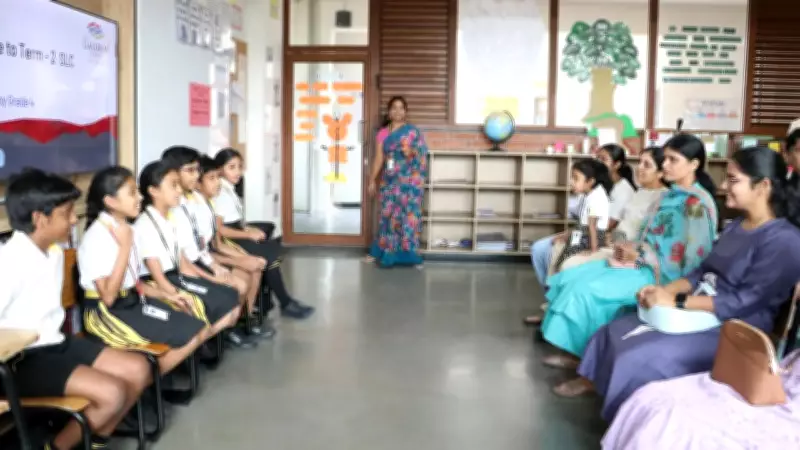
From the Early Years onward, students are given opportunities to listen to real-life experiences shared by their parents, who are often viewed as their first teachers. There is something uniquely special when a child witnesses their own parent or a friend's parent step into the classroom to share stories from beyond school. This practice builds a vital bridge between learning and life, linking abstract concepts with tangible lived experiences.
Key initiatives include:
- Coffee Meets: These sessions provide a platform for parents to engage in open conversations with the school, offering reflections, feedback, and ideas that foster community growth and strengthen trust and collaboration.
- Guest Talks: Parents enthusiastically participate as guest speakers, sharing their professional journeys and life experiences. These talks bring real-world relevance into the classroom, inspiring students through authentic storytelling.
- Orientations: Interactive and insightful parent orientations allow parents to actively engage with the school's vision and curriculum. Their questions and inputs help build a strong foundation for the academic year.
- Student-Led Conferences: Parents play an integral role by listening, encouraging, and celebrating their child's progress, boosting student confidence and making the learning journey more meaningful and personal.
- Beyond the Classroom: Parents extend support as guides and mentors during activities like Innovation Masterclasses, Science Exhibitions, and Panel Discussions, enriching student learning with their expertise and real-world insights.
Bringing Themes to Life: Real Stories with Emotional Depth
Whether students are exploring concepts such as role models, migration and belonging, technology in professions, or health and well-being, parent experts help animate these themes in relatable ways. When parents discuss role models, they often share not only stories of success but also moments of struggle, resilience, and courage. Children listen with wide-eyed curiosity, learning that role models are not distant figures but real people around them who exemplify kindness, determination, and purpose.

During units on migration, parents who have relocated across cities, countries, or continents share personal journeys of leaving familiar places, building new homes, and finding belonging in new environments. These narratives resonate deeply with children, fostering empathy and a sense of connection to others' experiences. Technology professionals from the parent community bring excitement by demonstrating how digital tools, innovation, and creativity shape today's world of work, sparking curiosity and future aspirations.
Equally impactful are sessions led by doctor parents and health professionals, who educate children on physical health, nutrition, emotional well-being, and self-care. Their presence reassures students and underscores the importance of caring for both body and mind.
The Power of Authenticity: Shaping Future Changemakers
What makes these experiences so powerful is the warmth and authenticity they bring. Children are not merely learning about the world; they are hearing stories filled with emotion and purpose. They see adults as learners, problem-solvers, and changemakers, which helps them envision their own place in the world. At the heart of this approach is the belief that parents offer valuable perspectives and experiences that can significantly enrich a child's learning journey.
By integrating these diverse voices into the classroom, the school strives to create an environment where learning is more contextual, personal, and connected to real-life experiences. Through this collaborative engagement, educators and parents collectively contribute to shaping students' perspectives, fostering empathy, and supporting overall development beyond mere academic concepts.
Disclaimer: The article has been produced on behalf of Gaudium School by the Times Internet's Spotlight team.