Patna's Student Housing Crisis: Overcrowded Hostels, Health Hazards & Mental Strain
In the cramped, humid lanes of Patna, the promise of a government job or a medical seat often begins in a space smaller than a prison cell. Every year, thousands of students from Bihar's rural heartlands migrate to Patna, driven by parental hopes and the aggressive marketing of coaching empires. Behind the glossy billboards of toppers, however, lies a grim and largely unregulated student housing industry where dignity, safety, and health are routinely compromised.
The Struggle for Habitable Spaces
The struggle for these aspirants is not limited to competitive exams or daily expenses. It is a daily battle with overcrowding, neglect, and an absence of accountability that defines hostel life across large swathes of the city. For Maitri Nandini, a 19-year-old from Sitamarhi, finding a habitable space meant visiting more than 20 hostels across Khazanchi Road, Bikhana Pahadi, and Boring Road. What she encountered was disturbingly uniform.
"Entries are often through shady, underground lifts. Kitchens and ground-floor rooms are infested with rats and cockroaches. Dustbins overflow for days, and the staff are visibly unhygienic. They barge into rooms without permission, and despite paying Rs 13,000 and more, we face hours of power cuts with no backup. Owners exploit the fact that students from small villages are too vulnerable to complain or raise their voice," Nandini said.

Safety and Hygiene Concerns
Archie Srivastava, a 19-year-old medical aspirant from Motihari, walks through dark alleys in Anandpuri, Boring Canal Road every evening, where streetlights have remained defunct for months. "Hostels lack private washrooms and basic hygiene. Most are tucked deep inside narrow alleys, making the commute terrifying after dark. Having washrooms only on the ground floor makes it incredibly unsafe and uncomfortable for girls to use them at night," she said.
The anxiety does not end indoors. "Even in girls' hostels, male workers for construction or cleaning roam the residential floors freely," Srivastava added.
Extreme Congestion and Lack of Security
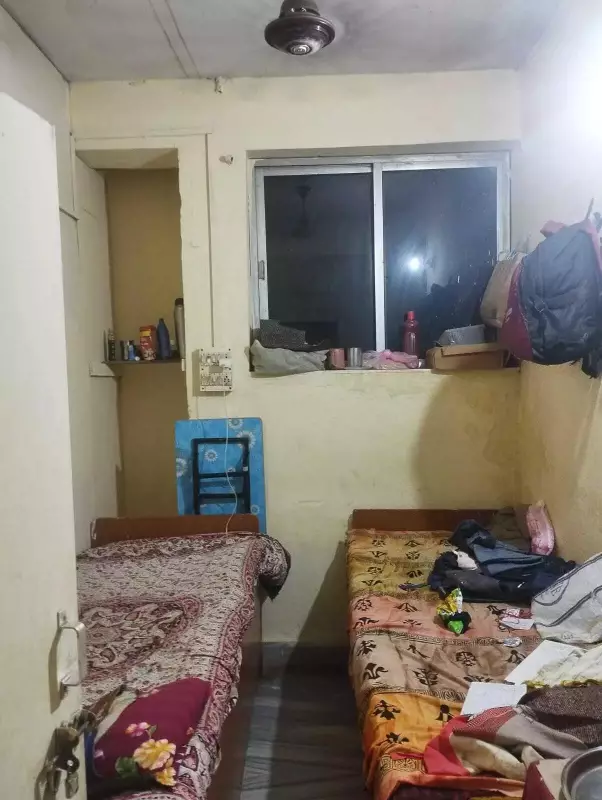
Extreme congestion is another constant. Amisha Anand, a 20-year-old from Madhepura, described rooms shared by five students. "It's as cramped as a train bogie. Students from small towns compromise on safety and health just to finish their courses. There are no guards at night; the staff rarely even know who is coming or going," she said.
Nutritional Deficiencies and Health Impacts
Nutrition suffers alongside space. Sneha Kumari, 21, preparing for UPSC, said, "Every meal is just watery lentils and potatoes. We go weeks without seeing a green vegetable or any real protein. It's a mess facility in name only – a way for owners to save money while we lose the energy needed to study 10 hours a day."
For Ruhi Singh, 22, from Assam, preparing for the IBPS PO exam, hostel life ended in hospitalisation. "The food was so poor that I ended up being admitted to the hospital, yet the warden offered no support. Many owners exhibit inappropriate behaviour that girls are too afraid to report. Most stay quiet because they are new to the city or fear being blamed," she said.
Substandard Living Conditions
In central Patna, non-residential spaces are repackaged as premium rooms. "I pay Rs 12,000 for a room that used to be a kitchen," said Supriya Singh from Buxar. "The walls are thin sheets of plywood and tin. There are no windows, no ventilation. I have to step over my suitcase just to move," she added.
Mental Health and Emergency Preparedness
This erosion of physical space seeps into mental health. "There is no such thing as a quiet moment. Constant noise and proximity are a slow poison. You lose your sense of self," said Saumya Kumari from Kankarbagh.
When emergencies strike, accountability disappears. Most hostels lack fire extinguishers, first aid kits, or evacuation plans, leaving students vulnerable in critical situations.

The student housing crisis in Patna highlights a systemic failure to provide safe and healthy living environments for young aspirants. As thousands flock to the city each year, the need for regulation and oversight in this industry becomes increasingly urgent to protect the well-being and futures of these students.