Beyond Textbooks: A Student's Journey Through Alternative Education in India
In a traditional educational landscape dominated by textbooks, homework, and high-stakes exams, some students in India are experiencing a radically different approach to learning. Shraddha A K, who attended two 'alternative' schools, provides a firsthand account of this innovative educational model that prioritizes hands-on experiences over conventional academic structures.
A Different Path to Learning
Shraddha's educational journey took place in schools that deliberately eliminated three pillars of traditional education: textbooks, homework, and standardized examinations. Instead of memorizing facts from books, students engaged in practical activities designed to develop critical thinking, creativity, and real-world skills.
"The absence of textbooks didn't mean an absence of learning," Shraddha explains. "We learned language, mathematics, and motor skills through carefully designed activities that made education feel relevant and engaging."

Learning Through Experience
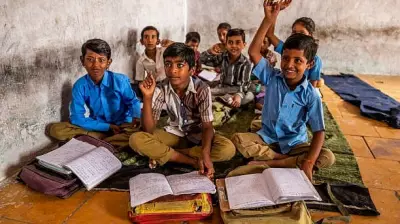
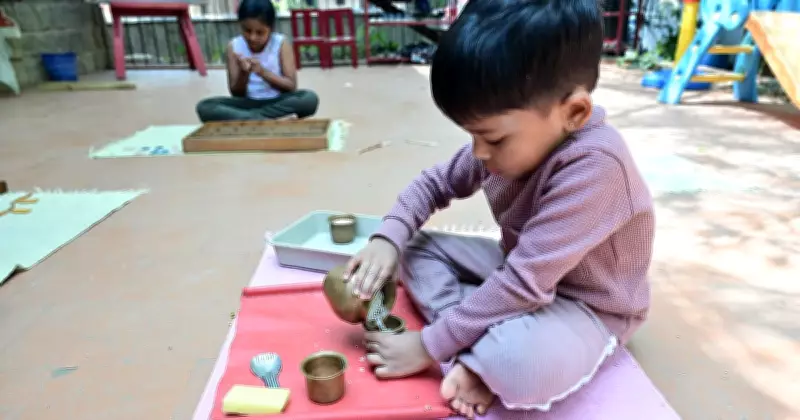
At Akshara Montessori House of Children, Shraddha witnessed how children develop fundamental skills through interactive methods. Rather than reading about concepts in isolation, students participated in activities that integrated multiple learning domains simultaneously.
- Language development through storytelling and communication exercises
- Mathematical understanding through practical problem-solving scenarios
- Motor skill enhancement through hands-on creative projects
This approach created a learning environment where education felt less like a chore and more like a natural exploration of the world.
Real-World Applications
Perhaps the most striking example of this alternative approach was when Shraddha and her classmates organized and operated a complete flea market featuring handmade products. This project wasn't an extracurricular activity but an integral part of their curriculum.
- Students learned entrepreneurship by creating products from conception to completion
- They developed financial literacy through pricing, sales, and profit calculations
- Communication and teamwork skills were honed through collaborative planning and execution
"Running that flea market taught me more about business and economics than any textbook chapter ever could," Shraddha reflects. "We were applying concepts in real time, facing actual challenges, and finding creative solutions."
The Philosophy Behind Alternative Education
These alternative schools operate on the principle that education should prepare students for life, not just for examinations. By removing the pressure of homework and standardized testing, educators can focus on developing:
- Critical thinking abilities rather than rote memorization
- Practical life skills alongside academic knowledge
- Intrinsic motivation for learning rather than external rewards
- Social and emotional intelligence through collaborative projects
This educational model, while still niche in India, represents a growing movement questioning traditional pedagogical approaches.
Challenges and Considerations
While Shraddha's experience highlights the benefits of alternative education, she acknowledges this approach presents unique challenges. Students transitioning to more traditional educational systems or standardized testing environments may face adjustment difficulties. Additionally, measuring learning outcomes without conventional assessments requires innovative evaluation methods.
Nevertheless, her story offers valuable insights into how education might evolve to better serve diverse learning styles and prepare students for an increasingly complex world.
As educational debates continue in India and globally, experiences like Shraddha's provide concrete examples of what learning can look like when freed from the constraints of textbooks, homework, and exams. Her journey demonstrates that meaningful education can thrive through experience, application, and genuine engagement with the learning process.