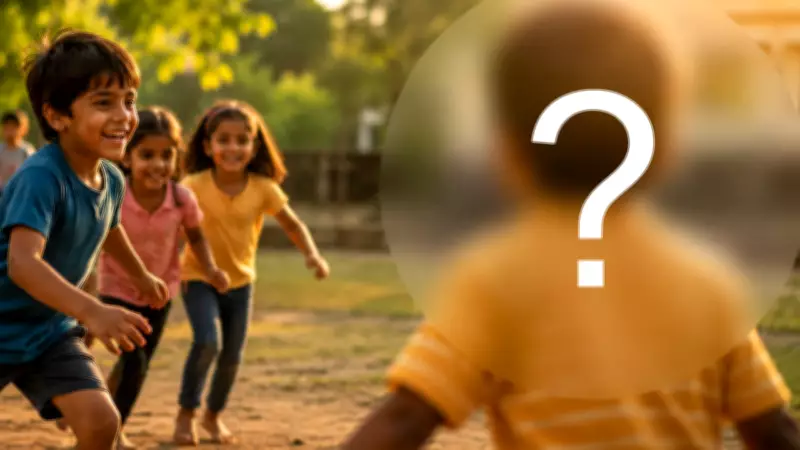
There was a time when childhood had a rhythm of its own. It was noisy, physical, a little chaotic, and gloriously unpolished. Kids climbed compound walls, raced down lanes, played hopscotch in fading light, invented games from broken plastic balls and stones, and returned home with scraped knees and full lungs. Much of that world has not disappeared entirely, but it has thinned out. Many experts now say one of the quietest losses in modern childhood is not a toy, a routine, or even a meal. It is free, unstructured outdoor play.
That may sound small compared with the bigger pressures children face today. But child development specialists often argue that this one missing activity affects nearly everything else: confidence, coordination, social skills, creativity, sleep, and even emotional regulation. When children no longer spend long stretches of time making their own fun, they also lose the experience of negotiating, improvising, taking risks, and learning how to recover from boredom.
The Vanishing Art of Play
Free play is not the same as a class, a coaching session, or a screen-based game. It is play with no adult script. No one is timing it, grading it, or correcting it every few minutes. Children decide the rules, argue over them, change them, and keep going. That process matters more than many adults realise.

Experts have long pointed out that this kind of play is where children learn to read a room, manage frustration, and work through conflict without immediate intervention. A child who has to figure out how to join a game, what to do after being left out, or how to settle a disagreement over rules is quietly practicing the emotional work of adulthood. In that sense, play is not a pause from learning. It is learning in its most natural form.
Why It Is Disappearing
The reasons are familiar, but together they have rewritten childhood. Schedules are fuller. Parents are more cautious. Cities leave less safe open space. Apartment life often means fewer shared grounds, fewer wandering hours, and fewer children visible at once. Add screens into the mix, and it becomes easy for indoor entertainment to replace outdoor exploration almost by accident.
There is also a cultural shift at work. Many families have come to see childhood as something that must be optimised: more classes, more structure, more visible progress. The result is a kind of overmanaged childhood, where every hour has a purpose except the hours that children most need to simply be children.
That loss can show up in subtle ways. Some children become less comfortable with boredom because they never get the chance to sit inside it and invent their way out. Others have fewer opportunities to build physical confidence, which used to come from running, falling, balancing, catching, and trying again. And many lose the simple social intelligence that grows when children spend time together without an adult translating every moment.
What Children Miss When Play Goes Missing
The absence of this one activity can leave childhood looking strangely polished and strangely incomplete. Children may be well-instructed, well-scheduled, and well-supervised, yet still miss the rough-edged experiences that help them become resilient.
Outdoor play gives children a particular kind of freedom: the chance to test limits without the pressure of perfection. It teaches body awareness, risk assessment, and persistence in ways that a classroom cannot fully replicate. It also gives children ownership. A stick becomes a cricket bat, a curb becomes a balance beam, a courtyard becomes a kingdom. That imaginative power is not trivial. It is one of the earliest forms of problem-solving.
Just as important, play is often where children learn the social rules no textbook can quite deliver. They learn when to wait, when to speak, when to apologise, when to insist, and when to let a moment pass. They learn that friendship is not always smooth and that conflict does not always mean rupture.

What Families Can Bring Back
The good news is that this is not a lost cause. Childhood does not need to be rebuilt through grand reforms alone. Sometimes it starts with protecting ordinary time. A stretch after school without structured activity. A weekly visit to a park. An evening in which children are not rushed from one obligation to the next. A lane, a terrace, a courtyard, a patch of grass, a school ground after hours.
Parents do not need to create perfect play conditions. In fact, perfection may be part of the problem. Children often need mess, interruption, and a little unpredictability. They need room to invent. They need room to get bored. They need room to figure things out with each other.
The childhood activity experts say is vanishing is not glamorous. It does not come with a certificate, a progress report, or a social media post. But it may be one of the most valuable things a child can have: unplanned play, the kind that leaves dirt under the nails, wind in the hair, and a small, growing sense that the world can be explored, not just managed.